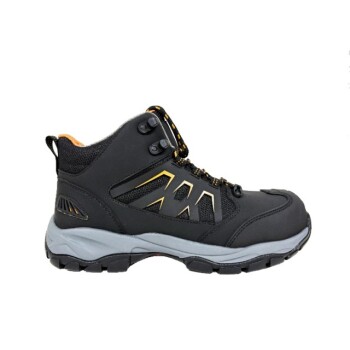
The fundamental purpose of safety toe shoes is to protect your feet from common workplace hazards, specifically shielding your toes from being crushed by impact or compression from heavy objects. A reinforced protective cap, or "toe box," is built into the front of the footwear to absorb and deflect these forces.
The core challenge isn't just knowing you need protection, but understanding that the material of the safety toe—be it steel, composite, or alloy—is what dictates its suitability for your specific work environment and hazards.
How Safety Toes Work
The ASTM Standard
All legitimate safety toe footwear is designed to meet standards set by the American Society for Testing and Materials (ASTM). This certification ensures the shoe can withstand specific levels of impact and compression, providing a reliable baseline for protection.
The Protective Cap
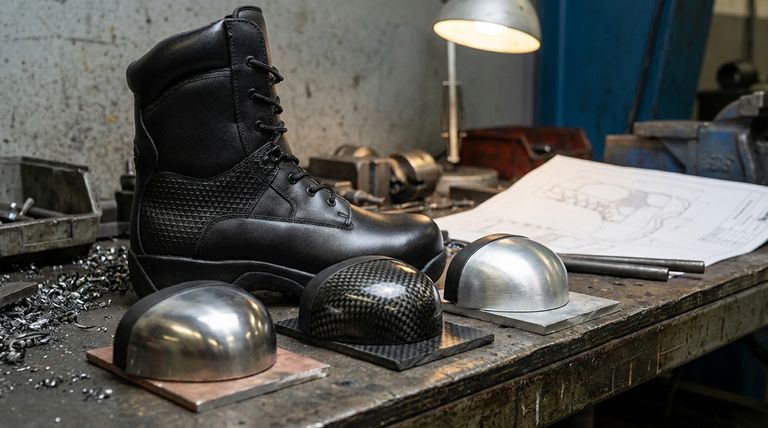
The "safety toe" itself is a cap integrated into the toe area of the shoe. This component is engineered to prevent the toe box from collapsing onto your foot when something heavy falls on it or when the shoe is caught in a compression-type accident.
Deconstructing the Main Types of Safety Toes
The material used for the protective cap is the most critical differentiator. Each type offers a unique balance of protection, weight, and environmental suitability.
Steel Toe: The Traditional Standard
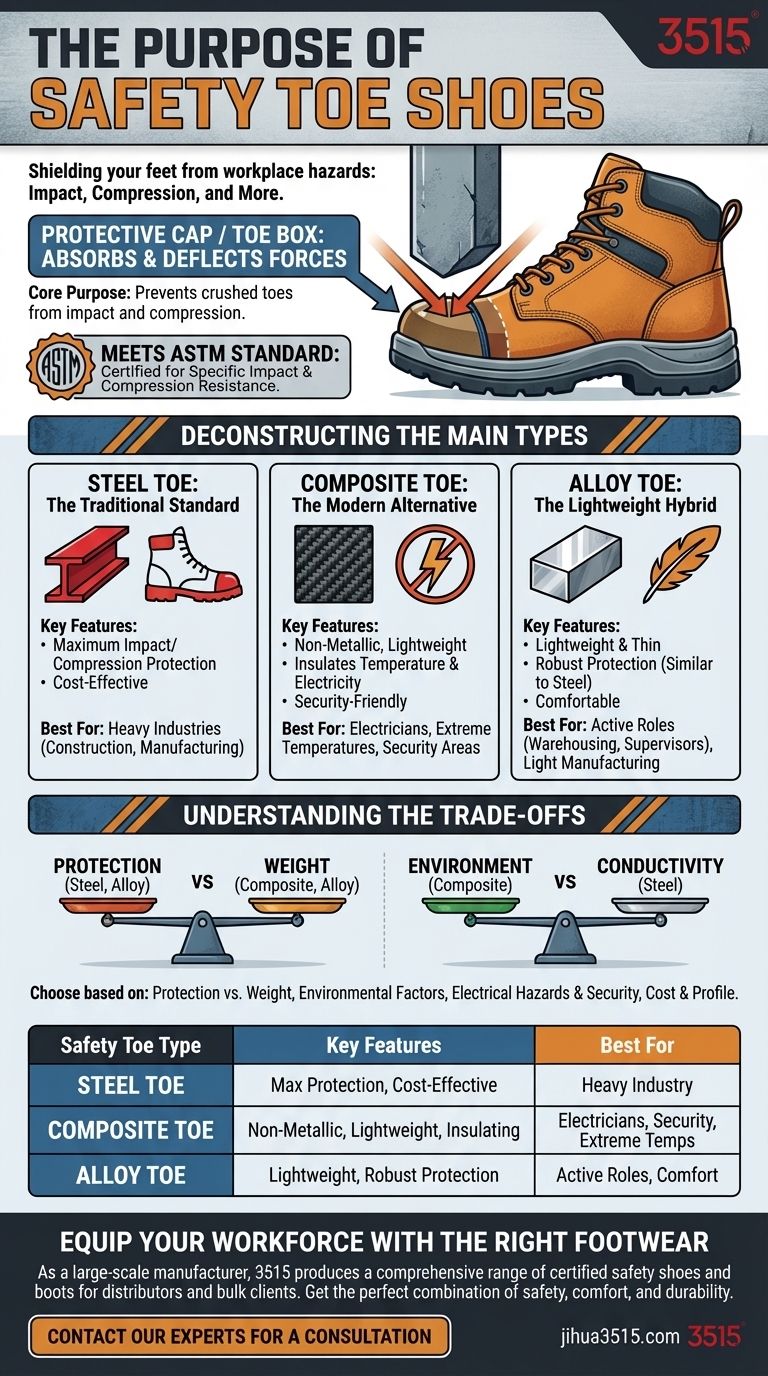
Steel toes are the original and most common type of safety toe. They are made from heavy-duty steel and are known for providing the highest level of protection against impact and compression.
This makes them a standard in heavy industries like construction, manufacturing, and shipping, where the risk of falling objects is significant.
Composite Toe: The Modern Alternative
Composite toes are crafted from non-metal materials like carbon fiber, plastic, Kevlar, or fiberglass. A key advantage is that they are significantly lighter than steel, reducing foot fatigue over a long day.
Because they contain no metal, they do not conduct electricity or temperature, making them ideal for electricians or those working in extreme hot or cold environments. They also won't set off metal detectors.
Alloy Toe: The Lightweight Hybrid
Alloy toes offer a middle ground, crafted from lightweight metals like aluminum or titanium. They provide robust protection similar to steel but in a lighter, thinner package.
This allows for a more comfortable, less bulky shoe that still meets ASTM safety standards, making them a popular choice for supervisors, light manufacturing, or warehouse work.
Understanding the Trade-offs
Choosing the right safety toe involves weighing the pros and cons of each material against the demands of your job. There is no single "best" option, only the best option for a specific application.
Protection vs. Weight
Steel offers maximum protection but is the heaviest option. Alloy and composite materials provide comparable certified protection at a significantly lower weight, which directly impacts comfort and long-term fatigue.
Environmental Factors
If you work in extreme temperatures, the conductivity of a steel toe can be a major issue, transferring heat or cold directly to your foot. Composite toes are insulators, providing a crucial barrier.
Electrical Hazards and Security
For electricians or anyone working near live circuits, a non-metallic composite toe is essential to mitigate the risk of electric shock. Similarly, for those who pass through metal detectors frequently, composite toes eliminate a daily hassle.
Cost and Profile
Steel toes are often the most cost-effective option. Alloy toes tend to be more expensive due to the materials used. Composite toes can sometimes be bulkier than steel or alloy to achieve the same level of impact resistance, which may affect the shoe's overall fit and style.
Making the Right Choice for Your Goal
Before selecting any footwear, you must first assess the specific hazards present in your work environment.
- If your primary focus is maximum impact resistance in heavy industry: Steel toe remains the proven, cost-effective standard for construction and manufacturing.
- If your primary focus is working around electrical hazards or frequent security screenings: Composite toe is the only logical and safe choice.
- If your primary focus is a balance of robust protection and all-day comfort: Alloy toe provides a lightweight, less bulky alternative perfect for active roles.
Ultimately, selecting the right safety shoe is a critical decision that directly contributes to your personal safety and well-being on the job.
Summary Table:
| Safety Toe Type | Key Features | Best For |
|---|---|---|
| Steel Toe | Maximum impact/compression resistance, cost-effective | Heavy industry (construction, manufacturing) |
| Composite Toe | Non-metallic, lightweight, insulates from temperature/electricity | Electricians, extreme temperatures, security-sensitive areas |
| Alloy Toe | Lightweight like composite, protection similar to steel | Active roles requiring comfort and protection (warehouses, supervisors) |
Ready to equip your workforce with the right safety footwear?
As a large-scale manufacturer, 3515 produces a comprehensive range of certified safety shoes and boots for distributors, brand owners, and bulk clients. Our production capabilities encompass all types of protective footwear, ensuring you get the perfect combination of safety, comfort, and durability tailored to your specific industry needs.
Contact our experts today for a consultation and discover how we can become your trusted safety footwear partner.
Visual Guide
Related Products
- Wholesale Mesh Steel Toe Safety Shoes with Dial Closure Factory Production
- Durable Steel Toe Safety Boots Wholesale & Custom Manufacturing
- Premium Wheat Nubuck Safety Shoes for Bulk Distribution
- Advanced KPU Athletic Safety Shoe with Steel Toe Cap Anti-Slip Rotary Lacing System
- Wholesale Safety Footwear Manufacturer for Bulk & Custom OEM Orders
People Also Ask
- What type of safety shoe is recommended for workers exposed to heavy machinery? Steel Toe Boots for Ultimate Protection
- Why is it mandatory to wear safety shoes with steel toe protection during metal loading? Prevent Crushing Injuries
- What are the main materials used in steel toe safety shoes? A Guide to Protective Footwear Construction
- Is the myth about steel toe shoes cutting off toes true? Debunking the Safety Footwear Myth
- What are the recommended uses for steel toe safety shoes? Essential Protection for High-Risk Industries