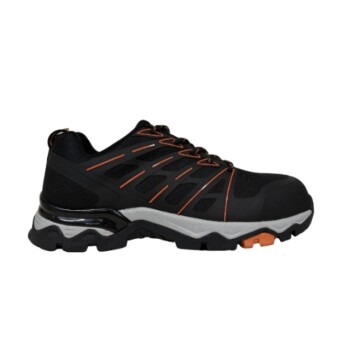
Pressure sensor-based systems are the cornerstone of objective stability analysis in modern footwear design, specifically for Safety Shoes and outdoor gear. These systems utilize high-sensitivity sensors to monitor Center of Pressure (COP) fluctuations, providing immediate, real-time data on weight-bearing imbalances that might otherwise go unnoticed during standard wear testing.
The Core Insight Rather than relying on subjective feedback, pressure sensors quantify stability by tracking how a wearer's center of gravity shifts. This allows manufacturers to engineer footwear that actively corrects imbalances, ensuring safety and reducing fatigue in unpredictable terrain.
The Mechanics of Stability Analysis
Monitoring Center of Pressure (COP)
The primary metric for stability is the Center of Pressure (COP). High-sensitivity sensors track the precise location and movement of the wearer's weight load.
Significant fluctuations in the COP indicate instability or poor balance recovery. By analyzing these signals, designers can identify exactly when and where a shoe fails to support the wearer.
Real-Time Feedback and Adjustment
This technology creates a real-time feedback loop. As the wearer stands or moves, the sensors detect weight-bearing issues instantly.
Manufacturers use this data to adjust the structural design of the shoe. This might involve altering the sole density or arch support to correct imbalances and enhance the shoe's static and dynamic performance.
Applying Data to Design
Dynamic Analysis for Active Movement
For outdoor and safety footwear, static analysis is not enough. Plantar pressure analysis systems use integrated sensing insoles to collect data during dynamic walking.
This process identifies risk areas where peak pressure exceeds safe thresholds, such as 200 kPa. Technicians can then modify the insole shape or material distribution to "offload" pressure, ensuring it remains within safe limits during movement.
Static Mapping for Structural Support
Static foot pressure mapping uses high-density sensor arrays to visualize pressure distribution while the wearer is standing still.
This quantifies the total contact area and highlights peak pressure points. It allows specialists to correlate specific foot deformities—such as flat feet or high arches—with potential pain points, providing a scientific basis for customizing the shoe's internal architecture.
Understanding the Trade-offs
Specificity vs. Generalization
While pressure sensors provide highly accurate data for a specific test subject, individual gait patterns vary widely. A design optimized for one specific pressure map may not offer the same stability benefits to the general population without customization.
Lab Conditions vs. Real Terrain
Sensor data is typically collected in controlled environments. While excellent for identifying biomechanical flaws, these systems may not fully replicate the unpredictable variables of outdoor environments, such as slipping on loose gravel or navigating uneven mud, which introduce external instability factors.
How to Apply This to Your Project
To leverage this technology effectively, align the sensor data with your specific design objectives:
- If your primary focus is Injury Prevention: Prioritize dynamic pressure analysis to identify and reduce peak pressure points (above 200 kPa) that cause repetitive stress injuries.
- If your primary focus is Stability and Balance: Focus on COP fluctuation data to engineer soles that minimize sway and correct weight-bearing imbalances.
- If your primary focus is Custom Fit: Use static mapping to visualize contact areas and accommodate specific foot deformities like high arches.
True footwear innovation lies in translating these invisible pressure signals into tangible structural support.
Summary Table:
| Metric | Technology Used | Design Benefit |
|---|---|---|
| Balance Control | COP (Center of Pressure) Monitoring | Corrects weight-bearing imbalances and reduces fatigue. |
| Injury Prevention | Dynamic Plantar Pressure Analysis | Identifies peak pressure points (>200 kPa) to prevent stress injuries. |
| Structural Support | Static Pressure Mapping | Quantifies contact area to customize internal shoe architecture. |
| Performance | Integrated Sensing Insoles | Real-time feedback for adjusting sole density and arch support. |
Partner with 3515 for Data-Driven Footwear Solutions
As a large-scale manufacturer serving global distributors and brand owners, 3515 leverages advanced biomechanical insights to deliver superior footwear. Our comprehensive production capabilities allow us to translate complex pressure data into high-performance products across our flagship Safety Shoes series, tactical boots, outdoor gear, and formal shoes.
Why choose 3515?
- Precision Engineering: We specialize in footwear that balances static support with dynamic stability.
- Bulk Versatility: From rugged sneakers to specialized work boots, we meet diverse bulk requirements with uncompromised quality.
- Expert Manufacturing: Our facilities are equipped to handle large-scale orders for global brands.
Ready to elevate your product line with scientifically engineered stability? Contact us today to discuss your manufacturing needs!
References
- Minjie Bian, Yurong Mao. A non-immersive virtual reality-based intervention to enhance lower-extremity motor function and gait in patients with subacute cerebral infarction: A pilot randomized controlled trial with 1-year follow-up. DOI: 10.3389/fneur.2022.985700
This article is also based on technical information from 3515 Knowledge Base .
Related Products
- Premium Suede Sport Safety Shoes for Wholesale & Bulk Orders
- Premium Lightweight Safety Shoes for Wholesale & Bulk Orders
- Wholesale Anti-Smash & Puncture-Proof Safety Shoes Custom Manufacturing for Brands
- Premium KPU Injection Athletic Style Safety Shoes
- Premium Safety Shoes with Rotating Buckle Safety Sneakers
People Also Ask
- What industries have specific OSHA footwear requirements? Ensure Compliance & Protect Your Workforce
- What are the primary functions of professional safety shoes? Maximize Safety in Water Supply Confined Spaces
- What role do specialized safety shoes play in preventing falls? Engineering Stability in Industrial Environments
- Why should ergonomics and comfort be prioritized when selecting safety shoes? Boost Compliance & Worker Health
- Why must safety training be synchronized with the provision of physical safety shoes? Achieve Optimal Workplace Protection