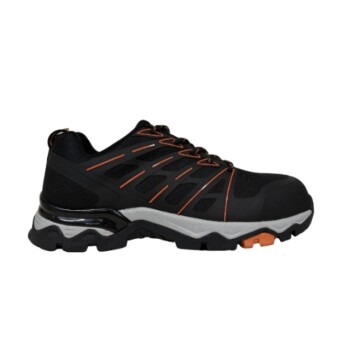
Designing professional safety footwear requires significantly more than simply shrinking a male shoe mold to fit a female foot. Mass production must strictly account for anatomical differences because clinical evidence demonstrates that women have a significantly higher incidence of Hallux Valgus (bunions), a condition directly linked to unique bone structures and pressure distribution patterns that standard sizing ignores.
Core Insight: Effective safety shoe production relies on gender-specific ergonomics rather than simple size scaling. By integrating features like wider toe boxes and targeted arch support for women, manufacturers provide essential medical protection against long-term occupational foot injuries.
The Flaw in Standard Mass Production
The Problem with Simple Scaling
Historically, mass production has relied on simple size scaling. This process involves taking a standard male shoe design and reducing the dimensions to fit a smaller foot.
This method fails because it assumes a female foot is merely a smaller version of a male foot. In reality, the geometry and biomechanics are fundamentally different.
Pressure Distribution Mismatches
The primary reference highlights that pressure distribution varies significantly between genders.
When a woman wears a scaled-down male shoe, the pressure points do not align with the reinforced areas of the safety shoe. This misalignment compromises the shoe's ability to absorb shock effectively.
Anatomical Risks and Ergonomic Solutions
Addressing Hallux Valgus
The most critical medical justification for gender-specific design is the high incidence of Hallux Valgus in females.
This deformity involves the misalignment of the big toe and is exacerbated by improper footwear. Standard safety shoes often compress the toes, accelerating this condition in female workers.
Essential Design Modifications
To mitigate these risks, the primary reference dictates that design must move beyond aesthetics to structural ergonomics.
Two specific features are non-negotiable for female-specific safety shoes: a wider toe box to accommodate the forefoot without compression, and targeted arch support to align with female bone structure.
Medical Protection as a Standard
Incorporating these features changes the nature of the equipment from simple PPE (Personal Protective Equipment) to a form of medical protection.
By respecting anatomical differences, employers reduce the risk of chronic occupational foot deformities that lead to long-term disability.
The Trade-offs of Specialized Production
Increased Complexity vs. Long-term Health
Implementing gender-specific designs in mass production introduces logical challenges. It requires distinct molds (lasts) and more complex inventory management compared to a unisex "scaling" approach.
However, the "efficiency" of unisex sizing creates a health debt. The immediate savings in production complexity are outweighed by the long-term reduction in worker health and safety.
Prioritizing Health in Equipment Selection
If you are evaluating safety footwear for a diverse workforce, consider the following principles:
- If your primary focus is immediate cost reduction: You may be tempted by unisex "scaled" sizing, but be aware this significantly increases the risk of medical claims related to foot deformities like Hallux Valgus.
- If your primary focus is comprehensive worker safety: You must select footwear lines that offer distinct male and female lasts with specific features like wider toe boxes and specialized arch support.
True professional safety is achieved only when the protective equipment respects the biology of the user.
Summary Table:
| Key Feature | Male-Centric Design (Scaled) | Gender-Specific Design (Anatomical) |
|---|---|---|
| Toe Box Width | Narrow/Proportional | Enhanced width to prevent Hallux Valgus |
| Arch Support | Standard Male Profile | Targeted support for female bone structure |
| Pressure Map | Misaligned with reinforced zones | Aligned with gender-specific biomechanics |
| Last Shape | Single mold (downsized) | Unique molds for diverse foot geometries |
| Worker Outcome | Higher risk of chronic foot deformity | Reduced injury and long-term medical safety |
Upgrade Your Workforce Safety with 3515 Specialized Footwear
As a premier large-scale manufacturer serving global distributors and brand owners, 3515 understands that true safety starts with anatomical precision. We move beyond simple size scaling by utilizing gender-specific lasts that prioritize long-term health and ergonomic comfort.
From our flagship Safety Shoes series to work boots, tactical gear, and formal footwear, our comprehensive production capabilities ensure your bulk requirements are met with medical-grade attention to detail. Protect your team from occupational deformities and enhance performance with our high-quality manufacturing solutions.
Ready to elevate your product line? Contact us today to discuss your bulk production needs!
References
- Carlo Biz, Pietro Ruggieri. Investigating and Practicing Orthopedics at the Intersection of Sex and Gender: Understanding the Physiological Basis, Pathology, and Treatment Response of Orthopedic Conditions by Adopting a Gender Lens: A Narrative Overview. DOI: 10.3390/biomedicines12050974
This article is also based on technical information from 3515 Knowledge Base .
Related Products
- Premium Suede Sport Safety Shoes for Wholesale & Bulk Orders
- Premium Lightweight Safety Shoes for Wholesale & Bulk Orders
- Wholesale Anti-Smash & Puncture-Proof Safety Shoes Custom Manufacturing for Brands
- Premium KPU Injection Athletic Style Safety Shoes
- Premium Safety Shoes with Rotating Buckle Safety Sneakers
People Also Ask
- What industries have specific OSHA footwear requirements? Ensure Compliance & Protect Your Workforce
- What are the primary functions of professional safety shoes? Maximize Safety in Water Supply Confined Spaces
- What role do specialized safety shoes play in preventing falls? Engineering Stability in Industrial Environments
- Why should ergonomics and comfort be prioritized when selecting safety shoes? Boost Compliance & Worker Health
- How do I choose the best safety shoes? Match Certified Features to Your Hazards