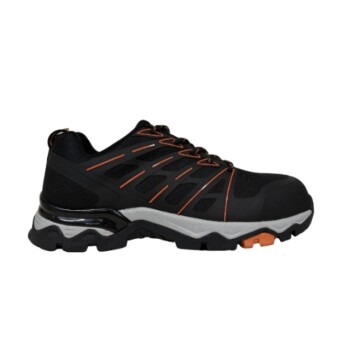
Personal protective equipment (PPE) and high-performance safety shoes function as a comprehensive protective boundary that adapts to the shifting dynamics of pesticide application. By covering critical areas with long sleeves, trousers, and well-sealed footwear, this gear physically blocks droplet deposition and prevents direct skin contact, which varies significantly depending on whether the operator is spraying vertically or horizontally.
Spraying direction alters where chemicals land on the body, creating dynamic exposure risks. High-quality PPE mitigates this by forming a non-porous seal—particularly around the feet and legs during horizontal spraying—to prevent contamination from direct contact with treated crops.
The Mechanics of the Protective Boundary
Adapting to Deposition Variations
Changing the direction of your spray does not just alter where the pesticide lands on the crop; it fundamentally changes where droplets deposit on your body.
Standard clothing is insufficient because it cannot account for these unpredictable patterns. Specialized PPE acts as a dynamic shield, ensuring that regardless of the spray angle, the operator remains isolated from chemical exposure.
Creating a Complete Seal
To be effective, protection must be uniform. A complete protective boundary is formed by integrating long-sleeved tops, protective trousers, and well-sealed safety shoes.
This integration eliminates gaps in coverage. Even minor breaks in this boundary can allow droplets to reach the skin, undermining the effectiveness of the entire suit.
Safeguarding Against Horizontal Spraying Risks
The Hazard of Direct Contact
Horizontal spraying operations present a unique challenge: the operator often moves through the very crops they are treating.
This proximity increases the risk of contact contamination. As the operator walks, their legs and feet inevitably brush against crop leaves that are wet with pesticide.
The Critical Role of High-Performance Footwear
In these scenarios, high-performance safety shoes are not just about physical stability; they are a chemical barrier.
Combined with protective trousers, these well-sealed shoes effectively block direct skin contact with contaminated foliage. This significantly minimizes chemical exposure for field workers who might otherwise absorb toxins through the lower extremities.
Material Defense During High-Risk Phases
Handling Maximum Toxicity
While spraying direction dictates deposition, the mixing and loading phases present the highest toxicity risks. During these times, chemicals are in their most concentrated form.
Accidental spills or splashes during mixing can lead to immediate skin irritation or severe systemic toxicity.
The Non-Porous Physical Barrier
Protective gear utilized during these phases must be composed of specialized, chemical-resistant materials.
These materials act as a non-porous physical barrier. Unlike standard fabrics, they prevent high-concentration liquids from permeating through to the skin, neutralizing the danger of direct contact with potent agents.
Common Pitfalls to Avoid
Overlooking the Lower Body
A common error is prioritizing upper-body protection while neglecting the feet and legs. As the primary reference indicates, horizontal spraying concentrates exposure risks on the lower body due to leaf contact. Standard footwear offers no protection against chemical transfer from wet crops.
Assuming One Type of Gear Fits All Phases
Operators often use the same gear for mixing as they do for spraying. However, the concentration levels differ protection needs. Gear that handles dilute spray mist may not be sufficient to stop the permeation of concentrated chemicals during the mixing phase.
Making the Right Choice for Your Goal
To ensure maximum safety, you must match your equipment to your specific operational context.
- If your primary focus is Horizontal Spraying: Prioritize high-performance safety shoes and trousers that are specifically sealed to prevent moisture transfer from contact with wet crop leaves.
- If your primary focus is Mixing and Loading: Select gear made from strictly non-porous, chemical-resistant materials to withstand accidental spills of concentrated toxic agents.
Safeguarding your health requires treating PPE not as a uniform, but as a technical system designed to counter specific exposure vectors.
Summary Table:
| Protection Category | Component | Key Safeguard Function |
|---|---|---|
| Footwear | High-Performance Safety Shoes | Blocks chemical transfer from wet foliage and prevents lower-extremity absorption. |
| Lower Body | Chemical-Resistant Trousers | Prevents contact contamination during horizontal movement through treated crops. |
| Upper Body | Long-Sleeved Protective Tops | Acts as a physical shield against vertical droplet deposition and spray mist. |
| Handling Phase | Non-Porous Specialized Gear | Neutralizes risks from concentrated chemical splashes during mixing and loading. |
Secure Your Workforce with Professional-Grade Protective Footwear
As a large-scale manufacturer serving distributors and brand owners, 3515 offers comprehensive production capabilities for all footwear types. Our flagship Safety Shoes series is specifically engineered to provide the non-porous chemical barriers and high-performance durability required for hazardous agricultural and industrial environments.
Whether you need robust tactical boots, outdoor work shoes, or specialized sneakers and dress shoes for bulk requirements, 3515 delivers unmatched protection and reliability for your clients.
Ready to elevate your product catalog with world-class safety footwear?
Contact Us Today to Discuss Your Bulk Requirements
References
- Shuang Li, Sen Pang. Health risk assessment following exposure of operators to backpack-sprayed prothioconazole and its major metabolite in wheat fields in China. DOI: 10.3389/fenvs.2023.1188916
This article is also based on technical information from 3515 Knowledge Base .
Related Products
- Premium Suede Sport Safety Shoes for Wholesale & Bulk Orders
- Premium Lightweight Safety Shoes for Wholesale & Bulk Orders
- Wholesale Anti-Smash & Puncture-Proof Safety Shoes Custom Manufacturing for Brands
- Premium KPU Injection Athletic Style Safety Shoes
- Premium Safety Shoes with Rotating Buckle Safety Sneakers
People Also Ask
- What are the primary functions of professional safety shoes? Maximize Safety in Water Supply Confined Spaces
- What industries have specific OSHA footwear requirements? Ensure Compliance & Protect Your Workforce
- What role do specialized safety shoes play in preventing falls? Engineering Stability in Industrial Environments
- What happens during the cutting stage of safety shoes manufacturing? Precision, Process & Quality
- What are the technical advantages of integrating sensors into safety shoes? Achieve Superior Motion Capture Precision