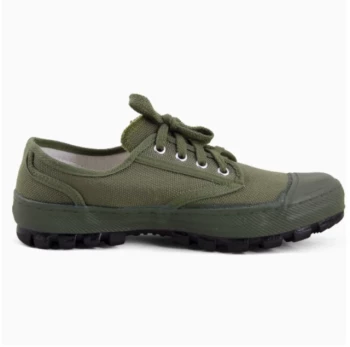
Surface patterns on rubber outsoles are engineered to maximize traction by fundamentally altering how the shoe interacts with the ground. Techniques such as symmetrical knurling or asymmetrical embossing create specific geometric profiles that channel away liquids and physically interlock with the walking surface to prevent slips.
By manipulating the outsole topography, manufacturers do not just rely on the material's stickiness; they turn the sole into a mechanical tool. These patterns concentrate physical stress and clear contaminants to maintain grip where smooth rubber would fail.
The Mechanics of Enhanced Grip
Modifying Contact Area
The primary function of patterning is to modify the actual contact area between the sole and the floor. While a smooth sole might seem to offer more contact, it creates a hydroplaning risk on wet surfaces.
Mechanical Interlocking
Patterns enable mechanical interlocking force. The texturing allows the rubber to physically embed itself into the microscopic irregularities of the ground, effectively locking the shoe in place during movement.
Stress Concentration at Edges
A critical mechanism for increasing friction is stress concentration. The edges of patterns—whether knurled or embossed—focus the wearer's weight into smaller surface areas, digging into the ground to resist sliding.
Managing Environmental Contaminants
Drainage Channels
On contaminated surfaces, liquids must be evacuated to prevent slips. Designs like symmetrical knurling create a network of channels for drainage.
Waste Discharge
Beyond liquids, solid debris can reduce friction. Asymmetrical embossing and similar patterns are designed to facilitate waste discharge, ensuring that mud or grime is ejected from the sole rather than clogging it.
Understanding the Trade-offs
Pattern Durability
While rubber is naturally abrasion-resistant, the sharp edges required for stress concentration are the first points to wear down. As these edges round off over time, the coefficient of friction can decrease.
Cleaning Complexity
The same channels that allow for mechanical interlocking and drainage can become traps for stubborn materials. High-performance patterns often require more rigorous maintenance to ensure the drainage channels remain clear and effective.
Making the Right Choice for Your Goal
When evaluating safety footwear, the pattern must match the specific environmental hazard.
- If your primary focus is wet or oily environments: Prioritize designs with deep, connected channels that maximize drainage and liquid evacuation.
- If your primary focus is loose or uneven terrain: Look for aggressive knurling or embossing that enhances physical embedding and mechanical interlocking.
- If your primary focus is high-temperature environments: Ensure the rubber compound itself is rated for the heat (up to 300°C), as the pattern alone cannot prevent thermal degradation.
The most effective safety shoe combines high-quality rubber material with an intelligent surface geometry that actively manages the ground beneath it.
Summary Table:
| Feature | Mechanism | Primary Benefit |
|---|---|---|
| Symmetrical Knurling | Drainage Channels | Rapidly evacuates liquids to prevent hydroplaning |
| Asymmetrical Embossing | Waste Discharge | Self-cleans mud and debris to maintain constant grip |
| Pattern Edges | Stress Concentration | Focuses weight to dig into slick surfaces |
| Textured Geometry | Mechanical Interlocking | Physically embeds rubber into ground irregularities |
Partner with 3515 for High-Performance Footwear Solutions
As a large-scale manufacturer serving global distributors and brand owners, 3515 offers comprehensive production capabilities for all footwear types. Our flagship Safety Shoes series is engineered with advanced outsole topography to meet the most rigorous industrial standards.
Our extensive portfolio includes:
- Work & Tactical Boots with specialized traction patterns.
- Outdoor & Training Shoes designed for mechanical interlocking.
- Sneakers, Dress & Formal Shoes for diverse bulk requirements.
Take advantage of our decades of manufacturing expertise to enhance your product line. Contact us today to discuss your bulk orders and custom specifications!
References
- Murat DİKER, Engin Ergül. Determination of The Static Friction Coefficient of Some Materials Used for Anti-slip Safety with ANOVA. DOI: 10.29137/umagd.1182843
This article is also based on technical information from 3515 Knowledge Base .
Related Products
- Durable Rubber-Soled Utility Shoes for Wholesale & Custom Brand Manufacturing
- Durable Canvas Work Shoes with Rubber Lug Sole | Wholesale Manufacturer
- Wholesale Durable Camo Canvas Shoes with High-Traction Rubber Soles
- Durable Rubber Sole Outdoor Shoes Wholesale & Custom Manufacturing
- Wholesale Durable Camouflage Canvas Shoes with High-Traction Cleated Rubber Sole
People Also Ask
- Why are rubber-soled shoes considered multi-weather footwear? Unlock All-Season Traction & Protection
- Why should we wear rubber soled shoes? Unlock Superior Safety and Durability
- How do rubber soles affect a shoe's appearance? Defining Your Shoe's Style and Formality
- What are the types of rubber sole shoes available? Choose the Right Sole for Durability & Comfort
- When were rubber sole shoes invented? From 1800s Concept to Modern Mainstay