The single most critical interface between you and the ground, a motorcycle boot's sole is far more than just a piece of rubber. The ideal sole must be oil-resistant for reliable grip on slick surfaces, feature a defined heel to securely engage with footpegs, and be constructed with torsional stiffness to prevent your foot from dangerously flexing during an incident. Its construction method and tread pattern are direct indicators of its durability and performance.
Your boot's sole is not just for walking; it's a foundational piece of safety equipment. Its primary job is to provide predictable traction when you stop, support the entire weight of the motorcycle, and protect your foot from crushing and twisting forces.
The Core Functions of a Motorcycle Boot Sole
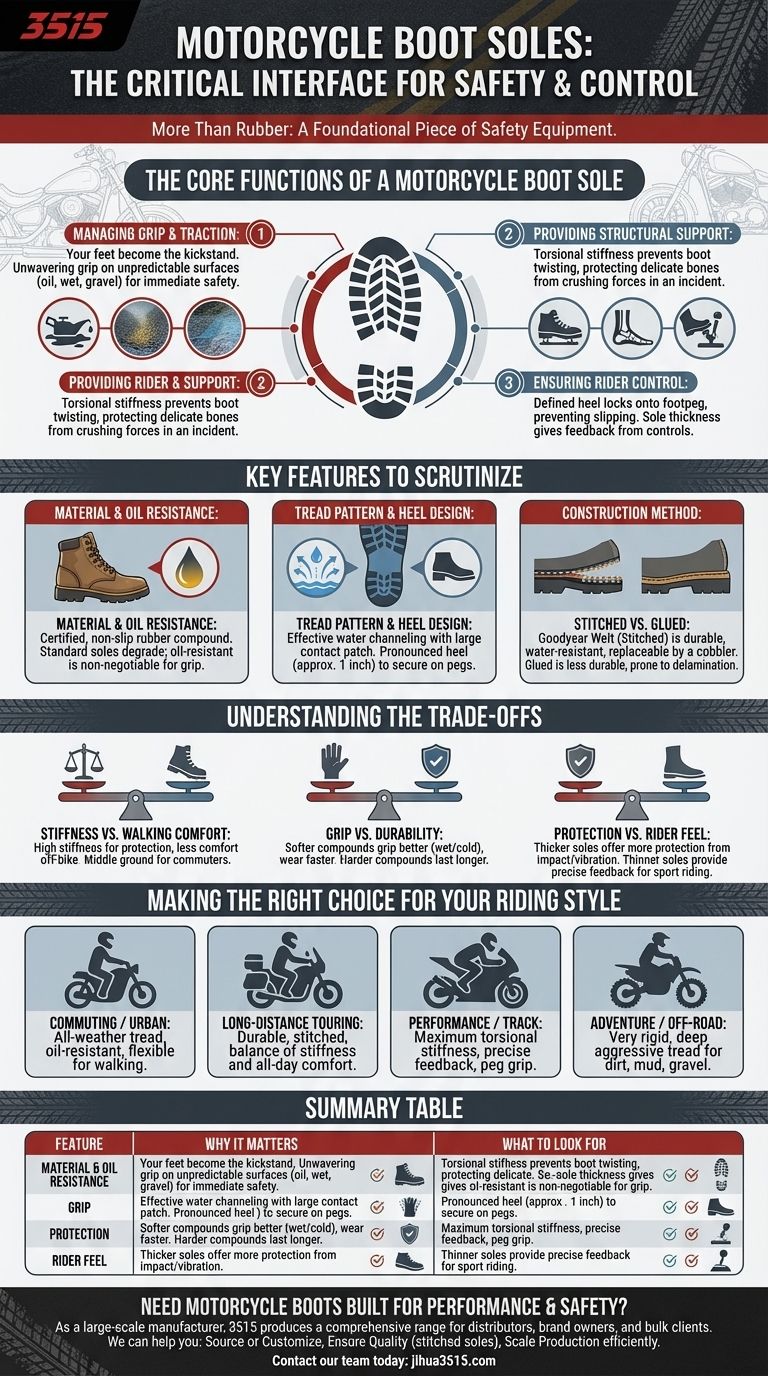
A motorcycle boot sole serves three distinct purposes that go far beyond what standard footwear can offer. Understanding these functions is key to appreciating why specific features are non-negotiable.
Managing Grip and Traction
When you stop, your feet become the kickstand. The sole must provide unwavering grip on unpredictable surfaces, including oil slicks at intersections, loose gravel on the shoulder, or wet pavement. This is its most immediate safety function.
Providing Structural Support
A proper motorcycle boot sole is engineered to be torsionally stiff. This rigidity prevents the boot from twisting, which protects the delicate bones in your foot and ankle from being crushed or broken by the bike's weight in a tip-over or crash.
Ensuring Rider Control
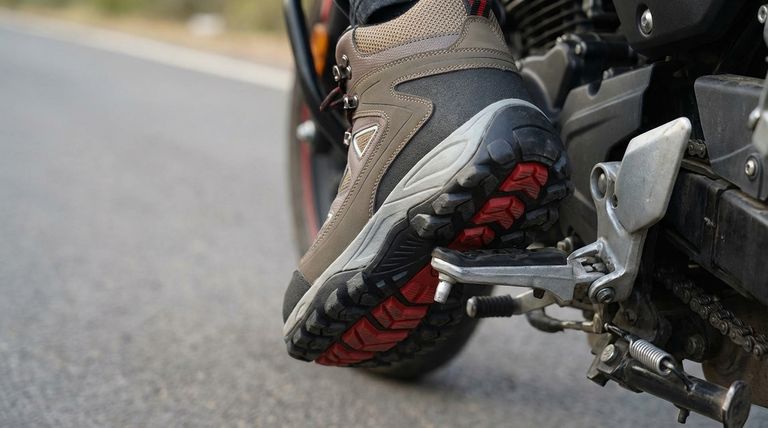
The sole’s design directly impacts how you interact with your motorcycle. A defined heel locks onto the footpeg, preventing your foot from slipping forward. The sole's thickness and material also provide feedback from the controls, allowing for precise shifting and braking.
Key Features to Scrutinize
When evaluating a pair of boots, focus on these specific characteristics of the sole to determine its quality and suitability for riding.
Material and Oil Resistance
The sole material must be oil-resistant. Standard rubber or synthetic soles can degrade or become dangerously slick when exposed to petroleum products commonly found on roads and in garages. This feature is a critical, certified aspect of true motorcycle footwear.
Tread Pattern and Heel Design
Look for a tread pattern that can effectively channel away water while providing a large contact patch for grip on asphalt. A pronounced heel, typically around one inch, is essential for securely resting on the footpegs and preventing your foot from sliding off during maneuvers.
Construction Method: Stitched vs. Glued
The method used to attach the sole is a clear indicator of the boot's overall quality and longevity.
Stitched soles, particularly those using a Goodyear Welt construction, are bonded and sewn to the boot. This creates an incredibly strong, durable, and water-resistant seal. A major advantage is that these soles can be replaced by a cobbler, significantly extending the life of your investment.
Glued soles are common on more affordable or athletic-style riding shoes. While modern adhesives are strong, they are more susceptible to delamination from heat and stress over time and are generally not replaceable.
Understanding the Trade-offs
Choosing the right boot sole involves balancing competing priorities. There is no single "best" sole, only the best sole for your specific needs.
Stiffness vs. Walking Comfort
A highly rigid, torsionally stiff sole offers maximum protection against twisting and impact forces in a crash. However, this same stiffness makes the boot feel clunky and uncomfortable for walking around off the bike. Commuters and tourers often need to find a middle ground.
Grip vs. Durability
Softer rubber compounds tend to provide superior grip, especially in wet or cold conditions. The trade-off is that they often wear down more quickly. Harder compounds offer excellent longevity but may sacrifice some of the stickiness of a softer sole.
Protection vs. Rider Feel
Thicker, more robust soles provide more protection from impacts and vibration. Conversely, a thinner sole can offer more precise feedback and a better feel for the rear brake pedal and gear shifter, which is often preferred by sport and track riders.
Making the Right Choice for Your Riding Style
Your final decision should be guided by how you primarily use your motorcycle.
- If your primary focus is daily commuting or urban riding: Prioritize an oil-resistant sole with an all-weather tread and enough flexibility for comfortable walking.
- If your primary focus is long-distance touring: Look for a durable, stitched sole that balances protective stiffness with all-day comfort, both on and off the bike.
- If your primary focus is performance or track riding: You need a sole with maximum torsional stiffness and a design that offers precise feedback and grip on the pegs.
- If your primary focus is adventure or off-road riding: Seek a very rigid sole with a deep, aggressive tread pattern designed for exceptional grip on dirt, mud, and gravel.
Choosing the right sole is a direct investment in your control, confidence, and ultimate safety on every ride.
Summary Table:
| Feature | Why It Matters | What to Look For |
|---|---|---|
| Oil Resistance | Prevents dangerous slips on slick surfaces | Certified, non-slip rubber compound |
| Torsional Stiffness | Protects foot from twisting injuries | Rigid construction that resists flex |
| Heel Design | Secures foot on pegs for better control | Pronounced heel (approx. 1 inch) |
| Construction Method | Determines durability and longevity | Stitched (Goodyear Welt) for replaceability |
| Tread Pattern | Provides reliable traction in all conditions | Deep grooves for water and debris dispersal |
Need motorcycle boots with soles built for performance and safety?
As a large-scale manufacturer, 3515 produces a comprehensive range of footwear for distributors, brand owners, and bulk clients. Our production capabilities encompass all types of motorcycle boots, engineered with the critical sole features detailed above to ensure rider safety and control.
We can help you:
- Source or Customize boots tailored to specific riding styles (commuting, touring, sport, adventure).
- Ensure Quality with durable materials and construction methods like stitched soles.
- Scale Production to meet your bulk order requirements efficiently.
Let's discuss your specific needs. Contact our team today to get started.
Visual Guide
Related Products
- Wholesale Waterproof Tactical Boots Custom Suede & High-Traction Soles
- Wholesale Leather Ankle Boots with Lug Soles for Custom Brand Manufacturing
- Heavy-Duty Goodyear Welted Pull-On Safety Rigger Boot
- Durable Leather Moc Toe Work Boots for Wholesale & Custom Manufacturing
- Durable Rubber Sole Outdoor Shoes Wholesale & Custom Manufacturing
People Also Ask
- What waterproof technology is used in tactical boots? Unlock All-Weather Performance & Protection
- What are the advantages and disadvantages of waterproof tactical boots? A Guide to the Key Trade-Offs
- What is the significance of waterproof functionality in tactical boots? Essential for Health & Performance
- What is the role of professional 3D medical imaging software in optimizing tactical boot design and performance?
- What features enhance breathability and comfort in tactical boots? A Guide to Superior Footwear Performance