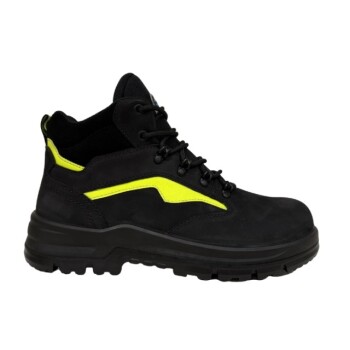
The primary purpose of water-resistant non-slip shoes is to provide a dual layer of protection in hazardous environments. They are engineered to keep your feet dry from splashes, spills, and damp conditions while simultaneously offering enhanced traction to prevent slips and falls on slick surfaces. This combination addresses two of the most common workplace risks in a single piece of footwear.
The core challenge in many professional settings isn't just a wet floor or a dry, slippery one—it's the constant presence of both. Water-resistant non-slip shoes are the specialized solution for environments where liquid hazards and slip risks are intrinsically linked.
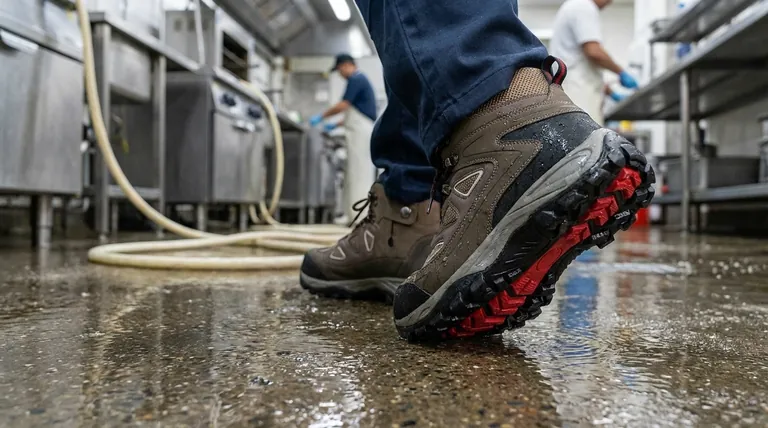
The Dual-Function Design: How They Work
To understand their value, it's essential to break down the two distinct technologies working in tandem. Each feature addresses a different aspect of environmental risk and personal comfort.
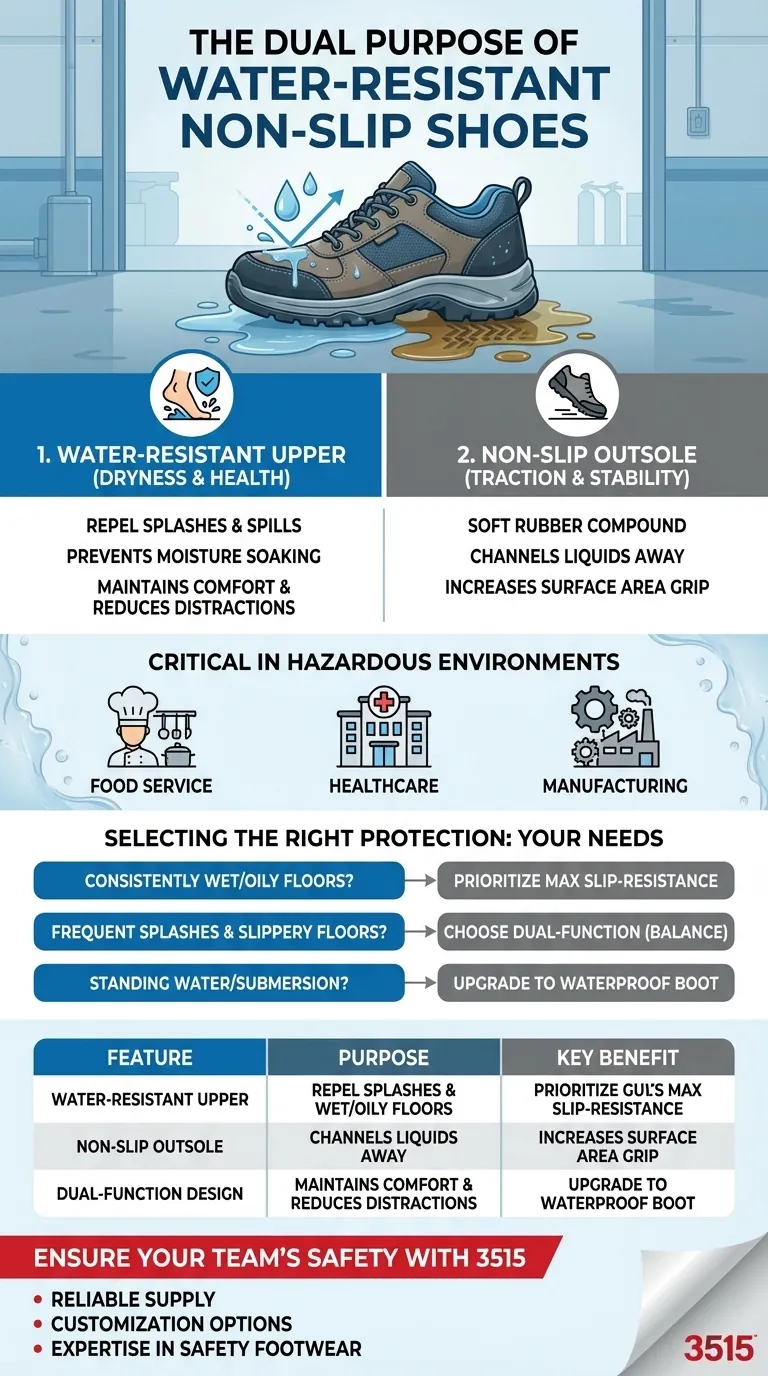
Repelling Water for Dryness and Health
The "water-resistant" quality means the shoe's upper material is treated or constructed to repel liquids. This prevents moisture from occasional splashes and spills from soaking through to your feet.
Keeping feet dry is not just about comfort. It helps prevent skin issues, maintains foot temperature, and reduces distractions that can lead to accidents.
Maximizing Traction for Stability
The "non-slip" function comes from the shoe's outsole. These soles are typically made from a soft rubber compound and feature a specific tread pattern with fine grooves or channels.
This design works by increasing the surface area of contact with the floor and channeling liquids like water or oil away from the bottom of the shoe. This allows the sole to maintain a firm grip, significantly reducing the risk of a fall.
Where This Specific Protection is Critical
While useful in many contexts, this type of footwear is specifically designed for environments where the risk of spills is constant, making floors predictably hazardous.
High-Risk Professional Environments
Industries like food service, healthcare, and manufacturing are prime examples. Kitchens, hospital corridors, and factory floors are frequently exposed to water, cleaning fluids, and oils.
In these settings, standard footwear is inadequate. Water-resistant non-slip shoes are often a requirement to comply with occupational safety standards and protect employees.
Enhancing Everyday Safety
Beyond the workplace, these shoes offer practical benefits for daily life. They provide added stability when walking on rainy sidewalks, icy paths, or other slick surfaces where a fall could occur.
Understanding the Critical Trade-offs
No single shoe is perfect for every situation. Understanding the design compromises is key to choosing the right tool for the job.
Water-Resistant vs. Waterproof
This is the most important distinction. Water-resistant shoes can handle splashes and light rain, but they are not designed for submersion.
If your work involves standing in water or deep puddles, you need a fully waterproof boot, which provides a complete, sealed barrier against liquid.
The Slip-Resistance Spectrum
While highly effective, a shoe designed for both water resistance and traction may make slight compromises. Some hyper-specialized, non-slip shoes might offer a marginally better grip on oily surfaces, but they provide zero protection from moisture.
Breathability Considerations
Materials and treatments used to make a shoe water-resistant can sometimes reduce its breathability. In very hot environments, this could lead to discomfort over a long shift.
Making the Right Choice for Your Environment
Choosing the correct footwear depends entirely on the specific hazards you face daily.
- If your primary focus is preventing falls on consistently wet or oily floors: Prioritize a shoe with the highest possible slip-resistance rating, as this is your greatest risk.
- If you face both frequent liquid splashes and slippery floors: The dual-function water-resistant non-slip shoe is the optimal, balanced solution for your safety.
- If you work in conditions with standing water or require submersion: You must upgrade from water-resistant to a fully waterproof non-slip boot to ensure your feet stay dry.
Selecting footwear based on a clear understanding of its specific purpose ensures both your safety and comfort on the job.
Summary Table:
| Feature | Purpose | Key Benefit |
|---|---|---|
| Water-Resistant Upper | Repels splashes and spills | Keeps feet dry, preventing discomfort and skin issues |
| Non-Slip Outsole | Provides enhanced traction on wet/oily surfaces | Significantly reduces the risk of slips and falls |
| Dual-Function Design | Addresses two common workplace hazards | A balanced solution for safety and compliance in high-risk environments |
Ensure your team's safety with the right footwear.
As a large-scale manufacturer, 3515 produces a comprehensive range of water-resistant non-slip footwear for distributors, brand owners, and bulk clients. Our production capabilities encompass all types of safety shoes and boots designed to meet the specific demands of your industry.
We provide:
- Reliable Supply: Consistent, high-volume production to meet your deadlines.
- Customization Options: Tailor styles, materials, and branding to your needs.
- Expertise in Safety Footwear: Decades of experience crafting footwear that protects.
Protect your workforce and streamline your supply chain. Contact our team today to discuss your requirements and receive a quote.
Visual Guide
Related Products
- Heavy-Duty Waterproof Nubuck Safety Boots Safety Shoes for Bulk Supply
- Wholesale Premium Waterproof Nubuck Safety Shoes Boots
- Durable Waterproof Rain Boots | Custom Manufacturer for Wholesale & Brands
- Factory Direct Wholesale Rain Boots Durable Waterproof & Fully Customizable
- Premium Suede Sport Safety Shoes for Wholesale & Bulk Orders
People Also Ask
- What primary protective functions do professional safety boots provide in urban solid waste recovery and waste picking processes? Discover Dual-Layer Protection.
- How do safety boots reduce cutting hazards? Essential Protection for Your Workforce
- Which organizations develop safety standards for work boots? Ensure Compliance & Worker Safety
- What are the common types of safety boots and their primary uses? A Guide to Industrial Footwear
- Why is ankle and arch support important in safety footwear? Prevent Injury & Fatigue