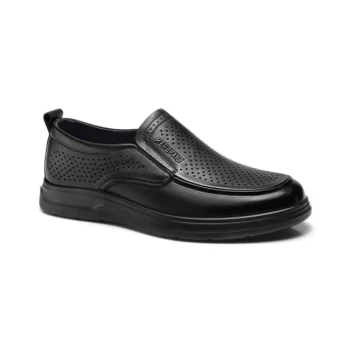
The core characteristic of a casual non-slip shoe is the intentional fusion of everyday style with enhanced-traction technology. Unlike standard fashion footwear, these shoes incorporate specific safety features—primarily in the outsole—designed to increase friction and provide a better grip on potentially slippery surfaces, all while maintaining a comfortable and versatile aesthetic.
The critical distinction is not just the material but the engineering of the outsole. A true non-slip casual shoe uses specialized rubber compounds and intricate tread patterns designed to channel liquids away and maximize contact with the ground, offering a measurable safety upgrade over a typical sneaker or loafer.
Deconstructing the Non-Slip Sole
The effectiveness of any non-slip shoe begins and ends with its sole. This is where the engineering for safety is most apparent, moving beyond simple aesthetics to functional performance.
The Material: High-Friction Rubber
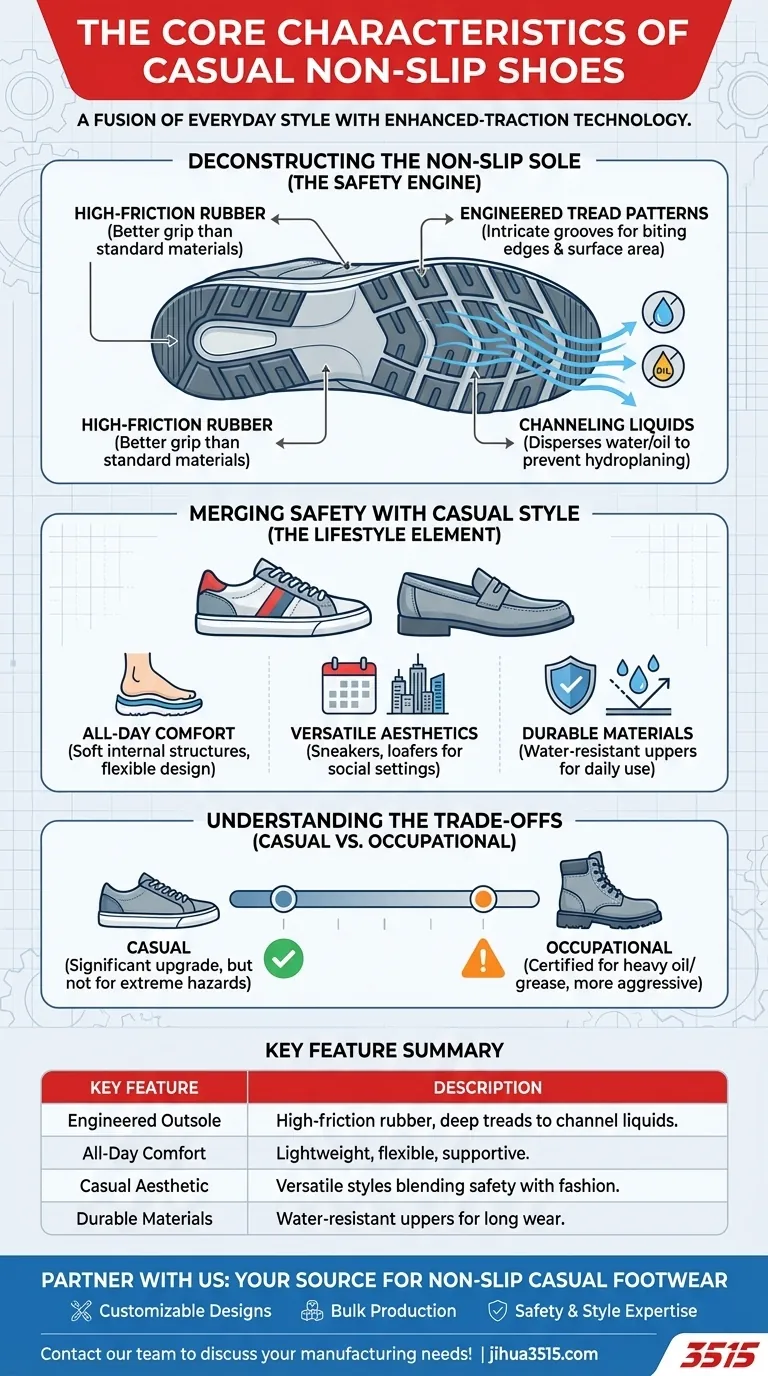
The foundation of a non-slip shoe is its high-quality rubber or synthetic rubber outsole. These materials are chosen for their naturally high coefficient of friction, which allows them to grip surfaces more effectively than the harder plastics or leather used in many fashion shoes.
The Design: Engineered Tread Patterns
A flat sole is a hazardous sole. Non-slip shoes feature intricate and deep tread patterns or grooves. This design serves two purposes: it increases the surface area of the shoe and creates sharp edges that bite into the ground for better traction.
The Goal: Channeling Liquids Away
The most critical function of a tread pattern is its ability to disperse liquids like water or oil. The channels in the sole act like tire treads, pushing fluid out from under the shoe. This prevents a layer of liquid from forming between the sole and the floor, a phenomenon known as hydroplaning, which is a primary cause of slips.
Merging Safety with Casual Style
While the sole provides the safety, the rest of the shoe must deliver on the "casual" promise. This means focusing on elements that make the shoe suitable for everyday wear.
Prioritizing All-Day Comfort
Casual non-slip shoes are designed for comfort. They often feature soft, supportive internal structures, lightweight materials, and a flexible design that allows for natural foot movement throughout the day.
Maintaining Versatility and Aesthetics
These shoes come in a variety of common styles, including sneakers, loafers, and sandals. The goal is to provide enhanced safety without looking like a piece of industrial work equipment, making them versatile enough for various social and casual settings.
Using Durable and Water-Resistant Materials
To keep your feet dry and extend the life of the shoe, the upper materials are often water-resistant. While they may use stylish materials like leather or suede, they are chosen for durability to withstand daily use in different conditions.
Understanding the Trade-offs: Casual vs. Occupational
It is crucial to recognize that "non-slip" is a spectrum. The level of protection you get from a casual shoe is different from that of a certified occupational shoe.
Slip-Resistance is Not Absolute
A casual non-slip shoe offers significantly more grip than a standard dress shoe, but it may not meet the rigorous standards required for environments with heavy oil or grease, like a professional kitchen. Occupational non-slip shoes have more aggressive tread and are often certified for specific workplace hazards.
The Compromise on Materials
To achieve a casual look and feel, these shoes may compromise on the heavy-duty construction found in work boots. They balance robust safety features with the need for lighter weight and greater flexibility, which can impact long-term durability under harsh conditions.
Making the Right Choice for Your Goal
Selecting the right shoe depends entirely on your environment and needs.
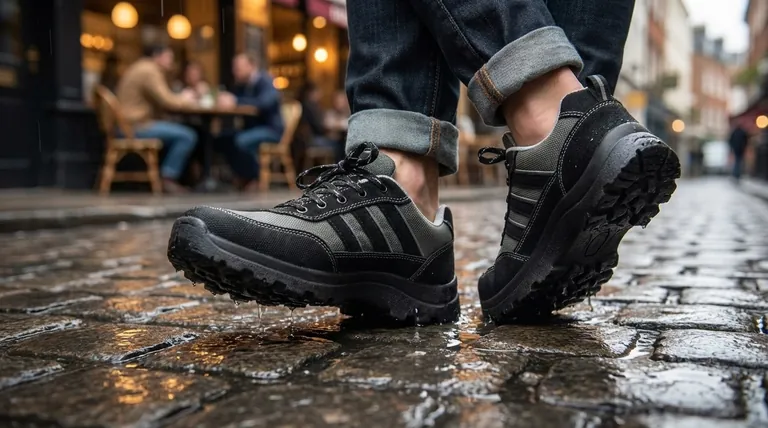
- If your primary focus is navigating wet city streets: Look for shoes with deep grooves and a softer rubber sole for maximum grip on pavement and tile.
- If your primary focus is style with an added layer of safety: Focus on casual sneakers or loafers from reputable brands that explicitly mention "traction" or "all-weather" soles in their design.
- If your primary focus is light-duty work (e.g., retail, café): Prioritize a shoe with a certified slip-resistant label and a supportive, comfortable construction for long periods of standing.
By understanding the interplay between outsole engineering and everyday comfort, you can confidently select a shoe that looks great and keeps you firmly on your feet.
Summary Table:
| Key Feature | Description |
|---|---|
| Engineered Outsole | High-friction rubber with deep tread patterns to channel liquids and prevent slips. |
| All-Day Comfort | Lightweight, flexible design with supportive internal structures. |
| Casual Aesthetic | Versatile styles (sneakers, loafers) that blend safety with everyday fashion. |
| Durable Materials | Water-resistant uppers made from leather or suede for long-lasting wear. |
Ready to Step Up Your Footwear Line?
As a large-scale manufacturer, 3515 produces a comprehensive range of non-slip casual footwear for distributors, brand owners, and bulk clients. We combine advanced safety engineering with market-leading style to create shoes that your customers will trust and love.
We offer:
- Customizable Designs: Tailor styles, materials, and sole patterns to fit your brand.
- Bulk Production: Scalable orders to meet your demand, ensuring consistent quality.
- Expertise in Safety & Style: Decades of experience fusing functional traction with casual aesthetics.
Let's create the perfect non-slip casual collection for your market.
Contact our team today to discuss your manufacturing needs and request a quote!
Visual Guide
Related Products
- Advanced KPU Athletic Safety Shoe with Steel Toe Cap Anti-Slip Rotary Lacing System
- Wholesale Comfortable Business Casual Shoes Custom Manufacturing
- Wholesale Smart Casual Sneakers with Dial Closure | Factory Direct Manufacturing
- Durable High-Traction Canvas Sneakers Wholesale & Custom Manufacturing
- Premium Suede Sport Safety Shoes for Wholesale & Bulk Orders
People Also Ask
- What are the key differences between steel toe and composite toe caps? Choose the Right Safety for Your Job
- What impact do steel toe caps have on toe skin health? Prevent Friction and Pressure in Your Safety Shoes
- What are the primary protective functions of safety shoes with steel toes in the automotive repair industry?
- What type of safety shoe is recommended for workers exposed to heavy machinery? Steel Toe Boots for Ultimate Protection
- How does defining specific friction interface models in FEA assist in predicting safety shoe toe cap failure modes?