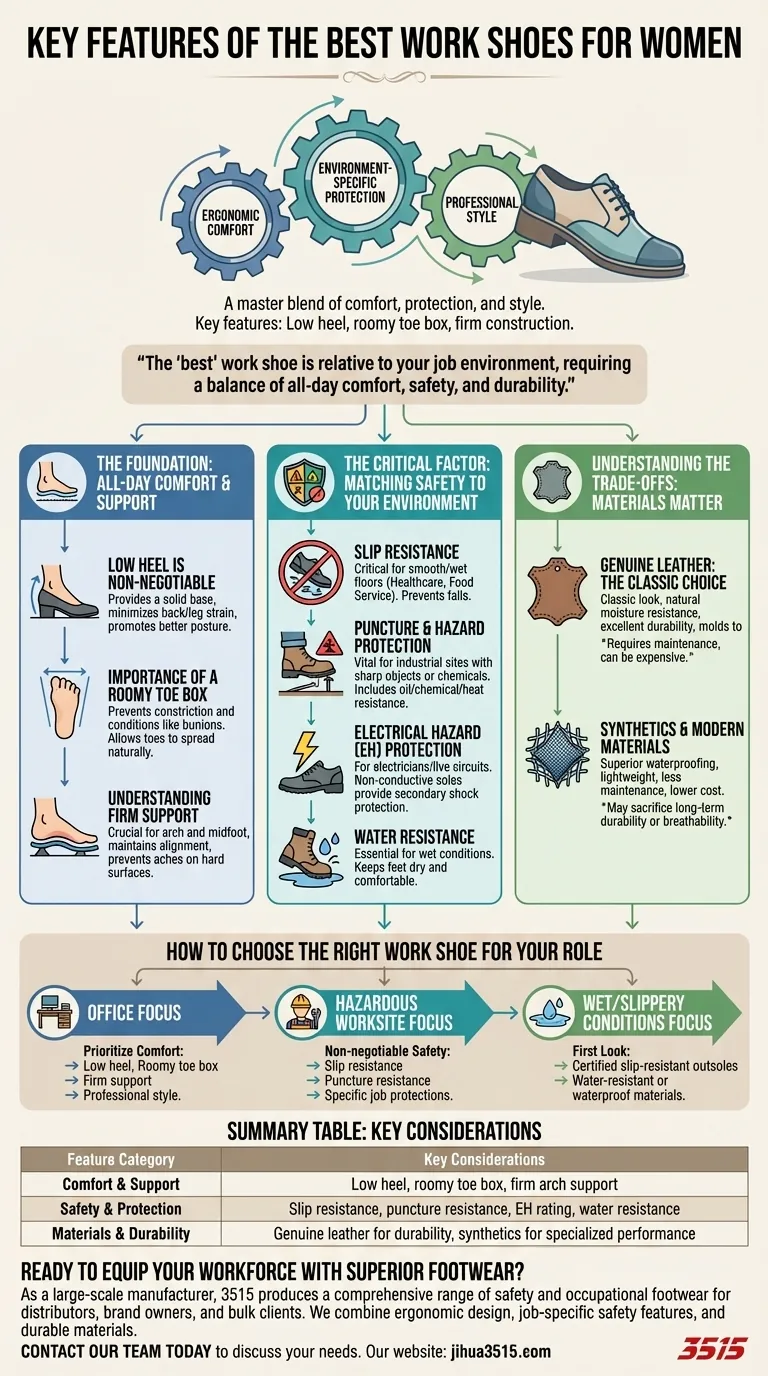
The best work shoes for women are those that masterfully blend three essential elements: ergonomic comfort, environment-specific protection, and professional style. The key features are a low heel, a toe box with ample room to prevent constriction, and firm, supportive construction to ensure comfort and stability throughout the workday.
The concept of a single "best" work shoe is a misconception. The ideal choice is always relative to your specific job environment, requiring a deliberate balance between all-day comfort, necessary safety features, and material durability.
The Foundation: All-Day Comfort and Support
Before considering any other feature, a work shoe must be comfortable. Poorly designed footwear can lead to fatigue, pain, and long-term foot problems.
Why a Low Heel is Non-Negotiable
A low, stable heel provides a solid base of support. This minimizes strain on your lower back and legs, promoting better posture and reducing fatigue over long hours.
The Importance of a Roomy Toe Box
A shoe that is too narrow in the front, or "toe box," can squish your toes together. This is not only uncomfortable but can lead to conditions like bunions. Ample room allows your toes to spread naturally as you walk.
Understanding Firm Support
Firm support, particularly through the arch and midfoot, is crucial. It helps maintain proper foot alignment, preventing the aches and pains that come from unsupported feet on hard surfaces.
The Critical Factor: Matching Safety to Your Environment
Beyond general comfort, the most important consideration is the specific hazards of your workplace. A shoe designed for an office is fundamentally different from one needed on a construction site.
Slip Resistance for Unpredictable Surfaces
For anyone working on smooth or potentially wet floors, such as in healthcare or food service, slip resistance is the most critical safety feature to prevent falls.
Puncture and Hazard Protection for Industrial Sites
In environments with sharp objects or chemicals, features like puncture resistance, oil/chemical resistance, and heat resistance are vital for protecting your feet from serious injury.
Electrical Hazard (EH) Protection for Specialized Roles
For electricians or others working around live circuits, Electrical Hazard (EH) rated shoes are designed with non-conductive soles to provide a secondary layer of protection against shock.
Water Resistance for Wet Conditions
If your job regularly exposes you to wet conditions, choosing a shoe with a water-resistant or fully waterproof construction is essential for keeping your feet dry and comfortable.
Understanding the Trade-offs: Materials Matter
The material a shoe is made from dictates its durability, maintenance requirements, and overall performance. There is no single "best" material; each comes with its own set of advantages and disadvantages.
Genuine Leather: The Classic Choice
Genuine leather offers a classic look, natural moisture resistance, and excellent durability. Over time, it molds to the shape of your foot, providing a customized and comfortable fit.
However, leather requires meticulous maintenance to keep it in good condition and can often be more expensive than synthetic alternatives.
Synthetics and Modern Materials
Modern synthetic materials often provide specialized benefits. They can offer superior waterproofing, be lighter in weight, require less maintenance, and sometimes come at a lower price point. The trade-off may be in long-term durability or breathability compared to high-quality leather.
How to Choose the Right Work Shoe for Your Role
Selecting the perfect shoe requires you to honestly assess your daily activities and environment. Use these guidelines to prioritize what matters most for your role.
- If your primary focus is an office environment: Prioritize all-day comfort with features like firm support, a roomy toe box, and a professional, low-heeled style.
- If your primary focus is a hazardous worksite: Your non-negotiable features are safety-rated, including slip resistance, puncture resistance, and any other protections specific to your job.
- If your primary focus is a role with wet or slippery conditions: Look first for certified slip-resistant outsoles and water-resistant or waterproof materials to ensure stability and comfort.
By matching the shoe’s features to your environment’s demands, you empower yourself to choose footwear that delivers safety, performance, and comfort.
Summary Table:
| Feature Category | Key Considerations |
|---|---|
| Comfort & Support | Low heel, roomy toe box, firm arch support |
| Safety & Protection | Slip resistance, puncture resistance, EH rating, water resistance |
| Materials & Durability | Genuine leather for durability, synthetics for specialized performance |
Ready to equip your workforce with superior footwear?
As a large-scale manufacturer, 3515 produces a comprehensive range of safety and occupational footwear for distributors, brand owners, and bulk clients. We combine ergonomic design, job-specific safety features, and durable materials to deliver comfort and protection that meets the demands of any work environment.
Contact our team today to discuss your specific needs and discover how we can provide the perfect work shoe solution for your customers.
Visual Guide
Related Products
- Durable Canvas Work Shoes with Rubber Lug Sole | Wholesale Manufacturer
- Wholesale Women's Leather Derby Shoes Custom Factory Production
- Custom Manufactured Air Cushion Leather Business Shoes for Wholesale
- Durable Leather Moc Toe Work Boots for Wholesale & Custom Manufacturing
- Wholesale Durable & Breathable Training Shoes for Custom Brands
People Also Ask
- What are the properties of canvas as a shoe material? A Guide to Lightweight Comfort & Style
- Why is the selection of high-strength fabric materials necessary in the production of canvas shoes and training shoes?
- What types of jobs are canvas work boots suitable for? Ideal for Light-Duty, High-Mobility Roles
- Can canvas shoes be worn in rainy conditions? The Truth About Water Resistance
- What are the functional advantages of choosing rubber soles over leather soles for work boots? Superior Safety & Durability