
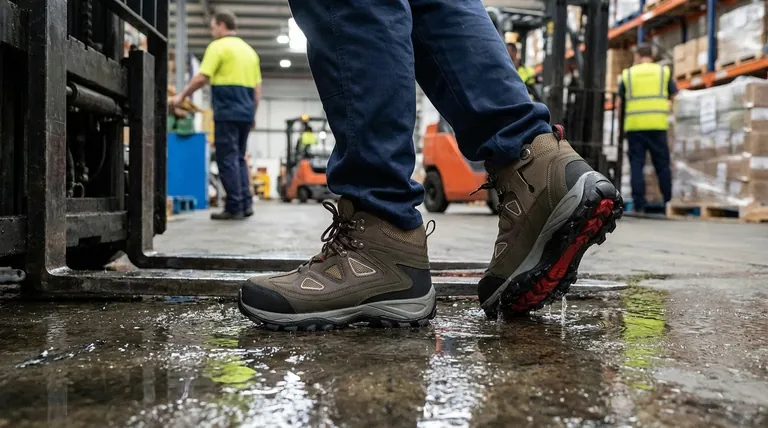
At their core, slip-resistant shoes prevent workplace accidents by using specialized materials and tread patterns engineered to dramatically increase the coefficient of friction between the shoe and the walking surface. This enhanced grip provides superior traction, giving the wearer stable footing even on wet, oily, or otherwise slick floors.
The true value of slip-resistant footwear lies not just in its grip, but in its role as a piece of specialized safety equipment. Understanding the specific hazards of your environment is the key to selecting a shoe that effectively mitigates the risk of slips, trips, and falls.
The Core Mechanism: How Grip Prevents Slips
A slip occurs when there is too little friction between your footwear and the ground. Slip-resistant shoes are designed with a single purpose: to maximize this friction under hazardous conditions.
Increasing the Coefficient of Friction
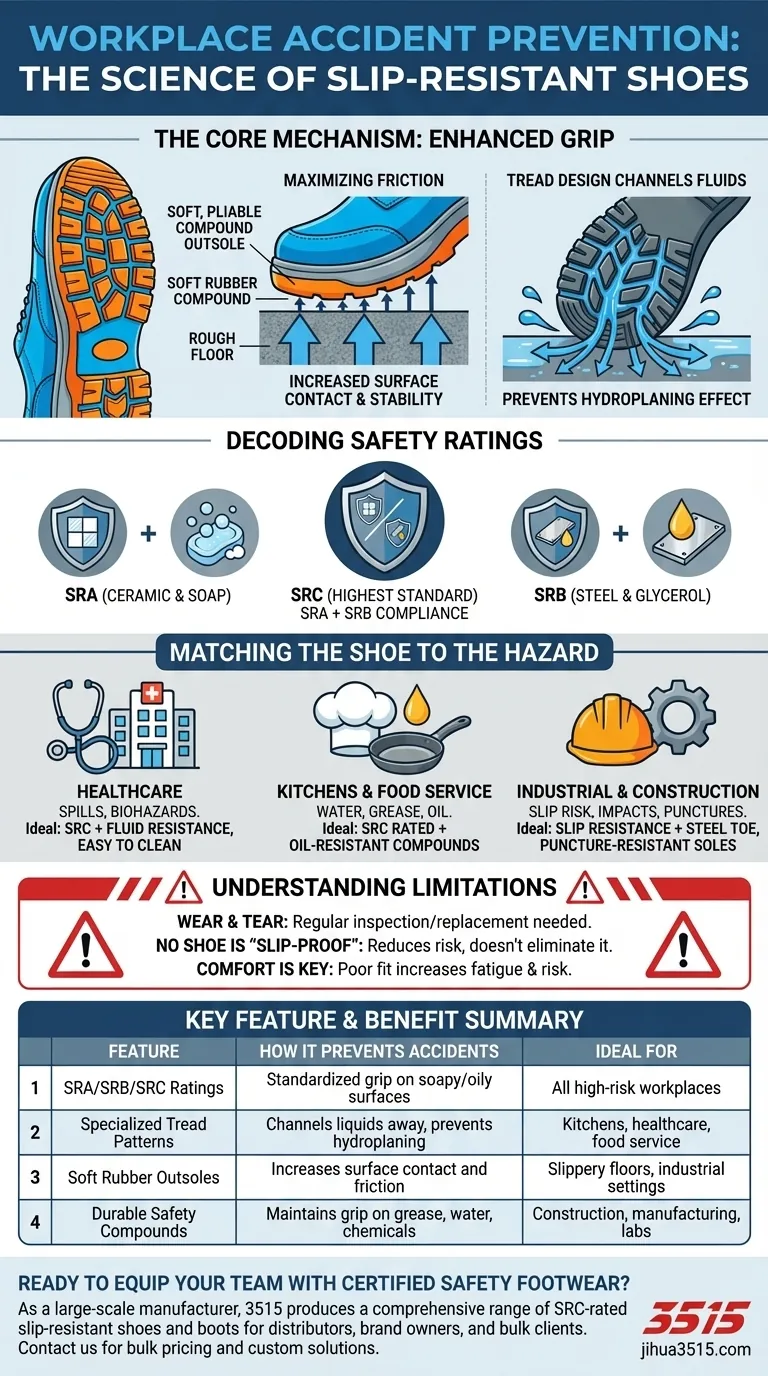
The primary principle is to use a soft, pliable rubber compound for the outsole. This material creates more surface contact with the floor, significantly increasing grip and stability compared to standard shoe materials.
The Role of Tread Design
The patterns on the bottom of the shoe are not for aesthetics. These treads are engineered to channel liquids like water, grease, and oil away from the sole's contact points, preventing a layer of fluid from causing a hydroplane effect.
Material Matters: Specialized Compounds
Slip-resistant rubber is formulated for durability and performance in challenging environments. These compounds maintain their grip and flexibility on various surfaces, from ceramic tile with soap to smooth steel with glycerol.
Not All Slip-Resistance is Created Equal
Simply choosing a shoe labeled "slip-resistant" is not enough. Professional safety footwear is tested and rated to perform under specific conditions, ensuring it is appropriate for the intended work environment.
Decoding the Safety Ratings
To standardize performance, shoes are tested against specific contaminants. Look for these ratings:
- SRA: Tested and passed on ceramic tile surfaces wetted with a soap solution.
- SRB: Tested and passed on smooth steel surfaces with glycerol (an oily substance).
- SRC: The highest standard, indicating the shoe has passed both SRA and SRB test conditions.
Matching the Shoe to the Hazard
Different jobs present unique combinations of risks. The right shoe addresses the total environment, not just the floor.
In healthcare settings, professionals face spills from various liquids and biohazards. The ideal shoe combines an SRC rating with fluid resistance and materials that are easy to clean and sanitize.
For chefs and kitchen staff, the primary risk comes from water, grease, and oil. An SRC-rated shoe is essential to prevent falls that can lead to burns or other serious injuries, ensuring a safe and efficient workflow.
On construction or industrial sites, slip resistance is just one required feature. Footwear must also incorporate steel toe protection, puncture-resistant soles, and sometimes chemical resistance or insulation.
Understanding the Limitations
Even the best safety footwear has its limits. Acknowledging these is crucial for maintaining a comprehensive safety culture.
Wear and Tear Diminishes Effectiveness
Over time, the soft rubber outsole and its intricate tread pattern will wear down. This degradation reduces the shoe's ability to grip and channel fluids, making regular inspection and replacement a necessity.
No Shoe is "Slip-Proof"
Slip-resistant shoes are designed to reduce the risk of a fall, not eliminate it entirely. They are a critical tool but must be paired with safe practices like cleaning up spills promptly and walking with caution.
Comfort and Fit Are Non-Negotiable
A poorly fitting or uncomfortable shoe is a safety hazard in itself. If footwear causes pain or distraction, it may not be worn correctly or could contribute to fatigue, increasing the overall risk of an accident.
Making the Right Choice for Your Environment
Your specific workplace hazards should dictate your choice of footwear.
- If your primary focus is a kitchen or food service environment: Select a shoe with an SRC rating that is specifically designed to resist degradation from oils and fats.
- If your primary focus is a healthcare setting: Prioritize an SRC rating combined with fluid-resistant uppers and a design that is easy to sanitize.
- If your primary focus is an industrial or construction site: Ensure that the necessary slip resistance is paired with other essential safety features like impact protection and puncture-resistant soles.
Ultimately, choosing the right slip-resistant shoe is a proactive investment in personal and team safety.
Summary Table:
| Key Feature | How It Prevents Accidents | Ideal For |
|---|---|---|
| SRA/SRB/SRC Ratings | Standardized grip on soapy or oily surfaces | All high-risk workplaces |
| Specialized Tread Patterns | Channels liquids away to prevent hydroplaning | Kitchens, healthcare, food service |
| Soft Rubber Outsoles | Increases surface contact and friction | Slippery floors, industrial settings |
| Durable Safety Compounds | Maintains grip on grease, water, and chemicals | Construction, manufacturing, labs |
Ready to Equip Your Team with Certified Safety Footwear?
As a large-scale manufacturer, 3515 produces a comprehensive range of SRC-rated slip-resistant shoes and boots for distributors, brand owners, and bulk clients. Our production capabilities ensure you get the right footwear—from kitchen non-slips to industrial safety boots—tailored to your specific workplace hazards.
Protect your workforce and reduce accident risks. Contact us today for bulk pricing and custom solutions!
Visual Guide
Related Products
- Heavy-Duty Waterproof Nubuck Safety Boots Safety Shoes for Bulk Supply
- Premium Suede Sport Safety Shoes for Wholesale & Bulk Orders
- Wholesale Durable 6-Inch Work Boots | Custom & Private Label Manufacturer
- Advanced KPU Athletic Safety Shoe with Steel Toe Cap Anti-Slip Rotary Lacing System
- Durable High-Traction Canvas Sneakers Wholesale & Custom Manufacturing
People Also Ask
- What primary protective functions do professional safety boots provide in urban solid waste recovery and waste picking processes? Discover Dual-Layer Protection.
- How do safety boots reduce cutting hazards? Essential Protection for Your Workforce
- Which organizations develop safety standards for work boots? Ensure Compliance & Worker Safety
- What are the common types of safety boots and their primary uses? A Guide to Industrial Footwear
- Why is ankle and arch support important in safety footwear? Prevent Injury & Fatigue


















