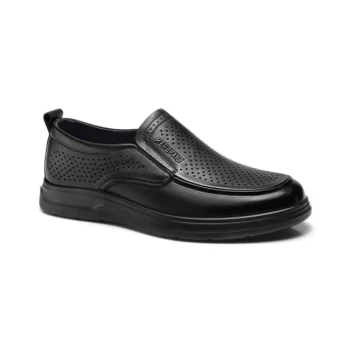
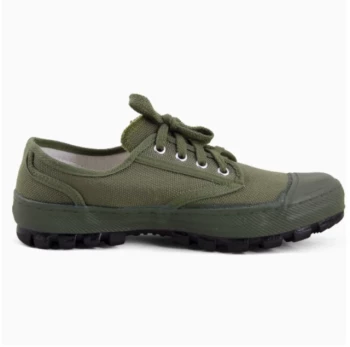
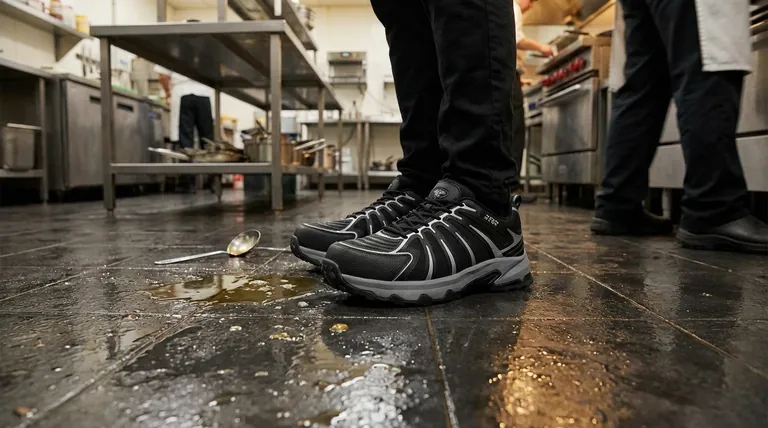
You should wear non-slip shoes in any environment where you anticipate a loss of traction due to slippery surfaces. This most commonly includes workplaces with wet or oily floors like commercial kitchens and hospitals, outdoor settings with uneven or slick terrain, and any daily situation where a slip could lead to significant injury.
Choosing to wear non-slip shoes is fundamentally a decision about risk mitigation. While essential in obviously hazardous jobs, their true value lies in proactively protecting yourself in everyday situations where slick surfaces can unexpectedly lead to serious falls.
The Core Principles of Non-Slip Footwear
Understanding how non-slip shoes work is key to knowing when to use them. Their effectiveness isn't magic; it's a result of specific design choices that address the physics of friction.
The Science of Grip
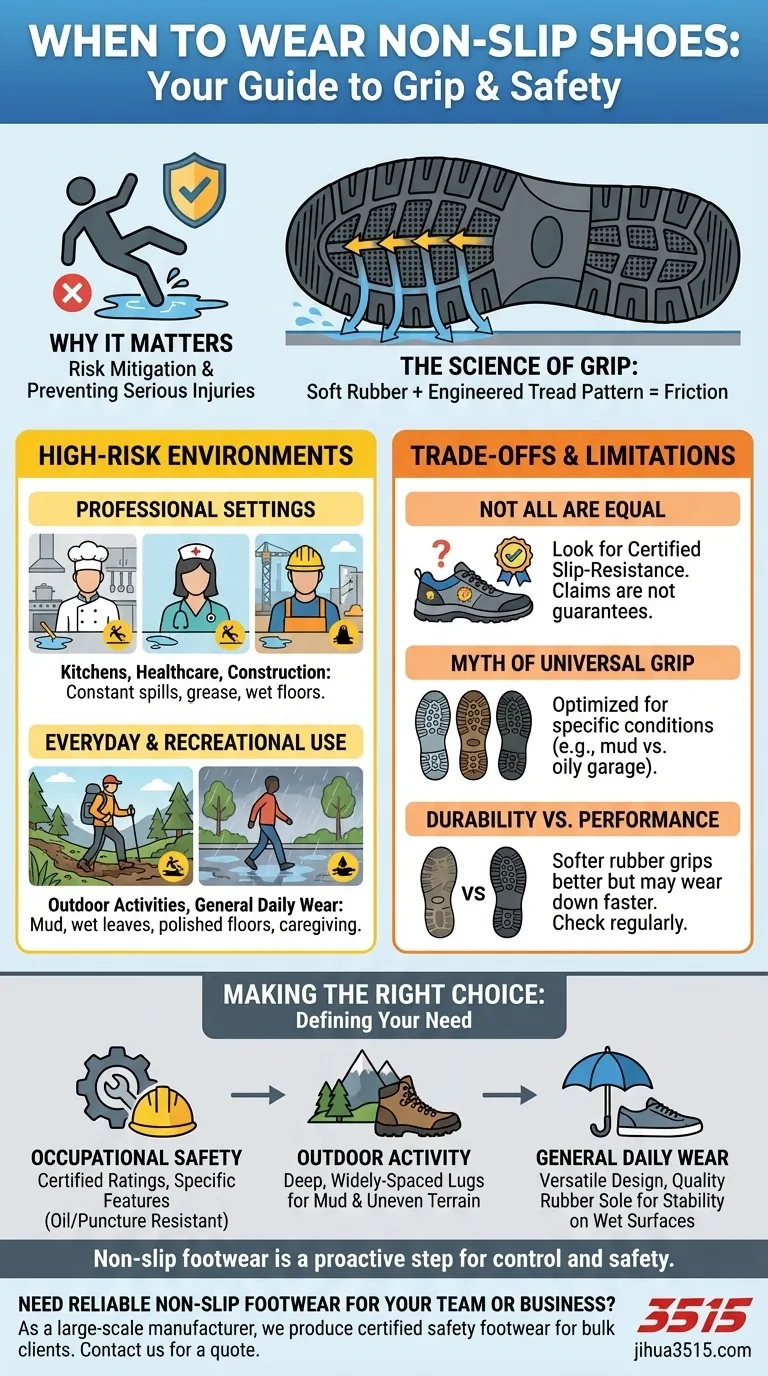
A shoe's ability to prevent a slip comes down to two primary features. The first is the sole material, which is typically made of soft rubber or a synthetic equivalent. This material is designed to create a higher coefficient of friction against a surface, even when wet.
The second feature is the tread pattern. Unlike a smooth-soled shoe that can trap a layer of liquid and hydroplane, non-slip shoes have intricate, open-ended channels. These patterns are engineered to push liquids out from under the sole, allowing the rubber to make direct contact with the ground.
Comfort, Fatigue, and Safety
Proper footwear does more than just grip the floor. Non-slip shoes often include thicker, more supportive soles to cushion the foot and reduce physical strain.
Reducing fatigue is a critical, often overlooked, safety benefit. A tired worker or individual is less attentive and has slower reaction times, making them more susceptible to trips and falls, regardless of their footwear.
Identifying High-Risk Environments
While the need is obvious in some places, many common environments present a significant slip risk. Being able to recognize them is the first step toward preventing a fall.
Professional and Occupational Settings
Certain industries have a clear and present need for non-slip footwear due to constant exposure to hazards.
- Food Service & Kitchens: Constant spills, grease, and wet floors make this a primary environment for slip-and-fall accidents.
- Healthcare: Hospital and clinic floors are frequently mopped and subject to liquid spills, demanding reliable traction for fast-moving staff.
- Construction & Manual Labor: Workers navigate uneven ground, debris, and wet conditions, where stable footing is essential.
Everyday and Recreational Use
The need for non-slip shoes extends far beyond the workplace. Anyone can benefit from enhanced traction in daily life.
- Outdoor Activities: Hikers and trail runners require deep, aggressive tread to handle mud, wet leaves, and loose terrain.
- General Consumers & Caregivers: Navigating rain-slicked pavement, polished grocery store floors, or helping a less stable person requires dependable footing.
Understanding the Trade-offs and Limitations
No shoe is perfect for every situation. Being an informed consumer means understanding the limitations and potential downsides of non-slip footwear.
Not All "Slip-Resistant" Shoes are Equal
The term "slip-resistant" is not always a regulated standard. Look for shoes that have been tested and certified by a third-party organization to ensure they meet specific safety benchmarks. A simple marketing claim is not a guarantee of performance.
The Myth of Universal Grip
A shoe designed for wet kitchen floors may not perform well on icy surfaces or in an oily mechanic's garage. The tread pattern and rubber compound are optimized for specific conditions. A deep, widely-spaced tread for mud is different from a fine, intricate pattern for water.
Durability vs. Peak Performance
The soft rubber compounds that provide the best grip can sometimes wear down more quickly than the harder soles found on standard shoes. This is a natural trade-off; you may be exchanging a longer lifespan for a higher degree of safety. Regularly check your soles for wear.
Making the Right Choice for Your Goal
To select the correct footwear, you must first define your primary need.
- If your primary focus is occupational safety: Prioritize shoes with certified slip-resistance ratings and features specific to your work environment, such as oil resistance or a puncture-proof sole.
- If your primary focus is outdoor activity: Look for deep, widely-spaced lugs in the tread pattern that are designed to shed mud and grip uneven terrain effectively.
- If your primary focus is general daily wear: Choose a versatile shoe that balances comfort and a quality rubber sole, ensuring stability on common wet surfaces like polished floors or pavement.
Ultimately, selecting the right footwear is a simple, proactive step to maintain control and safety in an unpredictable world.
Summary Table:
| Primary Use Case | Key Shoe Features | Ideal Environments |
|---|---|---|
| Occupational Safety | Certified slip-resistance, oil-resistant soles | Commercial kitchens, hospitals, construction sites |
| Outdoor Activity | Deep, widely-spaced tread lugs | Hiking trails, muddy or uneven terrain |
| General Daily Wear | Versatile design, quality rubber sole, comfort | Wet pavement, grocery stores, caregiving |
Need reliable non-slip footwear for your team or business?
As a large-scale manufacturer, 3515 produces a comprehensive range of certified non-slip shoes and boots for distributors, brand owners, and bulk clients. Our production capabilities encompass all types of occupational and safety footwear, ensuring your workforce has the traction and protection they need.
Contact us today for a quote and discover how we can meet your bulk footwear requirements with quality and efficiency.
Visual Guide
Related Products
- Advanced KPU Athletic Safety Shoe with Steel Toe Cap Anti-Slip Rotary Lacing System
- Premium Suede Sport Safety Shoes for Wholesale & Bulk Orders
- Durable High-Traction Canvas Sneakers Wholesale & Custom Manufacturing
- Heavy-Duty Waterproof Nubuck Safety Boots Safety Shoes for Bulk Supply
- Durable Goodyear Welt Leather Work Boots for Wholesale & Private Label
People Also Ask
- What are the key differences between steel toe and composite toe caps? Choose the Right Safety for Your Job
- What impact do steel toe caps have on toe skin health? Prevent Friction and Pressure in Your Safety Shoes
- What are the primary protective functions of safety shoes with steel toes in the automotive repair industry?
- What type of safety shoe is recommended for workers exposed to heavy machinery? Steel Toe Boots for Ultimate Protection
- How does defining specific friction interface models in FEA assist in predicting safety shoe toe cap failure modes?