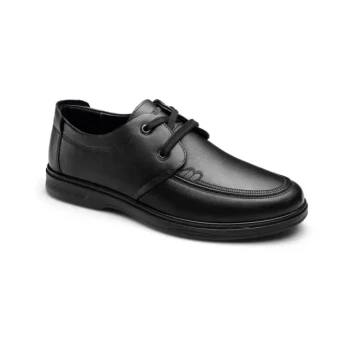
The defining characteristic of a non-slip server shoe is an outsole specifically engineered to maximize grip on hazardous surfaces. This is achieved through a combination of a soft rubber material and a complex tread pattern designed to channel away liquids like water, grease, and oil. While grip is the primary safety feature, these shoes also integrate elements for comfort and agility to endure long shifts.
The terms "non-slip" and "slip-resistant" are used interchangeably but are not officially regulated. True slip resistance comes from the physical design of the shoe's outsole—its material and tread pattern—not from the marketing label itself.
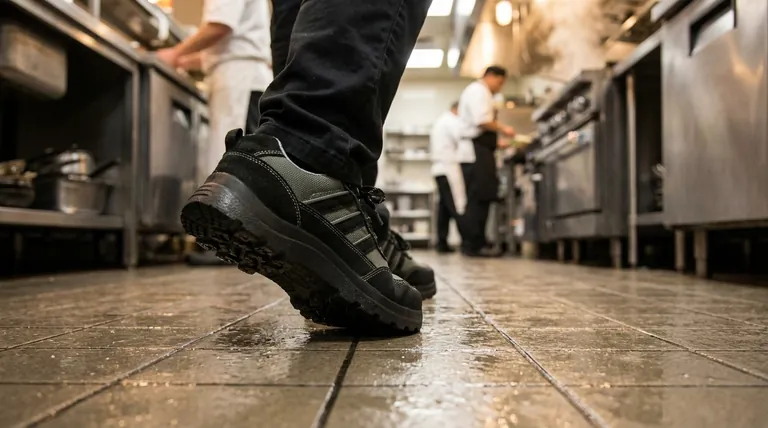
The Anatomy of a High-Grip Outsole
The foundation of any non-slip shoe is the outsole. Its effectiveness is determined by two key factors working in tandem: the material it's made from and the pattern of its tread.
The Critical Role of Material
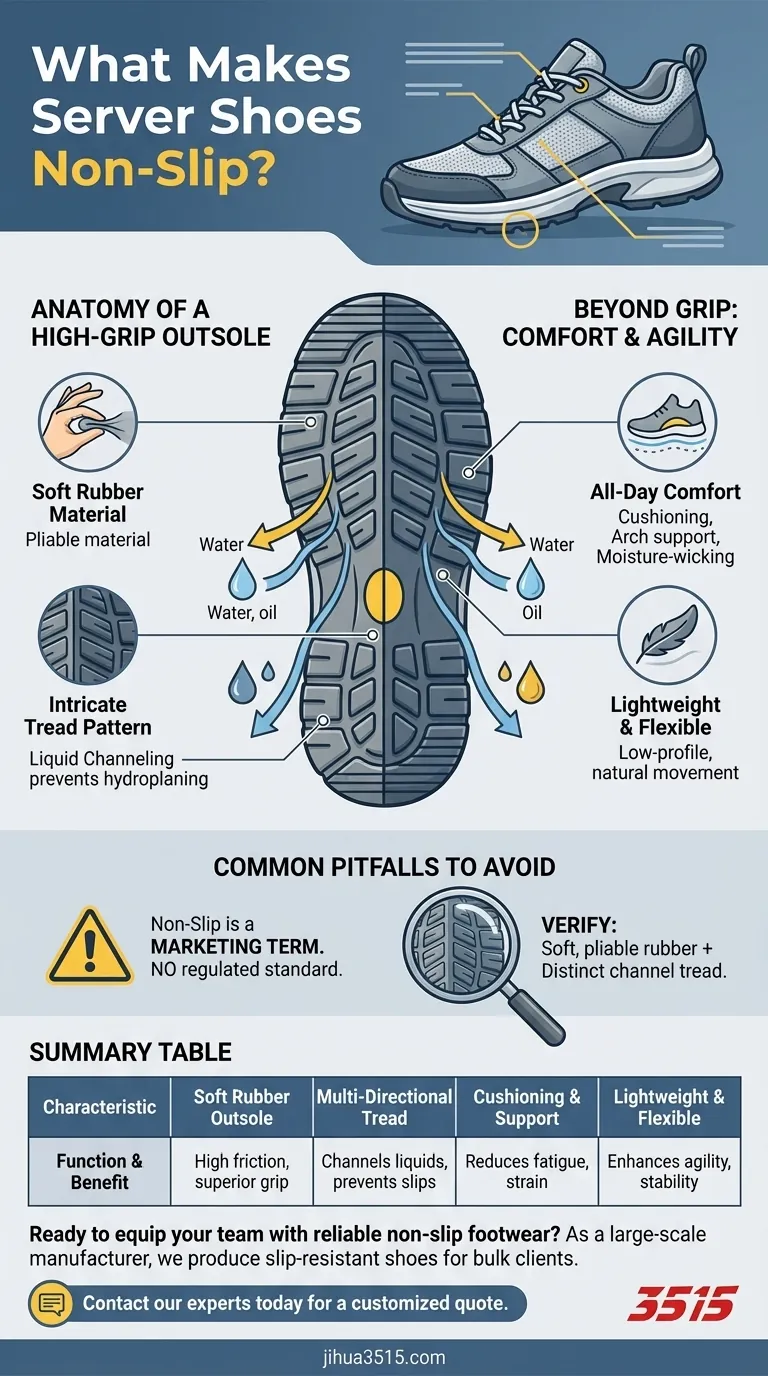
The most effective non-slip shoes use a soft rubber compound for the outsole. Unlike harder plastics or leather, soft rubber has a higher coefficient of friction, allowing it to better conform and stick to microscopic imperfections in a floor surface.
This pliability ensures more of the shoe's sole remains in contact with the ground, providing a more reliable grip, especially on smooth, wet tile or linoleum.
The Importance of Tread Pattern
A flat sole can easily hydroplane on a thin layer of liquid. To prevent this, non-slip shoes feature intricate tread patterns with deep grooves or channels.
These patterns are engineered to do one job: quickly channel water, oil, and other liquids out from under the shoe. This allows the rubber to make direct contact with the floor, creating the friction needed to prevent a fall. Look for small, multi-directional patterns, as they provide grip when moving in any direction.
Beyond Grip: Features for Service Professionals
For a shoe to be truly effective for a server, it must do more than just prevent slips. It needs to support the user through long hours of standing, walking, and carrying loads.
All-Day Comfort and Support
Constant movement on hard surfaces requires proper support. Quality server shoes include features like cushioning and adequate arch support to reduce strain on the feet, knees, and back.
Many also feature padded collars to prevent chafing and moisture-wicking linings to keep feet dry and comfortable throughout a demanding shift.
Lightweight and Flexible Construction
Heavy, rigid shoes lead to faster fatigue. Server shoes are designed to be lightweight and flexible to promote agility and natural foot movement.
A low-profile design keeps the foot closer to the ground, enhancing stability and reducing the risk of ankle rolls when making quick turns or navigating a busy floor.
Common Pitfalls to Avoid
Understanding the limitations and realities of shoe marketing is crucial for making an informed decision. The most common mistake is trusting a label without verifying the physical features.
"Non-Slip" is a Marketing Term
There is no regulated industry standard or government definition for "non-slip" or "slip-resistant." This means any brand can use the term, regardless of the shoe's actual performance.
Because of this, you must become your own inspector. Never purchase a shoe for safety based on the name alone.
What to Verify Yourself
Always flip the shoe over and examine the outsole. Confirm that it is made of a soft, pliable rubber and has a distinct, channel-like tread pattern. If the sole feels hard and plastic-like or is relatively smooth, it will not provide reliable protection on slick floors.
Making the Right Choice for Your Goal
Selecting the best shoe depends on balancing the specific demands of your work environment with your personal comfort needs.
- If your primary focus is maximum safety in wet or greasy areas: Prioritize a shoe with a very soft rubber outsole and a deep, intricate tread pattern designed for channeling liquids.
- If your primary focus is reducing fatigue during long shifts: Look for excellent arch support, generous cushioning, and a lightweight overall construction.
- If your primary focus is agility and fast-paced movement: Choose a flexible, low-profile shoe that allows for quick pivots and natural foot movement without feeling restrictive.
Ultimately, a properly selected non-slip shoe is a critical piece of professional equipment that ensures both your safety and your performance.
Summary Table:
| Key Characteristic | Function & Benefit |
|---|---|
| Soft Rubber Outsole | Provides a high coefficient of friction, conforming to floor surfaces for superior grip. |
| Multi-Directional Tread Pattern | Channels water, grease, and oil away to prevent hydroplaning and slips. |
| Cushioning & Arch Support | Reduces fatigue and strain during long shifts on hard floors. |
| Lightweight & Flexible Design | Enhances agility and stability for fast-paced movement. |
Ready to equip your team with reliable, high-performance non-slip footwear?
As a large-scale manufacturer, 3515 produces a comprehensive range of slip-resistant shoes and boots for distributors, brand owners, and bulk clients. Our production capabilities encompass all types of occupational footwear, engineered with the precise characteristics outlined above to ensure safety and comfort.
We can help you source or develop the perfect non-slip solution for your market. Contact our experts today to discuss your needs and receive a customized quote.
Visual Guide
Related Products
- Wholesale Comfort Leather Business Shoes with Dial Lacing System
- Wholesale Comfortable Business Casual Shoes Custom Manufacturing
- Custom Manufactured Air Cushion Leather Business Shoes for Wholesale
- Wholesale Modern Business Shoes with Dial Closure System for Bulk Orders
- Wholesale Modern Comfort Shoes with Dial Closure for Private Label & Bulk Orders
People Also Ask
- What kind of shoes do businessmen wear? Master the Dress Code for Professional Success
- What are the essential business shoes every man should own? Build a Professional Wardrobe Foundation
- What type of boots are suitable for challenging weather conditions in a business setting? | Durable & Professional Footwear
- How does leather compare to other shoe materials in terms of durability and comfort? A Material Guide for Footwear
- What are the options for waterproofing leather shoes? Protect Your Footwear for the Long Haul