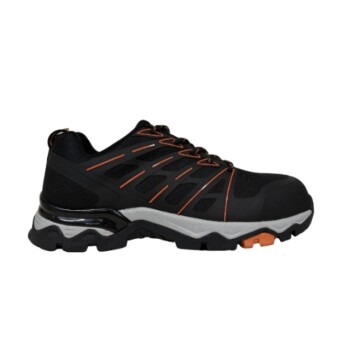
Integrated force plates act as the analytical foundation for biomechanical footwear testing. Their primary function is the high-frequency collection of Ground Reaction Forces (GRF) occurring during the walking cycle. This data provides the objective mechanical parameters necessary to calculate internal body stresses, such as joint moments and muscle contraction forces.
By quantifying the interaction between the foot and the floor, force plates allow researchers to look beyond the shoe's outer shell. They reveal the actual physical performance of midsole materials, specifically regarding how well they handle impact cushioning and energy transformation.
The Mechanics of Data Collection
Capturing Ground Reaction Forces (GRF)
The fundamental role of the integrated force plate is to capture Ground Reaction Forces.
When a worker walks, the force they exert on the ground is returned equally by the ground. The force plate measures this return energy at a high frequency to create a detailed profile of the walking process.
Establishing Boundary Conditions
The data collected serves as the critical "boundary conditions" for biomechanical modeling.
Without accurate GRF data, it is impossible to reliably calculate joint moments or muscle contraction forces. These calculations are essential for understanding the physical toll a specific shoe design takes on the wearer’s body over time.
Evaluating Material Performance
Analyzing Midsole Efficiency
Force plates are the primary tool for testing the efficacy of midsole materials.
By analyzing changes in GRF, researchers can determine the shoe's ability to provide impact cushioning. They can also measure energy transformation, revealing how much energy is absorbed by the material versus how much is returned to the walker.
Assessing Joint Protection
Supplementary measurements, such as loading rates, help evaluate how sole structures mitigate impact loads.
This analysis identifies how footwear influences foot strike patterns, such as inducing a rear-foot strike. This data is vital for validating the joint protection capabilities of safety footwear designs.
Understanding the Trade-offs
The Scope of Measurement
While force plates are precise, they primarily measure kinetic parameters (forces).
They do not directly measure user comfort or sensory perception. A shoe might demonstrate excellent force absorption data on a plate but still feel uncomfortable due to fit or thermal properties.
Individual Variability
Force platforms can capture the global position of the Center of Pressure (COP) and individual force application habits.
However, data can vary significantly based on the wearer. Differences in friction perception and gait between individuals mean that force plate data must often be normalized or contextually analyzed to be universally applicable.
Making the Right Choice for Your Goal
When interpreting force plate data for safety footwear, focus on the metric that aligns with your specific objective.
- If your primary focus is Injury Prevention: Prioritize data on joint moments and loading rates to ensure the footwear minimizes stress on knees and ankles.
- If your primary focus is Fatigue Reduction: Look for energy transformation metrics that indicate how well the midsole returns energy to the wearer during the walking cycle.
Force plate data transforms footwear testing from a subjective trial into an objective engineering discipline.
Summary Table:
| Metric Category | Data Collected | Performance Insight |
|---|---|---|
| Kinetic Forces | Ground Reaction Forces (GRF) | Internal joint stress and muscle contraction loads |
| Midsole Efficiency | Loading rates & Energy return | Impact cushioning and fatigue reduction effectiveness |
| Stability & Balance | Center of Pressure (COP) | User gait patterns and global balance support |
| Boundary Conditions | High-frequency gait profiles | Objective mechanical parameters for biomechanical modeling |
Elevate Your Footwear Standards with 3515 Expertise
As a large-scale manufacturer serving distributors and brand owners, 3515 offers comprehensive production capabilities for all footwear types, anchored by our flagship Safety Shoes series. Our extensive portfolio covers work and tactical boots, outdoor shoes, training shoes, and sneakers, as well as Dress & Formal shoes to meet diverse bulk requirements.
By leveraging advanced biomechanical insights like force plate analysis, we ensure our footwear delivers superior impact cushioning and joint protection. Partner with us to provide your customers with scientifically validated performance and comfort.
Ready to scale your inventory with high-performance safety footwear? Contact us today to discuss your bulk manufacturing needs!
References
- Judith Osterloh, Rainer Bader. The effect of different midsole materials in safety shoes on perceived comfort, muscle activities, and biomechanical parameters during walking – a musculoskeletal modelling approach. DOI: 10.1080/19424280.2025.2472249
This article is also based on technical information from 3515 Knowledge Base .
Related Products
- Premium Suede Sport Safety Shoes for Wholesale & Bulk Orders
- Premium Lightweight Safety Shoes for Wholesale & Bulk Orders
- Wholesale Anti-Smash & Puncture-Proof Safety Shoes Custom Manufacturing for Brands
- Premium KPU Injection Athletic Style Safety Shoes
- Premium Safety Shoes with Rotating Buckle Safety Sneakers
People Also Ask
- What industries have specific OSHA footwear requirements? Ensure Compliance & Protect Your Workforce
- What are the primary functions of professional safety shoes? Maximize Safety in Water Supply Confined Spaces
- What role do specialized safety shoes play in preventing falls? Engineering Stability in Industrial Environments
- Why must safety training be synchronized with the provision of physical safety shoes? Achieve Optimal Workplace Protection
- What are the technical advantages of integrating sensors into safety shoes? Achieve Superior Motion Capture Precision