
Under no circumstances should you use a hairdryer or place boots directly on a radiator to dry them before applying a waterproofing treatment. This application of high, direct heat can cause the boot's upper materials, particularly leather, to blister and crack, permanently damaging the boot and compromising its existing waterproof integrity.
The core principle to remember is that rapid, intense heat is the enemy of modern footwear. It damages the boot's core materials and structural adhesives, leading to irreversible failure long before the end of its natural lifespan.
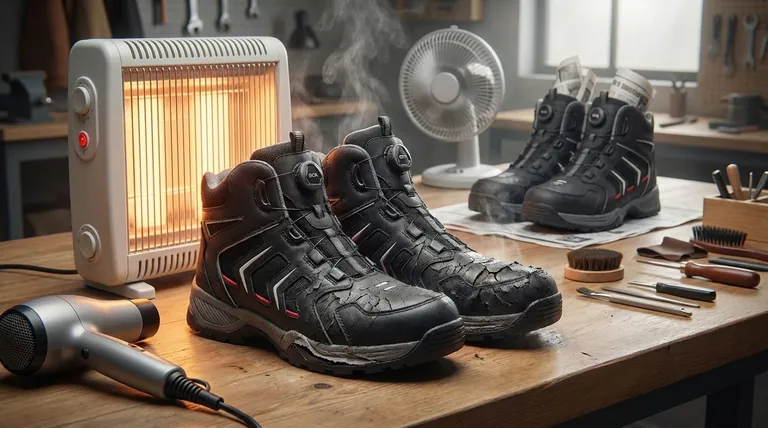
The Damage Caused by High, Direct Heat
Using a high-heat source like a hairdryer or radiator creates a false economy of speed. While it dries the boot quickly, it does so by inflicting serious, often invisible, damage to its construction.
Material Degradation: Cracking and Blistering
Leather and synthetic uppers are not designed to withstand concentrated heat. For leather, this intense heat rapidly draws out the natural oils that keep it supple and strong, causing it to become brittle and prone to cracking. Both leather and synthetics can blister, creating weak points that will fail under stress.
Weakening Adhesives and Seams
Modern boots rely heavily on specialized adhesives to bond the outsole, midsole, and upper together. High heat can soften or even melt these glues, leading to delamination—where the sole begins to separate from the rest of the boot. It can also damage the seam-sealing tape used in waterproof liners like GORE-TEX, creating pathways for water to enter.
Warping the Boot's Shape
Rapid and uneven drying can cause the materials to shrink and warp. This permanently alters the boot's carefully engineered shape, leading to an improper fit, discomfort, and painful pressure points on your feet.
Understanding the Trade-off: Speed vs. Longevity
The temptation to quickly dry your boots is understandable, especially when you need them for the next day. However, this is a critical moment where patience directly impacts your gear's performance and value.
The Illusion of a Quick Fix
A hairdryer might get the surface of your boot dry in minutes, but this is a purely superficial solution. It often leaves moisture trapped deeper within the materials while simultaneously causing the damage described above.
The Reality of Irreversible Damage
The time you save by using a hairdryer is insignificant compared to the cost of replacing a pair of high-quality boots. Cracks in leather, delaminated soles, and warped materials are not repairable, and they will effectively end the functional life of your footwear.
The Correct Way to Prepare Boots for Waterproofing
Proper preparation is the key to effective waterproofing and long-term boot health. The process should be slow, gentle, and methodical.
Step 1: Thorough Cleaning
You must always clean your boots before treating them. As noted, dirt, mud, and grime create a physical barrier that prevents waterproofing treatments from bonding effectively with the boot's surface. This leads to patchy coverage and poor performance.
Step 2: The Proper Drying Technique
The safest and most effective way to dry your boots is to allow for slow, even air circulation. Remove the insoles and laces to open the boot up completely. Loosely stuff the boots with newspaper or a small towel, which will help draw moisture out from the inside. Place them in a dry, well-ventilated area away from any direct heat sources.
Making the Right Choice for Your Boots
Your approach to drying your boots directly determines how long they will last and how well they will protect you.
- If your primary focus is maximum lifespan and performance: Always use the slow, air-drying method with newspaper in a ventilated room, as this preserves the integrity of all materials.
- If your primary focus is slightly faster (but still safe) drying: Place a small, room-temperature fan a few feet away from your boots to increase air circulation without applying damaging heat.
Protecting your investment in quality footwear requires patience, not shortcuts.
Summary Table:
| Drying Method | Impact on Boots | Result |
|---|---|---|
| Hair Dryer / Radiator | Rapid, intense heat | Cracks leather, weakens adhesives, warps shape |
| Air Drying (Recommended) | Slow, gentle air circulation | Preserves materials, maintains waterproof integrity, extends lifespan |
Protect your inventory and ensure customer satisfaction with durable, high-performance footwear. As a large-scale manufacturer, 3515 produces a comprehensive range of boots and shoes for distributors, brand owners, and bulk clients. Our expertise in material science and construction ensures your products are built to last. Contact us today to discuss your manufacturing needs and deliver superior quality to your market.
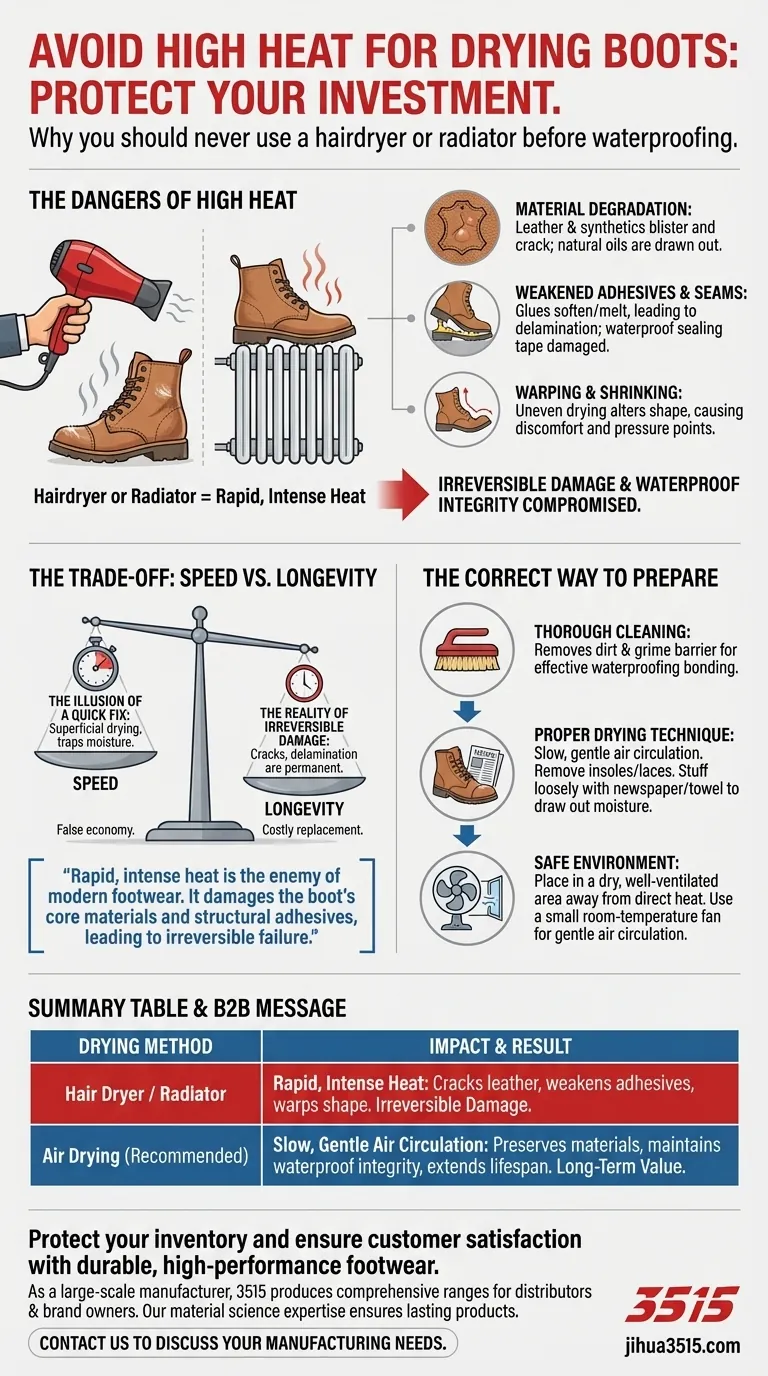
Visual Guide
Related Products
- Wholesale Durable Safety Boots | Custom Steel Toe & Puncture-Resistant Manufacturing
- Premium Wholesale Tactical Style Safety Shoes Boots with Quick Lacing
- Durable Goodyear Welt Leather Work Boots for Wholesale & Private Label
- Durable Leather Work Boots for Wholesale & Custom Manufacturing
- Premium Wholesale Waterproof Safety Boots High Performance Protection for Industrial Markets
People Also Ask
- Why is proper storage important for safety boots? Preserve Protection and Extend Lifespan
- What are the consequences of not wearing safety boots? Protect Your Finances and Career
- What materials are commonly used for outsoles in safety boots? A Guide to Durability, Grip, and Comfort
- What are the key features of safety boots? Essential Protection for Hazardous Workplaces
- How should safety boots be cleaned to avoid damage? A Gentle Guide to Preserve Your Boots



















