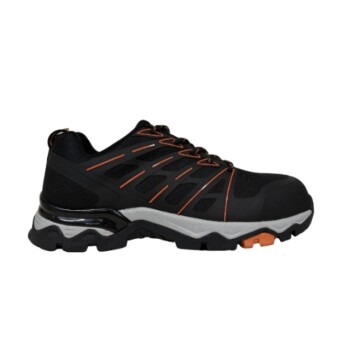
Applying lubricants to test surfaces serves a critical diagnostic function: it compels safety footwear to demonstrate performance under worst-case scenarios. By introducing agents like oil, water, or soapy liquid, testers create a controlled environment that mimics the most treacherous industrial and outdoor conditions.
The application of these contaminants creates a "lubrication film" that fundamentally alters the interface between the shoe and the ground. This process allows experts to isolate and measure the specific efficiency of tread patterns in expelling liquid, providing the data necessary to establish rigorous safety standards.
The Mechanics of Contamination
Simulating Extreme Conditions
The primary purpose of using lubricants is to replicate hazardous environments found in real-world operations.
Standard dry testing fails to account for the risks inherent in greasy kitchens, wet factory floors, or outdoor construction sites.
By applying specific contaminants, testers can evaluate how a shoe performs when the physical properties of the walking surface are compromised.
The Lubrication Film
When applied to a test surface, liquids create a physical barrier—a lubrication film—between the footwear outsole and the ground.
This film disrupts direct contact, significantly reducing the natural friction that keeps a worker stable.
The test challenges the shoe to penetrate this film to re-establish contact with the underlying surface.
Evaluating Footwear Performance
Friction Differential Analysis
Testers evaluate safety by comparing friction levels before and after the introduction of lubricants.
This comparison reveals the drastic shift in grip caused by the contaminant.
Quantifying this drop in friction provides vital data on how reliable the footwear remains when conditions deteriorate.
Testing Drainage Efficiency
The presence of a lubrication film specifically tests the efficiency of the footwear's tread pattern.
Just as a car tire must disperse rain, a safety shoe must channel fluids away from contact points.
This test measures the tread's ability to expel liquids, preventing the "hydroplaning" effect that leads to slips and falls.
Understanding the Constraints
Specificity of Media
It is important to note that different lubricants test different physical interactions.
Soapy water tests low-viscosity slip resistance, while oil tests high-viscosity adherence.
Therefore, data derived from a water test cannot always be extrapolated to predict performance in an oily environment; the "drainage" mechanics required may differ.
Making the Right Choice for Your Goal
Understanding how lubricants assist in testing allows you to interpret safety ratings with greater precision.
- If your primary focus is Industrial Procurement: Prioritize footwear tested against the specific contaminant (oil vs. water) most prevalent in your facility to ensure relevant protection.
- If your primary focus is Product Design: Focus on tread patterns that show the smallest delta between dry and lubricated friction levels, indicating superior drainage efficiency.
Ultimately, rigorous lubricant testing ensures that safety ratings rely on empirical performance data rather than theoretical assumptions.
Summary Table:
| Test Factor | Lubricant Type | Evaluation Goal |
|---|---|---|
| Surface Simulation | Oil, Water, Soap | Replicating hazardous real-world industrial environments |
| Friction Analysis | Comparative Media | Measuring the drop in grip from dry to contaminated states |
| Drainage Testing | Fluid Contaminants | Assessing tread efficiency in expelling liquids and preventing hydroplaning |
| Material Adherence | High-Viscosity Oil | Testing the outsole's ability to maintain contact on greasy surfaces |
Partner with 3515 for Certified Safety Footwear Solutions
As a premier large-scale manufacturer serving global distributors and brand owners, 3515 leverages rigorous testing data to deliver footwear that excels in the most treacherous conditions. Our flagship Safety Shoes series is engineered for superior drainage and slip resistance, ensuring maximum protection against oil and chemical contaminants.
From tactical boots and training sneakers to formal dress shoes, our comprehensive production capabilities are designed to meet your diverse bulk requirements with uncompromising quality. Contact us today to discuss your procurement needs and discover how our expertise can strengthen your product portfolio.
References
- J. O. Abere, J. S. Ibinaiye. Slip Resistance (Friction) and Safe Walk Characteristics of Selected Shoe Soles on Floor Tiles in Nigeria. DOI: 10.37745/bjmas.2022.04210
This article is also based on technical information from 3515 Knowledge Base .
Related Products
- Premium Suede Sport Safety Shoes for Wholesale & Bulk Orders
- Premium Lightweight Safety Shoes for Wholesale & Bulk Orders
- Wholesale Anti-Smash & Puncture-Proof Safety Shoes Custom Manufacturing for Brands
- Premium KPU Injection Athletic Style Safety Shoes
- Premium Safety Shoes with Rotating Buckle Safety Sneakers
People Also Ask
- What industries have specific OSHA footwear requirements? Ensure Compliance & Protect Your Workforce
- What are the primary functions of professional safety shoes? Maximize Safety in Water Supply Confined Spaces
- What role do specialized safety shoes play in preventing falls? Engineering Stability in Industrial Environments
- How Specialized Footwear Impacts Side-Cutting Performance and Injury Risk Assessment
- How do specialized safety shoes protect against battery maintenance injuries? Prevent Impact and Chemical Burns