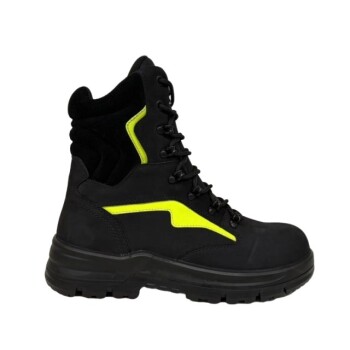
For any employer, a protective footwear program is a direct investment in the company's financial health and operational stability. The primary benefit is a significant reduction in both direct and indirect workers' compensation costs, achieved by mitigating the frequency and severity of workplace foot injuries.
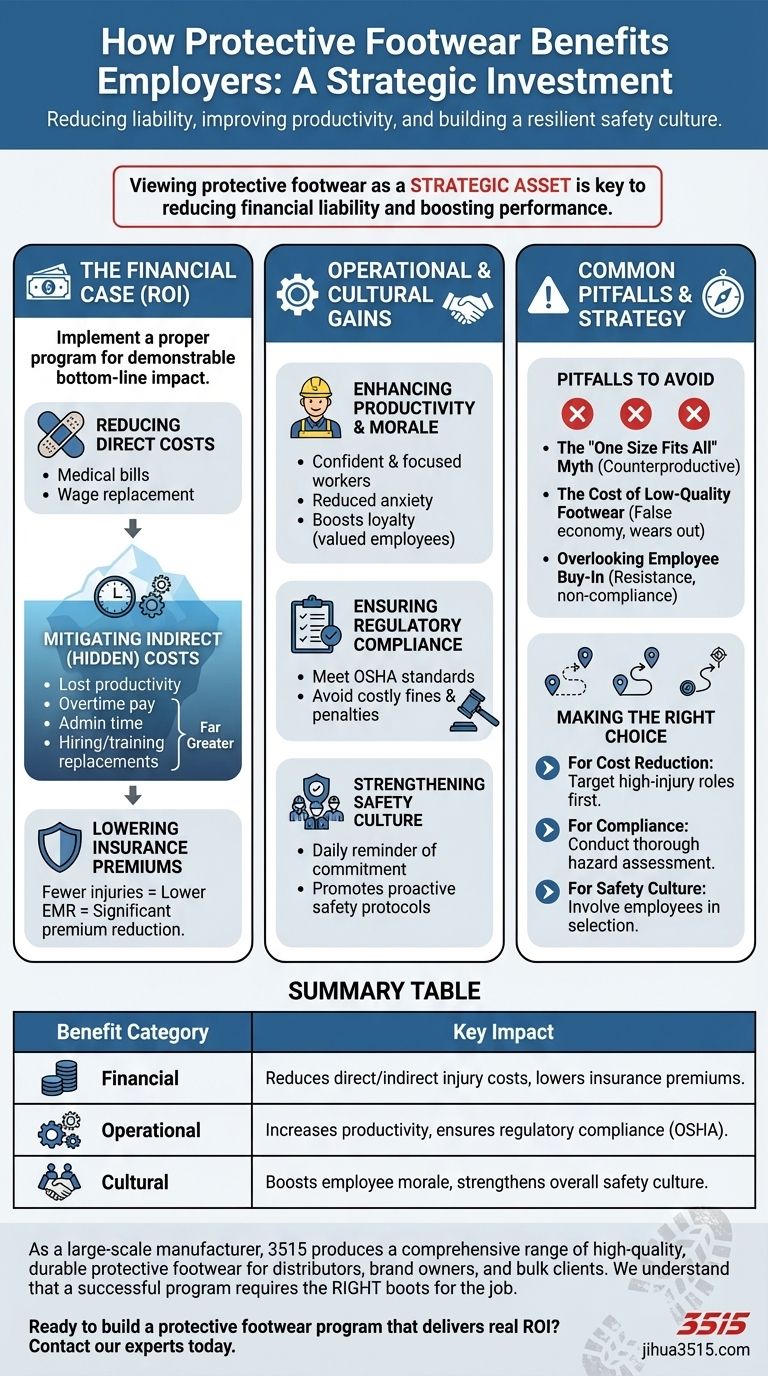
Viewing protective footwear not as a mandatory expense but as a strategic asset is the key. It's a high-leverage tool for reducing financial liability, improving productivity, and building a resilient safety culture.
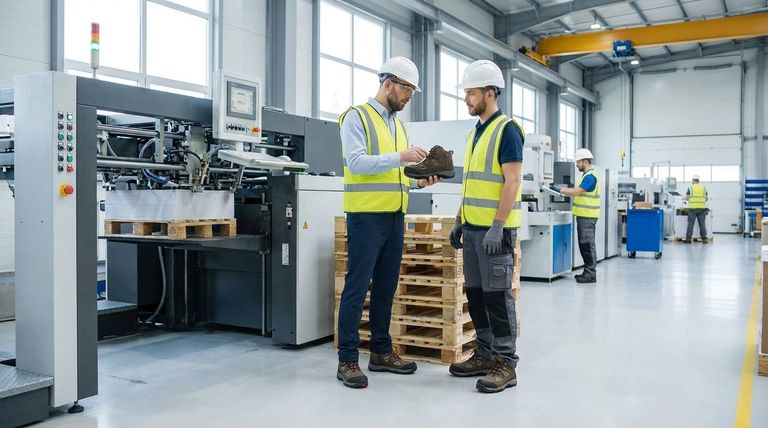
The Financial Case for Protective Footwear
Implementing a proper footwear program has a clear and demonstrable impact on your bottom line. The return on investment is realized through several channels, both obvious and hidden.
Reducing Direct Costs
Direct costs are the most visible expenses following a workplace injury. These are the immediate, out-of-pocket payments covered by workers' compensation insurance.
This includes medical bills for treating the injury, from emergency room visits to ongoing physical therapy. It also covers wage replacement payments made to the employee while they are unable to work.
Mitigating Indirect (Hidden) Costs
Indirect costs are often far greater than direct costs and represent the true financial burden of an injury. These are the uninsurable consequences that disrupt your business.
These costs include lost productivity from the injured worker, overtime pay for others covering their shifts, and the administrative time spent on incident reports and claims management. It also encompasses the cost of hiring and training a replacement if the absence is long-term.
Lowering Insurance Premiums
Your workers' compensation insurance premiums are calculated based on your claims history, known as an experience modification rate (EMR).
Fewer injuries lead to fewer claims, which directly lowers your EMR over time. A lower EMR results in a significant reduction in your annual insurance premiums, providing a long-term financial benefit.
Beyond the Balance Sheet: Operational & Cultural Gains
While the financial arguments are compelling, the benefits of a protective footwear program extend deep into your company's daily operations and overall culture.
Enhancing Productivity and Morale
Workers who feel safe and protected are more confident and focused on their tasks. Reducing the risk of painful foot injuries minimizes a major source of anxiety and distraction.
Providing high-quality personal protective equipment (PPE) also sends a powerful message that you value your employees' well-being. This investment in their safety boosts morale and fosters company loyalty.
Ensuring Regulatory Compliance
Governmental bodies like the Occupational Safety and Health Administration (OSHA) have specific standards for workplace safety, including the use of protective footwear in hazardous environments.
A formal program ensures you meet these legal requirements, helping you avoid costly fines, penalties, and potential litigation that can arise from non-compliance or negligence.
Strengthening Your Safety Culture
A protective footwear program is a tangible, daily reminder of your company's commitment to safety. It's not just a rule in a handbook; it's a piece of equipment employees interact with every day.
This consistent reinforcement helps build a proactive safety culture where employees are more likely to follow all safety protocols, not just those related to their feet.
Common Pitfalls to Avoid
Simply providing footwear is not enough. A poorly executed program can undermine its own goals and fail to deliver the expected benefits.
The Myth of "One Size Fits All"
Not all protective footwear is the same. Mandating a single type of boot without considering different job functions can be counterproductive.
An electrician needs electrical hazard (EH) rated boots, while a warehouse worker might need puncture resistance and slip protection. Improper footwear can be uncomfortable, reduce compliance, and even introduce new hazards.
The Cost of Low-Quality Footwear
Opting for the cheapest available option is a false economy. Low-quality boots wear out quickly, offer subpar protection, and are often uncomfortable, leading to employee complaints and non-compliance.
Investing in durable, well-constructed footwear ensures better protection and a longer service life, reducing the total cost of ownership over time.
Overlooking Employee Buy-In
A program dictated from the top down without employee input is likely to face resistance. If footwear is uncomfortable or ill-suited to the task, employees may find ways not to wear it.
Involving employees in the selection process and providing choices within approved safety standards dramatically increases buy-in and ensures the program's success.
Making the Right Choice for Your Goal
To maximize the benefits of your program, align your implementation strategy with your primary objective.
- If your primary focus is immediate cost reduction: Target the roles or departments with the highest rate of foot injuries first to achieve the quickest impact on your workers' compensation claims.
- If your primary focus is regulatory compliance: Conduct a thorough hazard assessment of every role to meticulously document the specific footwear requirements and ensure you exceed minimum OSHA standards.
- If your primary focus is building a safety culture: Involve employees in the selection process by testing different brands and models, and use the program launch as a cornerstone event in your safety communications.
Ultimately, a protective footwear program is one of the most effective investments you can make in the safety of your people and the financial health of your business.
Summary Table:
| Benefit Category | Key Impact |
|---|---|
| Financial | Reduces direct/indirect injury costs, lowers insurance premiums. |
| Operational | Increases productivity, ensures regulatory compliance (OSHA). |
| Cultural | Boosts employee morale, strengthens overall safety culture. |
As a large-scale manufacturer, 3515 produces a comprehensive range of high-quality, durable protective footwear for distributors, brand owners, and bulk clients.
We understand that a successful program requires more than just providing boots—it requires the right boots for the job. Our production capabilities encompass all types of safety shoes and boots, designed to meet specific hazards and ensure employee comfort for maximum compliance.
Ready to build a protective footwear program that delivers real ROI? Let us help you reduce costs and enhance safety. Contact our experts today to discuss your needs.
Visual Guide
Related Products
- Premium Suede Sport Safety Shoes for Wholesale & Bulk Orders
- Premium Lightweight Safety Shoes for Wholesale & Bulk Orders
- Wholesale Customizable Safety Boots Durable & Protective Footwear Manufacturing
- Premium Waterproof Nubuck Safety Boots for Wholesale
- Wholesale Anti-Smash & Puncture-Proof Safety Shoes Custom Manufacturing for Brands
People Also Ask
- What industries have specific OSHA footwear requirements? Ensure Compliance & Protect Your Workforce
- What are the primary functions of professional safety shoes? Maximize Safety in Water Supply Confined Spaces
- What role do specialized safety shoes play in preventing falls? Engineering Stability in Industrial Environments
- How do gait analysis algorithms ensure accuracy in footwear? Master Step Length Precision for Boots & Sneakers
- What are the main safety features of S1-S5 shoes? The 3 Essential Protections Explained