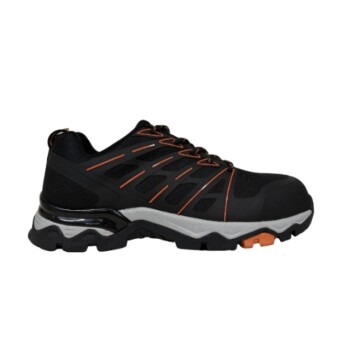
Precise sizing and width constitute the primary defense against tissue damage in professional environments. When safety footwear is too tight, it physically constricts blood vessels causing compressive ischemia, while footwear that is too loose allows the foot to slide, generating harmful shear forces and friction that erode the skin barrier.
The critical function of proper sizing is the simultaneous prevention of vascular restriction and mechanical abrasion. By utilizing diverse width specifications, professional footwear ensures that pressure is distributed evenly, maintaining blood perfusion and preventing the localized stress points that lead to ulceration.
The Mechanics of Tissue Injury
The Danger of Constriction
When a safety shoe lacks adequate width or length, it exerts continuous pressure on the foot's soft tissues.
This static pressure compresses the capillaries, restricting blood flow to the skin and underlying structures. This condition, known as compressive ischemia, deprives cells of oxygen and nutrients, making the tissue highly susceptible to necrosis and ulcer formation.
The Risk of Shear Forces
Conversely, a shoe that is oversized introduces instability.
If the foot is not securely contained, it slides inside the shoe during movement. This sliding generates friction and shear forces, which pull tissue layers in opposite directions, causing blisters and deep tissue damage even without direct impact.
The Role of Width and Structural Design
Accommodating Anatomical Variance
Professional manufacturers utilize wide lasts to address the fact that foot volume varies significantly between individuals.
Standard sizing often fails to account for the width of the forefoot. By offering wider specifications, safety shoes can accommodate anatomical changes, such as hallux valgus (bunions), preventing rigid materials from pressing against bony prominences.
Optimizing Pressure Distribution
Effective safety footwear incorporates widened toe spaces and specialized cushioned insoles.
These features ensure that the weight of the body is not concentrated on the tips or sides of the toes. Instead, pressure is redistributed across a larger surface area, relieving specific "hot spots" that are prone to breakdown.
Common Pitfalls and Trade-offs
The "Sizing Up" Fallacy
A common error is attempting to fix a width problem by choosing a larger shoe size.
While this may relieve side compression, it often creates excessive length. This misalignment introduces the shear forces mentioned above, trading one risk (ischemia) for another (friction injury).
Stability vs. Volume
While extra volume is necessary for circulation, too much internal space can compromise biomechanical alignment.
If the structural containment is lost, the ankle may lack support during complex movements. The ideal fit strikes a balance: roomy enough to allow blood perfusion, but snug enough to lock the heel and midfoot in place to prevent sliding.
Making the Right Choice for Your Goal
Selecting the correct safety footwear requires prioritizing specific risk factors based on the individual's foot health and work environment.
- If your primary focus is circulatory health: Prioritize shoes built on wide lasts with widened toe boxes to ensure zero compression on the sides of the forefoot.
- If your primary focus is preventing blisters and abrasions: Ensure the heel containment is secure and the length is precise to eliminate internal sliding and shear forces.
- If your primary focus is accommodating anatomical deformities: Look for footwear with pressure-distribution capabilities and cushioned insoles that mold to the foot's unique shape.
True injury prevention begins with the understanding that fit is not a luxury, but a medical necessity.
Summary Table:
| Factor | Impact of Poor Fit | Prevention Strategy |
|---|---|---|
| Narrow Width | Compressive Ischemia (restricted blood flow) | Utilize wide lasts and widened toe boxes |
| Loose Fit | Shear forces and friction (blisters/abrasion) | Secure heel containment and precise length |
| Incorrect Size | Biomechanical instability and misalignment | Select specific width options over 'sizing up' |
| Pressure Points | Localized tissue necrosis and ulceration | Implement cushioned insoles for pressure distribution |
Partner with 3515 for Precision-Engineered Footwear
At 3515, we understand that proper fit is a medical necessity for the modern workforce. As a large-scale manufacturer serving distributors and brand owners, we offer comprehensive production capabilities anchored by our flagship Safety Shoes series. Our designs prioritize diverse width specifications to ensure even pressure distribution and prevent workplace injuries.
Our extensive portfolio includes:
- Work and Tactical Boots for rugged protection.
- Outdoor and Training Shoes for performance.
- Sneakers and Dress & Formal Shoes for diverse bulk requirements.
Provide your clients with footwear that guarantees blood perfusion and structural stability. Contact us today to explore our manufacturing solutions and value-driven partnerships!
References
- Halene Cristina Dias de Armada e Silva, Harlon França de Menezes. Construction and validation of nursing diagnoses for people with diabetic foot ulcers. DOI: 10.1590/1980-220x-reeusp-2022-0022en
This article is also based on technical information from 3515 Knowledge Base .
Related Products
- Premium Suede Sport Safety Shoes for Wholesale & Bulk Orders
- Premium Lightweight Safety Shoes for Wholesale & Bulk Orders
- Wholesale Anti-Smash & Puncture-Proof Safety Shoes Custom Manufacturing for Brands
- Premium KPU Injection Athletic Style Safety Shoes
- Premium Safety Shoes with Rotating Buckle Safety Sneakers
People Also Ask
- What industries have specific OSHA footwear requirements? Ensure Compliance & Protect Your Workforce
- What are the primary functions of professional safety shoes? Maximize Safety in Water Supply Confined Spaces
- What role do specialized safety shoes play in preventing falls? Engineering Stability in Industrial Environments
- Why is barefoot walking used as a baseline in gait safety research? Unlocking Natural Biomechanics for Shoe Design
- What are the technical advantages of integrating sensors into safety shoes? Achieve Superior Motion Capture Precision