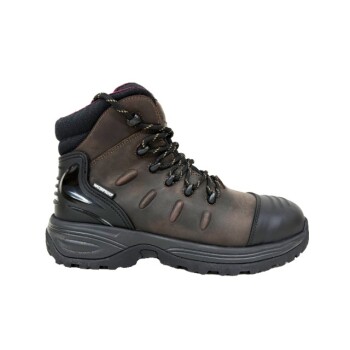
The mandatory provision of individual-specific safety shoes is driven primarily by the critical need to sever pathways of pathogen transmission among the workforce. In high-volume logistics and retail distribution centers, shared Personal Protective Equipment (PPE) has been identified as a significant vector for cross-infection, making individual issuance a non-negotiable standard for operational safety.
While sharing equipment may seem cost-effective initially, it creates a direct route for viral transmission in high-density environments. Providing individual safety shoes is not just a hygiene preference; it is a core safeguard required to ensure supply chain continuity and protect the occupational health of the workforce.
The Biological Risks of Shared Equipment
The Cross-Infection Vector
Shared industrial gear, including helmets, goggles, and safety shoes, acts as a significant pathway for cross-infection.
When multiple employees utilize the same footwear, the equipment becomes a fomite—a surface capable of carrying infectious agents. Eliminating shared contact points effectively blocks the transmission of viruses between shifts and individuals.
Vulnerability in Enclosed Environments
The risk of transmission is amplified in specific logistics settings, particularly enclosed, high-density environments.
Facilities such as cold chain storage units and temperature-controlled warehouses create conditions where pathogens may persist longer on surfaces. In these environments, the lack of individual equipment can turn a single infection into a facility-wide outbreak.
Strategic Operational Value
Ensuring Supply Chain Continuity
The primary goal of individual equipment mandates is the preservation of supply chain continuity.
By isolating protective gear to specific individuals, companies prevent mass contamination events that could quarantine large portions of the workforce. This strategy safeguards the facility against operational paralysis caused by widespread illness.
Prioritizing Occupational Health
Beyond operational uptime, companies have a fundamental duty to uphold employee occupational health.
Mandating individual safety shoes demonstrates a commitment to reducing preventable workplace hazards. It moves safety protocols beyond simple physical injury prevention to encompass biological safety and hygiene.
Understanding the Trade-offs
The Cost of Implementation
The transition to individual-specific equipment requires a higher upfront financial investment compared to maintaining a pool of shared gear.
Facilities must budget for purchasing a larger volume of inventory and managing the lifecycle of gear for every single employee. This can strain short-term procurement budgets in favor of long-term security.
Storage and Logistics Complexity
Individual issuance introduces logistical challenges regarding storage and personal locker space.
Unlike shared bins of equipment, individual shoes require dedicated storage areas to prevent mix-ups and ensure hygiene. This demands valuable floor space and requires stricter inventory tracking systems to ensure every employee has compliant gear.
Making the Right Choice for Your Goal
To navigate the implementation of safety shoe policies effectively, consider your primary operational objectives:
- If your primary focus is Infection Control: Prioritize the immediate cessation of all shared PPE programs, especially in cold storage zones, to block viral transmission vectors.
- If your primary focus is Business Continuity: View the cost of individual shoes as an insurance premium against mass workforce absenteeism and supply chain halts.
Investing in individual safety gear is the only reliable method to insulate your workforce and your supply chain from the risks of cross-contamination.
Summary Table:
| Feature | Individual Safety Shoes | Shared Safety Equipment |
|---|---|---|
| Infection Risk | Minimal (Personal issuance) | High (Cross-contamination vector) |
| Worker Health | High protection & hygiene | Potential biohazard exposure |
| Operational Stability | High (Prevents mass illness) | Low (Risk of facility-wide outbreaks) |
| Cost Structure | Higher upfront investment | Lower initial cost; high risk cost |
| Logistics | Requires dedicated storage | Simple bulk storage |
Secure Your Workforce with 3515 High-Performance Footwear
As a premier large-scale manufacturer serving global distributors and brand owners, 3515 delivers the reliability your supply chain demands. Our flagship Safety Shoes series is engineered to meet the strictest hygiene and occupational health standards, ensuring your team stays protected without compromising on comfort.
From rugged work and tactical boots to high-performance sneakers and formal dress shoes, our comprehensive production capabilities cater to all footwear categories and bulk requirements. Partner with a manufacturer that understands the critical link between individual safety gear and business continuity.
Ready to upgrade your safety standards? Contact us today to discuss bulk procurement and custom footwear solutions tailored to your brand.
References
- Mila Tejamaya, Dong‐Uk Park. Characteristics of COVID-19 infection clusters occurring among workers in several Asia-Pacific countries. DOI: 10.2486/indhealth.2021-0227
This article is also based on technical information from 3515 Knowledge Base .
Related Products
- Premium Waterproof High-Cut Industrial Safety Boots for Wholesale and Bulk Orders
- Premium Wheat Nubuck Safety Shoes for Bulk Distribution
- Wholesale Mesh Steel Toe Safety Shoes with Dial Closure Factory Production
- Wholesale Anti-Smash & Puncture-Proof Safety Shoes Custom Manufacturing for Brands
- Premium KPU Athletic Safety Shoes for Wholesale
People Also Ask
- Why are oil-resistant and anti-slip properties critical for industrial safety boots? Expert Outsole Engineering Guide
- What are the primary protective functions of industrial safety boots in oil palm plantations? Master Rough Terrain Safety
- How do industrial safety boots assist maintenance personnel working on high-level palm oil factory structures?
- What functions do industrial safety boots serve? Essential Protection for Footwear Sole & Stockfit Processing
- What are the protective functions of industrial safety boots in sugar factory clarification stations? Thermal & Slip Experts