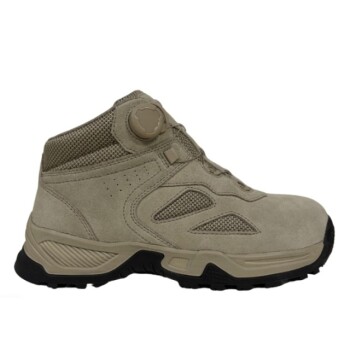
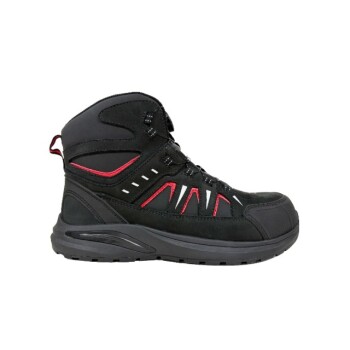
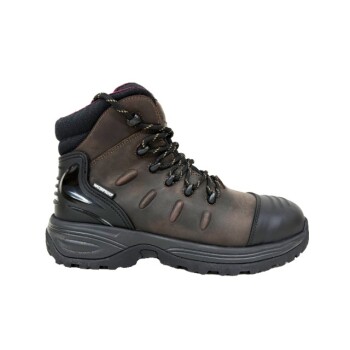
Industrial safety boots are the primary line of defense against mechanical trauma and environmental hazards in footwear sole production. During Stockfit processing and sole manufacturing, these boots perform three specific functions: they absorb impacts from falling production tools, prevent crushing injuries caused by heavy machinery, and provide critical traction to mitigate slip hazards.
Core Takeaway: In the context of sole production, safety boots function as a rigid exoskeleton for the foot. They are essential not just for compliance, but for neutralizing the high-force risks associated with heavy compression machinery and unpredictable manufacturing surfaces.
Critical Protective Functions
Impact Absorption
Shielding against falling objects is a primary requirement in sole production. As workers handle various molds, dies, and hand tools, the risk of dropping heavy items is constant.
Safety boots are engineered to withstand these specific high-velocity impacts. This protection ensures that an accidental drop of a production tool does not result in a disabling foot injury.
Compression Resistance
Preventing crushing injuries is vital when operating the heavy machinery used in Stockfit processing. This stage often involves powerful presses and assembly equipment.
The structural integrity of safety boots—specifically the toe cap area—stops the foot from being crushed. This prevents severe trauma if a foot is accidentally caught in machinery or under heavy static loads.
Operational Stability
Ensuring slip resistance is crucial for maintaining worker safety in complex manufacturing environments. Production floors can vary in texture and cleanliness.
Specialized outsoles on these boots provide necessary grip. This traction allows workers to move confidently and safely around machinery without the risk of slipping, which could lead to secondary injuries.
Understanding the Operational Trade-offs
Weight vs. Fatigue
The reinforced materials required to withstand heavy impacts and compression add significant weight to the footwear.
While this bulk provides necessary protection, it can lead to increased leg fatigue over long shifts compared to standard footwear. Operators must balance protective needs with ergonomic comfort.
Sensitivity Limitations
Thick, impact-resistant soles act as a barrier between the worker and the environment.
This isolation reduces proprioceptive feedback (feeling the ground). Workers must be more visually aware of their footing, as they cannot rely on tactile sensation to detect small obstructions or changes in floor grade.
Making the Right Choice for Your Environment
Effective safety protocols rely on matching the specific boot features to the dominant risks in your processing node.
- If your primary focus is operating heavy presses or molding machinery: Prioritize boots with reinforced composite or steel toes to guarantee maximum protection against compression injuries.
- If your primary focus is moving materials across the factory floor: Select footwear with high-grade, slip-resistant outsoles to ensure stability in dynamic, complex environments.
Investing in the correct safety footwear is the foundational step in maintaining a resilient and accident-free production line.
Summary Table:
| Protective Function | Risk Addressed | Manufacturing Benefit |
|---|---|---|
| Impact Absorption | Falling molds, dies, and hand tools | Prevents disabling foot trauma from high-velocity drops |
| Compression Resistance | Heavy presses and static loads | Protects feet from crushing injuries in assembly machinery |
| Operational Stability | Slick or uneven factory floors | High-grade traction reduces slip-related secondary accidents |
| Structural Integrity | Mechanical trauma | Acts as a rigid exoskeleton for long-term foot safety |
Partner with 3515 for Robust Industrial Safety Solutions
As a large-scale manufacturer serving distributors and brand owners globally, 3515 offers comprehensive production capabilities for all footwear types. Our flagship Safety Shoes series is specifically engineered to neutralize high-force risks in heavy manufacturing environments like sole production and Stockfit processing.
Our extensive portfolio also covers work and tactical boots, outdoor shoes, training shoes, sneakers, and Dress & Formal shoes to meet your diverse bulk requirements. We provide the structural integrity and slip resistance your workforce needs to maintain a resilient, accident-free production line.
Ready to upgrade your inventory with professional-grade safety footwear? Contact us today to discuss your bulk requirements!
References
- Neneng Yanti Andriani. IMPLEMENTASI KESELAMATAN DAN KESEHATAN KERJA (K3) PADA BAGIAN STOCKFIT DI PT PRATAMA ABADI INDUSTRI KABUPATEN SUKABUMI. DOI: 10.58268/eb.v1i1.6
This article is also based on technical information from 3515 Knowledge Base .
Related Products
- Premium Waterproof High-Cut Industrial Safety Boots for Wholesale and Bulk Orders
- Puncture-Resistant Velcro Safety Boots for Wholesale & Custom Manufacturing
- Premium Wholesale Waterproof Safety Boots High Performance Protection for Industrial Markets
- Customizable Anti-Smash Safety Boots for Wholesale & Private Label Manufacturing
- Premium Wholesale Wheat Nubuck Safety Boot with Rapid Lacing System
People Also Ask
- Why are oil-resistant and anti-slip properties critical for industrial safety boots? Expert Outsole Engineering Guide
- What are the primary protective functions of industrial safety boots in oil palm plantations? Master Rough Terrain Safety
- Why are industrial safety boots with high-grip outsoles required for oil leaks and B3 waste? Ensure Worker Stability
- What protective functions do industrial-grade safety boots provide in construction and mining? Maximize Worker Safety
- What dual characteristics do industrial safety boots exhibit? Balance Worker Protection with Health Recovery Efficiency