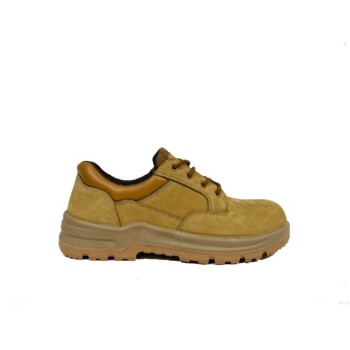
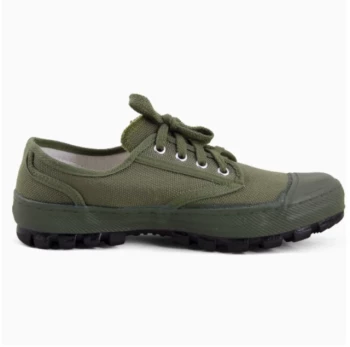
The mandatory requirement for anti-slip safety shoes stems directly from the critical loss of traction caused by scattered salt particles. Salt warehouse floors are frequently composed of ceramic materials, which become exceptionally slippery when coated with loose salt. Specialized footwear is the only reliable mechanical countermeasure to restore the necessary friction for safe movement.
The interaction between ceramic floors and salt granules creates an immediate, high-risk slip hazard. Anti-slip safety shoes provide a high-friction barrier that stabilizes workers carrying heavy loads, preventing acute accidents where standard footwear would fail.
The Mechanics of the Hazard
The Salt-Ceramic Interaction
In many salt storage facilities, the flooring is constructed from ceramic materials. While durable, these surfaces become dangerous when scattered salt particles accumulate during loading and unloading.
The salt granules act as unstable debris between the shoe and the floor. This drastically reduces the natural grip of the surface, creating conditions similar to walking on marbles or ice.
The Coefficient of Friction
The technical objective of safety footwear is to manipulate the coefficient of friction. This is the measure of how much resistance a surface exerts on an object moving over it.
Standard footwear cannot generate enough friction against salt-covered ceramic. This lack of resistance leads to immediate loss of balance, particularly when a worker is in motion.
How Safety Footwear Mitigates Risk
High-Traction Outsoles
Anti-slip industrial shoes are engineered with specialized outsoles. These designs are specifically formulated to "bite" through surface debris and grip the floor beneath.
By significantly increasing the friction between the footwear and the floor surface, these outsoles neutralize the slippery effect of the salt.
Stability Under Load
The risk of slipping is compounded when personnel are transporting heavy loads. The physical forces exerted on the foot are higher, making stability harder to maintain.
Safety shoes provide stable physical support. This ensures that even when bearing weight, the worker maintains a solid foundation, preventing falls that could result in severe acute injuries.
Broader Operational Benefits
Fatigue Reduction
Beyond slip resistance, loading operations often require prolonged standing and repetitive movement. This leads to physical fatigue, which can impair judgment and reaction time.
Professional safety shoes often utilize scientific arch support structures. These features alleviate foot fatigue, ensuring personnel remain alert and physically capable throughout their shift.
The First Line of Defense
While the primary hazard in this context is slipping, industrial environments are complex. Risks include falling objects and sharp items on the floor.
Safety footwear serves as a fundamental protective barrier. It protects toes and feet from impact and puncture wounds, serving as the primary shield against potentially fatal workplace accidents.
Understanding the Limitations
The Necessity of Housekeeping
While high-traction outsoles are effective, they are not a cure-all. If the floor is allowed to accumulate excessive layers of salt, even the best safety shoes may lose grip.
Tread Maintenance
The effectiveness of anti-slip shoes relies entirely on the condition of the outsole. If the treads become clogged with compacted salt or wear down over time, the coefficient of friction drops.
Regular inspection and cleaning of the footwear are required to maintain the safety margin. Shoes with worn tread patterns must be replaced immediately to ensure continued protection.
Making the Right Choice for Your Goal
Selecting the correct safety gear requires aligning equipment features with your specific operational risks.
- If your primary focus is Preventing Slips and Falls: Prioritize footwear with specialized high-traction outsoles specifically tested for grip on ceramic and granular surfaces.
- If your primary focus is Worker Endurance and Efficiency: Select models that combine anti-slip technology with scientific arch support to minimize fatigue during heavy lifting.
- If your primary focus is Comprehensive Injury Prevention: Ensure the footwear meets standards for both slip resistance and impact protection to guard against falling objects.
By enforcing the use of proper anti-slip footwear, you transform a chaotic hazard into a manageable operational risk.
Summary Table:
| Feature | Mechanical Benefit | Operational Outcome |
|---|---|---|
| High-Traction Outsole | Increases coefficient of friction on salt-coated ceramic | Prevents slips, trips, and falls |
| Reinforced Arch Support | Provides scientific weight distribution | Reduces worker fatigue and enhances alertness |
| Impact Protection | Hardened toe caps and puncture resistance | Shields against falling objects and sharp debris |
| Tread Design | Channels granular debris away from contact points | Maintains grip even in messy loading zones |
Secure Your Workforce with 3515 High-Traction Safety Footwear
As a large-scale manufacturer serving global distributors and brand owners, 3515 delivers the high-performance footwear required for hazardous industrial environments. Our Safety Shoes series is specifically engineered with high-traction outsoles and ergonomic arch support to eliminate slip risks during salt loading and heavy material handling.
Beyond our flagship safety line, we offer a comprehensive portfolio including:
- Tactical & Work Boots for rugged durability.
- Outdoor & Training Shoes for versatility.
- Sneakers & Dress Shoes for diverse bulk inventory needs.
Partner with 3515 to access superior production capabilities and protect your team. Contact us today to discuss your bulk requirements.
References
- Masri Pradipto, Mohammad Riski Borman. Sosialisasi Pengetahuan Keselamatan dan Kesehatan Kerja (K3) Pada Pekerja Di PT. Sumartaco Langgeng Abadi Gudang Cikarang. DOI: 10.62411/ja.v6i3.1569
This article is also based on technical information from 3515 Knowledge Base .
Related Products
- Advanced KPU Athletic Safety Shoe with Steel Toe Cap Anti-Slip Rotary Lacing System
- Wholesale Anti-Smash & Puncture-Proof Safety Shoes Custom Manufacturing for Brands
- Durable Leather Moc Toe Work Boots for Wholesale & Custom Manufacturing
- Wholesale Durable Safety Boots | Custom Steel Toe & Puncture-Resistant Manufacturing
- Wholesale Durable 6-Inch Work Boots | Custom & Private Label Manufacturer
People Also Ask
- What are the key differences between steel toe and composite toe caps? Choose the Right Safety for Your Job
- What impact do steel toe caps have on toe skin health? Prevent Friction and Pressure in Your Safety Shoes
- What are the primary protective functions of safety shoes with steel toes in the automotive repair industry?
- What type of safety shoe is recommended for workers exposed to heavy machinery? Steel Toe Boots for Ultimate Protection
- How does defining specific friction interface models in FEA assist in predicting safety shoe toe cap failure modes?