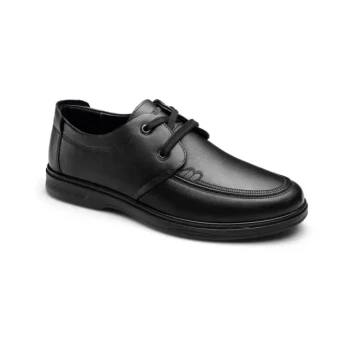
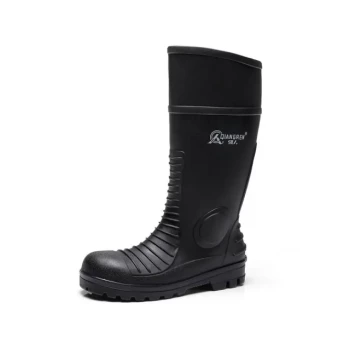
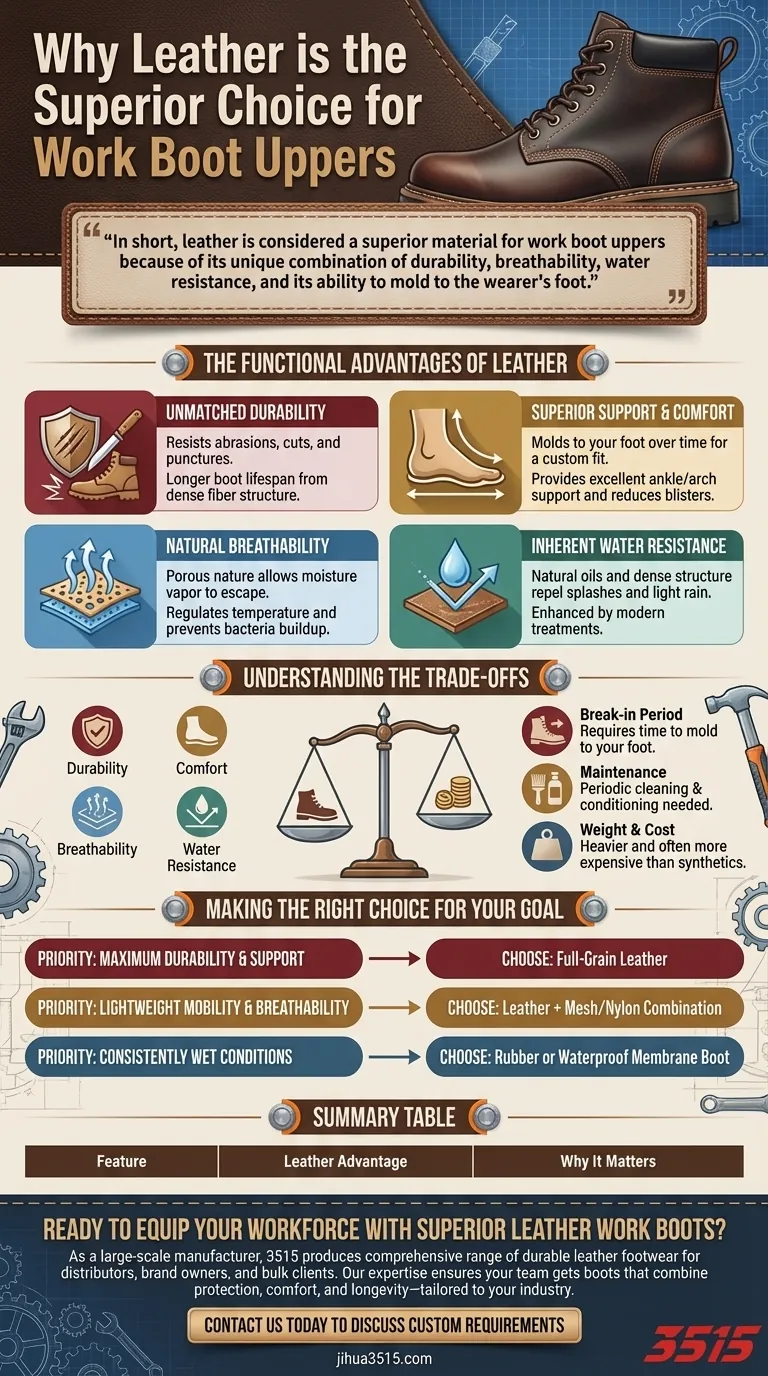
In short, leather is considered a superior material for work boot uppers because of its unique combination of durability, breathability, water resistance, and its ability to mold to the wearer's foot. This creates a boot that is both protective and comfortable for long-term use in demanding environments.
The core reason for leather's dominance isn't just one feature, but its balanced performance across multiple critical areas—protection, comfort, and longevity—that synthetic materials often struggle to replicate simultaneously.

The Functional Advantages of Leather
The choice of upper material directly impacts a work boot's performance, safety, and all-day comfort. Leather has remained a top choice for centuries because of its inherent physical properties.
Unmatched Durability
Leather, particularly full-grain leather, is derived from the strongest part of the animal hide. This gives it exceptional resistance to abrasions, cuts, and punctures common on job sites.
Unlike many synthetic fabrics, leather's dense fiber structure doesn't easily tear or fray, extending the lifespan of the boot significantly.
Superior Support and Comfort
One of leather's most valued characteristics is its ability to conform to the shape of your foot over time. This creates a custom fit that provides excellent ankle and arch support.
While synthetic materials hold a static shape, leather's "break-in" period results in a boot that moves with you, reducing friction and the likelihood of blisters.
Natural Breathability
The porous nature of leather allows moisture vapor from sweat to escape. This is crucial for maintaining foot health and comfort during long workdays.
Properly breathable boots help regulate temperature and prevent the buildup of bacteria and fungus, which thrive in damp environments.
Inherent Water Resistance
While not fully waterproof without treatment, leather's natural oils and dense structure provide a significant level of water resistance. It can effectively repel splashes and light rain.
Modern tanning and finishing processes can further enhance this property, providing a reliable barrier against moisture without sacrificing breathability like rubber or some plastics do.
Understanding the Trade-offs
No material is perfect. While leather excels in many areas, it's essential to understand its limitations compared to modern alternatives.
The Break-in Period
Leather boots, especially those made from thick full-grain leather, often require a break-in period. They can feel stiff and uncomfortable initially before they mold to your foot.
Maintenance is Required
To maintain its water resistance, flexibility, and durability, leather must be periodically cleaned and conditioned. Neglecting this can lead to drying, cracking, and a loss of its protective qualities.
Weight and Cost
Leather is generally heavier than synthetic options like nylon or mesh. This can be a factor for workers who prioritize lightweight footwear for mobility.
High-quality leather, especially full-grain, is also more expensive than most synthetic materials, reflecting its durability and the complex tanning process required.
Making the Right Choice for Your Goal
The best material depends entirely on your specific work environment and priorities.
- If your primary focus is maximum durability and support: Choose full-grain leather for its unmatched toughness and ability to provide a custom, supportive fit over time.
- If your primary focus is lightweight mobility and breathability: A combination boot using leather for structure and nylon or mesh panels for flexibility and airflow may be the ideal solution.
- If your primary focus is working in consistently wet conditions: While treated leather is effective, a dedicated rubber boot or one with a fully waterproof membrane is a more specialized choice.
Ultimately, leather's enduring popularity for work boots stems from its proven ability to offer a comprehensive, balanced solution for protection and long-term comfort.
Summary Table:
| Feature | Leather Advantage | Why It Matters |
|---|---|---|
| Durability | Resists abrasions, cuts, and punctures | Longer boot lifespan, reduced replacement costs |
| Comfort & Fit | Molds to the foot over time | Custom support, fewer blisters, all-day comfort |
| Breathability | Natural pores allow moisture vapor to escape | Regulates temperature, prevents bacteria buildup |
| Water Resistance | Repels splashes and light rain (enhanced with treatment) | Protects feet in damp conditions without sacrificing breathability |
Ready to equip your workforce with superior leather work boots?
As a large-scale manufacturer, 3515 produces a comprehensive range of durable leather footwear for distributors, brand owners, and bulk clients. Our expertise ensures your team gets boots that combine protection, comfort, and longevity—tailored to your specific industry needs.
Contact us today to discuss your custom work boot requirements and benefit from our extensive production capabilities!
Visual Guide
Related Products
- Durable Leather Work Boots for Wholesale & Custom Manufacturing
- Wholesale Leather Work Boots with Customizable Wedge Sole for Brands
- Durable Leather Work Boots for Wholesale & Custom OEM Manufacturing
- Durable Leather Work Boots Wholesale Manufacturer & Custom Factory
- Durable Goodyear Welt Leather Work Boots for Wholesale & Private Label
People Also Ask
- What is the difference between full-grain and top-grain leather? Premium Material Guide for Boot Manufacturers
- What are the common workplace hazards that can be mitigated with the right work boots? Protect Your Workforce
- What are the common foot issues workers face due to uncomfortable work boots? Prevent Pain & Deformities
- What are the advantages of leather versus synthetic work boots? A Guide to Choosing the Right Material
- What are the key components of modern work boots? Engineered for Ultimate Durability and Comfort