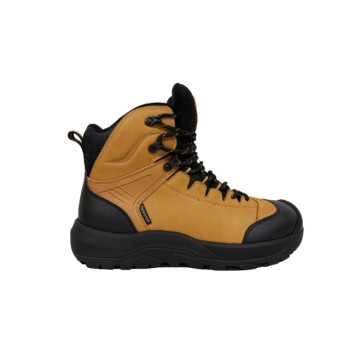
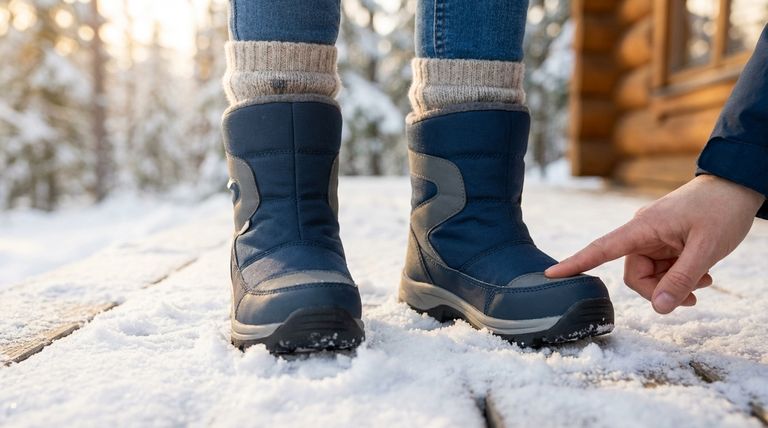
When buying winter boots for a child, the recommendation for extra room serves two critical functions. It is partly a practical strategy to accommodate rapid foot growth, but more importantly, it is a technical requirement for ensuring proper warmth through insulation and circulation.
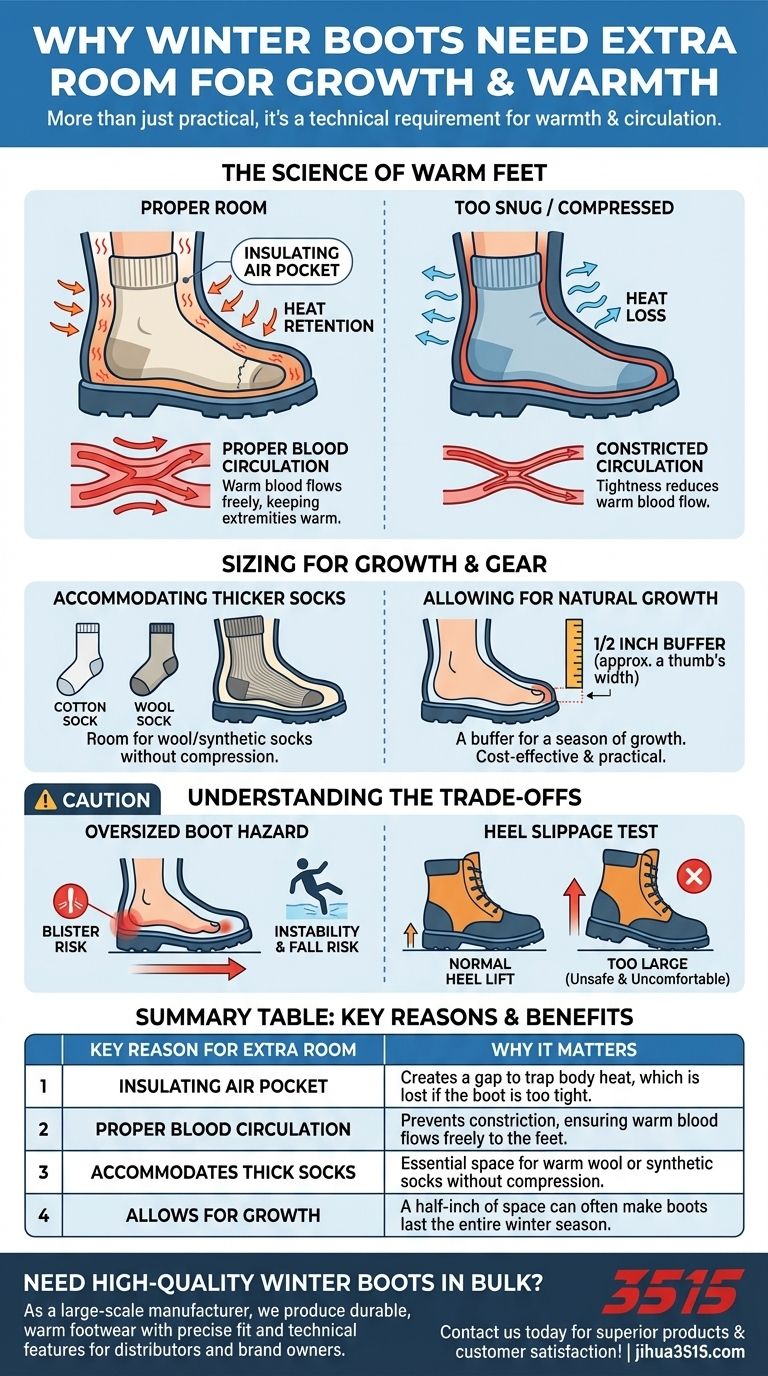
The core principle is that empty space is not wasted space. A small air pocket inside the boot is essential for trapping body heat, and this insulation is compromised if the foot and sock are compressed tightly against the boot's lining.
The Science of Warm Feet
A winter boot's performance is not just about its materials; it's about how it manages space and air around the foot. This space serves two distinct, equally important purposes.
It Creates an Insulating Air Pocket
The primary source of warmth for your feet is your own body heat. A winter boot's insulation works by trapping this heat in small pockets of air.
An essential pocket of air exists between your child's socked foot and the boot's inner lining. A boot that is too snug eliminates this gap, pressing the foot directly against the lining and reducing the boot's ability to retain heat.
It Ensures Proper Blood Circulation
Proper blood flow is critical for keeping extremities warm. Tight footwear can constrict blood vessels in the foot, significantly reducing the flow of warm blood.
Even the highest-rated boot will fail to keep a foot warm if circulation is compromised. Ample room ensures the foot is not squeezed, allowing the body's natural heating system to function correctly.
Sizing for Growth and Gear
Beyond the physics of warmth, the extra space accounts for two practical realities: rapidly growing feet and the necessity of proper winter socks.
Accommodating Thicker Winter Socks
Winter warmth requires socks made from materials like wool or synthetics, which are typically thicker than standard cotton socks.
The extra room in the boot must be sufficient to accommodate these thicker socks without causing the compression issues mentioned earlier. Always fit boots with the type of sock your child will actually wear in the winter.
Allowing for Natural Growth
Children's feet can grow surprisingly fast. Leaving extra space—typically about a half-inch—provides a buffer that can often allow a single pair of boots to last the entire winter season.
This makes the purchase more cost-effective and avoids a mid-season replacement when a sudden growth spurt occurs.
Understanding the Trade-offs
While extra room is crucial, there is a point where too much space becomes a problem. Finding the right balance is key to safety and comfort.
The Danger of an Oversized Boot
A boot that is excessively large can be a safety hazard. It forces the foot to slide forward with each step, which can cause painful blisters and chafing.
Furthermore, a sloppy fit reduces stability and control, increasing the risk of stumbles and falls, especially on uneven or icy terrain.
The Heel Slippage Test
The goal is a snug fit at the heel and ankle with room at the toes. When your child walks, a small amount of heel lift is normal.
However, if their entire heel pops out of the boot with each step, the boot is too large and will be uncomfortable and unsafe.
Making the Right Choice for Your Child
To ensure a proper fit, have your child stand up with their full weight on their feet while wearing thick winter socks. The ideal space is about a thumb's width (or a half-inch) between their longest toe and the end of the boot.
- If your primary focus is maximum warmth: Ensure the space accommodates a thick wool sock without compressing the foot or the boot's insulation.
- If your primary focus is cost-effectiveness: A half-inch of room at the toe provides a reliable buffer for a season of growth without compromising safety.
- If your primary focus is stability and safety: Confirm that while the toes have room, the boot fits securely around the ankle and heel to prevent excessive sliding.
Ultimately, a well-fitted winter boot creates the ideal environment for warmth, comfort, and safety throughout the season.
Summary Table:
| Key Reason for Extra Room | Why It Matters |
|---|---|
| Insulating Air Pocket | Creates a gap to trap body heat, which is lost if the boot is too tight. |
| Proper Blood Circulation | Prevents constriction, ensuring warm blood flows freely to the feet. |
| Accommodates Thick Socks | Essential space for warm wool or synthetic socks without compression. |
| Allows for Growth | A half-inch of space can often make boots last the entire winter season. |
Need High-Quality Winter Boots in Bulk?
As a large-scale manufacturer, 3515 produces a comprehensive range of durable and warm footwear for distributors, brand owners, and bulk clients. Our production capabilities encompass all types of insulated boots designed with the precise fit and technical features discussed in this article.
We help you provide superior products that ensure customer satisfaction.
Contact us today to discuss your winter footwear needs and request a quote!
Visual Guide
Related Products
- Premium Insulated Safety Boots and Shoes for Wholesale & Bulk Orders
- Durable Waterproof Rain Boots | Custom Manufacturer for Wholesale & Brands
- Factory Direct Wholesale Rain Boots Durable Waterproof & Fully Customizable
- Wholesale Waterproof Tactical Boots Custom Suede & High-Traction Soles
- High Performance Fire-Retardant Waterproof Safety Boots
People Also Ask
- What are the recommended insulation ratings for mild winter conditions? A Guide for Active & Stationary Workers
- How does insulation thickness correlate with temperature ranges? A Guide to Choosing the Right Warmth
- What insulation level is needed for severe cold and stationary work? 1200g or Higher is Essential
- What safety advantages do insulated boots offer beyond warmth? Dielectric Protection & Superior Grip
- How does fleece lining contribute to the warmth of insulated boots? Trapping Air for Superior Cold Protection