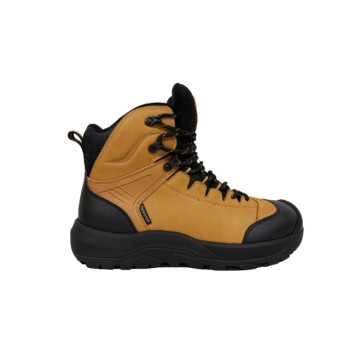
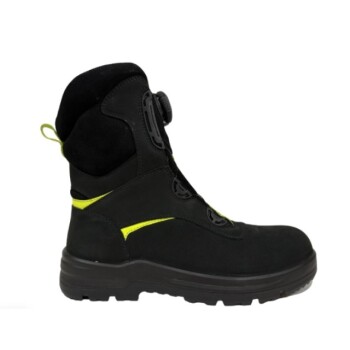
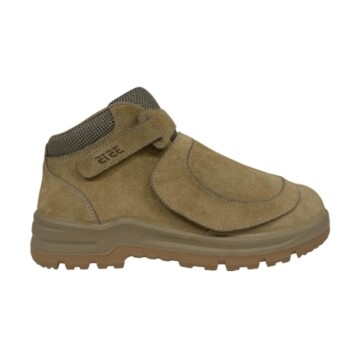
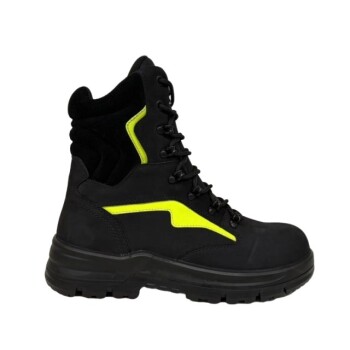
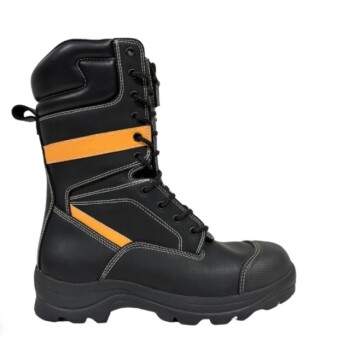
Beyond providing warmth, insulated boots offer two critical safety advantages that are often overlooked. Their construction materials provide significant dielectric protection against electrical shock, and their specialized design enhances grip and stability on hazardous icy or uneven surfaces.
The core takeaway is that the very features making a boot an effective insulator—thick, non-conductive rubber and composite materials—also make it a crucial piece of safety equipment for preventing electrical shocks and dangerous falls.
The Hidden Advantage: Electrical Hazard Protection
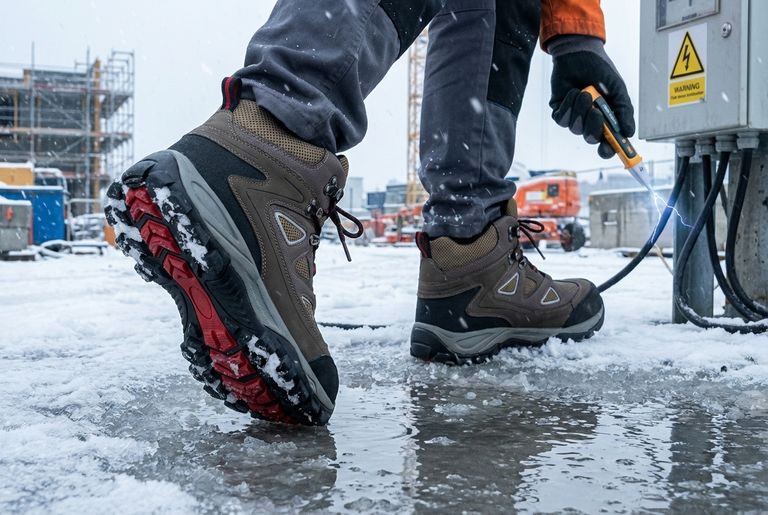
Many professionals work in cold, wet environments where electrical hazards are a serious concern. Insulated boots provide a vital, often misunderstood, layer of secondary protection.
How Insulation Acts as a Dielectric Barrier
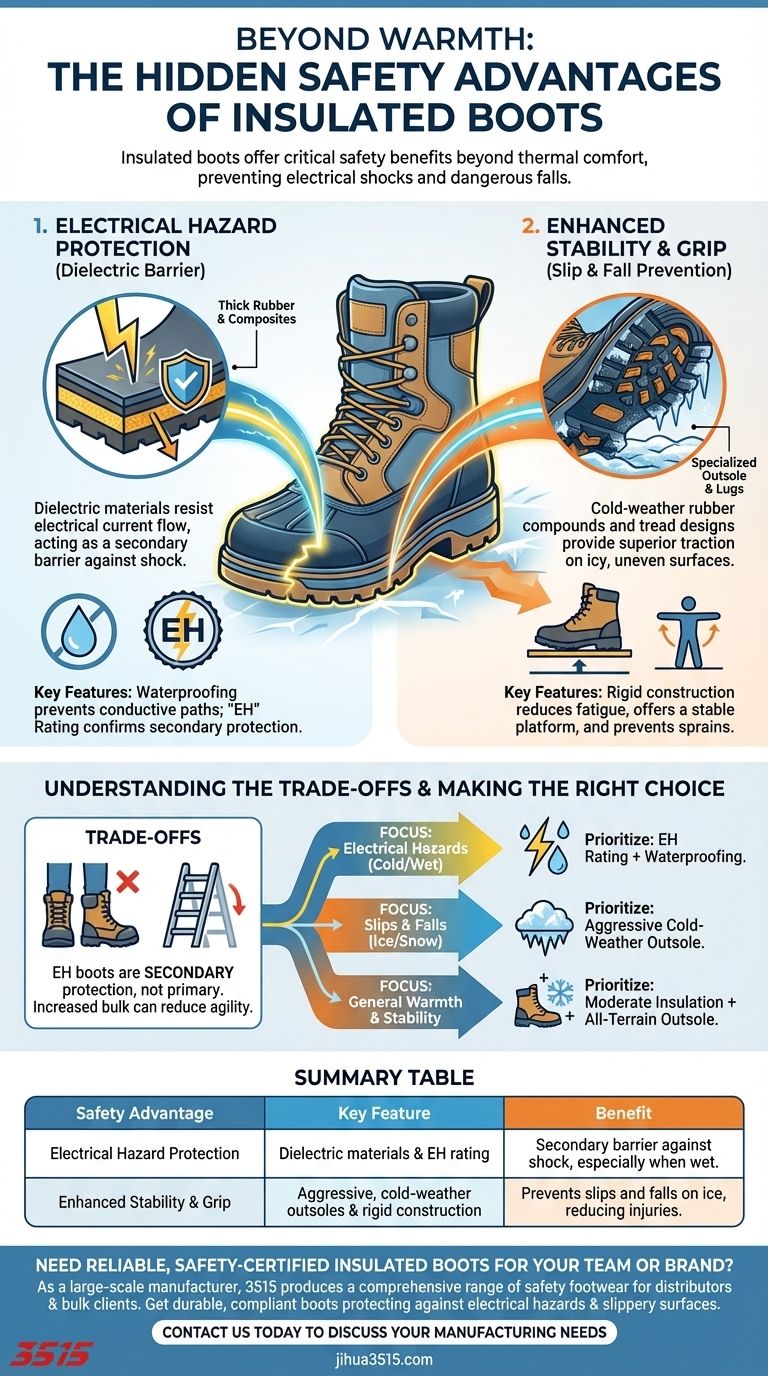
The materials used for thermal insulation, such as thick rubber and composite materials, are inherently poor conductors of electricity. This property, known as being dielectric, means they resist the flow of an electrical current.
When you accidentally come into contact with a live electrical source, these boots can act as a barrier, preventing the current from passing through your body to the ground.
The Critical Role of Moisture Resistance
Water is an excellent conductor of electricity. Most quality insulated boots are also waterproof, which is a key component of their electrical safety.
By keeping your feet dry, they prevent moisture from creating a conductive path for electricity, a risk that is significantly higher in damp or snowy conditions.
Look for the "EH" Rating
For verified protection, look for boots with an Electrical Hazard (EH) rating. This certification confirms the footwear has been tested by ASTM International to withstand a specific voltage under dry conditions, providing a defined level of secondary protection.
Enhancing Physical Stability and Grip
Slips, trips, and falls are among the most common workplace injuries, and their frequency skyrockets in winter. Insulated boots are engineered specifically to mitigate these risks.
Specialized Outsole Design
The outsoles of insulated boots are fundamentally different from standard work boots. They often use special rubber compounds that remain flexible and grippy even in freezing temperatures.
These soles feature deep, aggressive lugs and tread patterns designed to bite into snow and ice while channeling away slush, maximizing surface contact and traction.
A Stable Platform for Uneven Terrain
Beyond just grip, these boots provide superior overall stability. Their rigid construction and robust ankle support help prevent sprains and twists when walking on uneven, snow-covered ground.
This structural integrity creates a firm, reliable platform for your feet, reducing muscle fatigue and the likelihood of a misstep.
Understanding the Trade-offs
While highly beneficial, it's crucial to understand the limitations of insulated boots to use them safely and effectively.
Not a Primary Source of Protection
EH-rated boots provide secondary electrical protection. They should never be relied upon as the primary defense in environments with live wires, such as for linemen. Always follow established electrical safety protocols.
Reduced Dexterity and Increased Bulk
The same robust construction that provides protection and stability also makes the boots heavier and bulkier than their non-insulated counterparts. This can reduce agility and the tactile feel required for operating vehicle pedals or climbing ladders.
Making the Right Choice for Your Environment
Selecting the appropriate boot requires matching its features to your specific hazards and tasks.
- If your primary focus is working near potential electrical hazards in cold, wet conditions: Prioritize a boot with a certified EH rating and proven waterproofing.
- If your primary focus is preventing slips and falls on ice and snow: Scrutinize the outsole design, looking for deep lugs and materials specifically formulated for cold-weather grip.
- If your primary focus is general-purpose warmth and stability: A well-constructed boot with moderate insulation and a quality all-terrain outsole will provide a good balance of safety and comfort.
Ultimately, choosing the right insulated boot is about recognizing it as a comprehensive safety system for your feet.
Summary Table:
| Safety Advantage | Key Feature | Benefit |
|---|---|---|
| Electrical Hazard Protection | Dielectric materials (rubber, composites) & EH rating | Acts as a secondary barrier against electrical shock, especially in wet conditions. |
| Enhanced Stability & Grip | Aggressive, cold-weather outsoles & rigid construction | Prevents slips and falls on ice and snow, reducing workplace injuries. |
Need reliable, safety-certified insulated boots for your team or brand?
As a large-scale manufacturer, 3515 produces a comprehensive range of safety footwear for distributors, brand owners, and bulk clients. Our production capabilities encompass all types of insulated boots and work shoes, ensuring you get durable, compliant footwear that protects against electrical hazards and slippery surfaces.
Contact us today to discuss your specific needs and leverage our manufacturing expertise for your next order.
Visual Guide
Related Products
- Premium Insulated Safety Boots and Shoes for Wholesale & Bulk Orders
- High Performance Fire-Retardant Waterproof Safety Boots
- Premium Wholesale Waterproof Safety Boots High Performance Protection for Industrial Markets
- Puncture-Resistant Velcro Safety Boots for Wholesale & Custom Manufacturing
- Premium High-Cut Waterproof Safety Boots Manufacturing & Wholesale Solutions
People Also Ask
- What are the recommended insulation ratings for mild winter conditions? A Guide for Active & Stationary Workers
- How does insulation thickness correlate with temperature ranges? A Guide to Choosing the Right Warmth
- What insulation level is needed for severe cold and stationary work? 1200g or Higher is Essential
- How does fleece lining contribute to the warmth of insulated boots? Trapping Air for Superior Cold Protection
- What are the key features of insulated boots designed for cold weather? A Guide to Warmth, Dryness & Safety