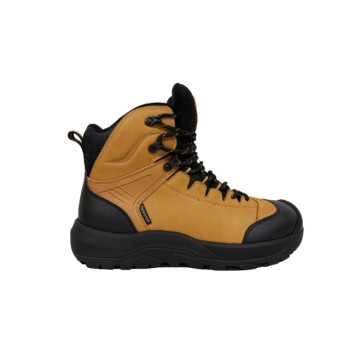
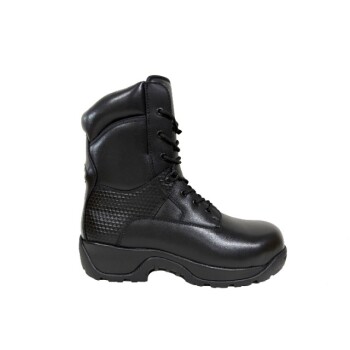
For severe cold and stationary work, you need an insulation level of 1200 grams (g) or higher. This level is specifically engineered for conditions often below -20°F where your body is generating minimal heat due to a lack of movement, such as when operating equipment or standing watch for extended periods.
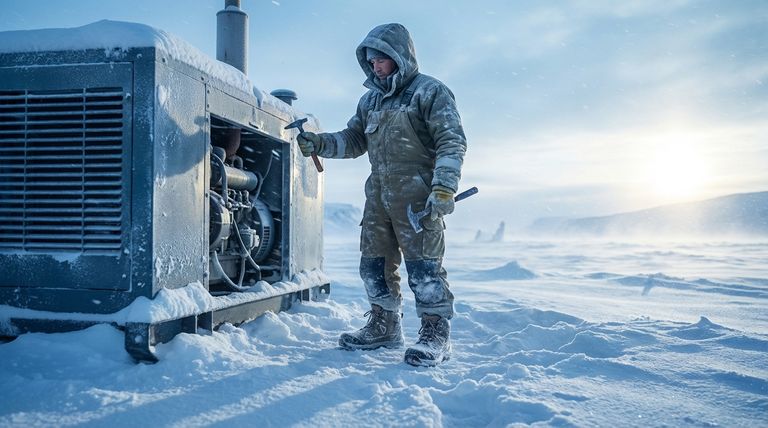
The core principle is simple: as your activity level drops, your insulation requirement skyrockets. For stationary work in severe cold, the boot must do all the work of retaining heat, making maximum insulation a necessity, not a luxury.
How Insulation Ratings Function
Understanding the "G"
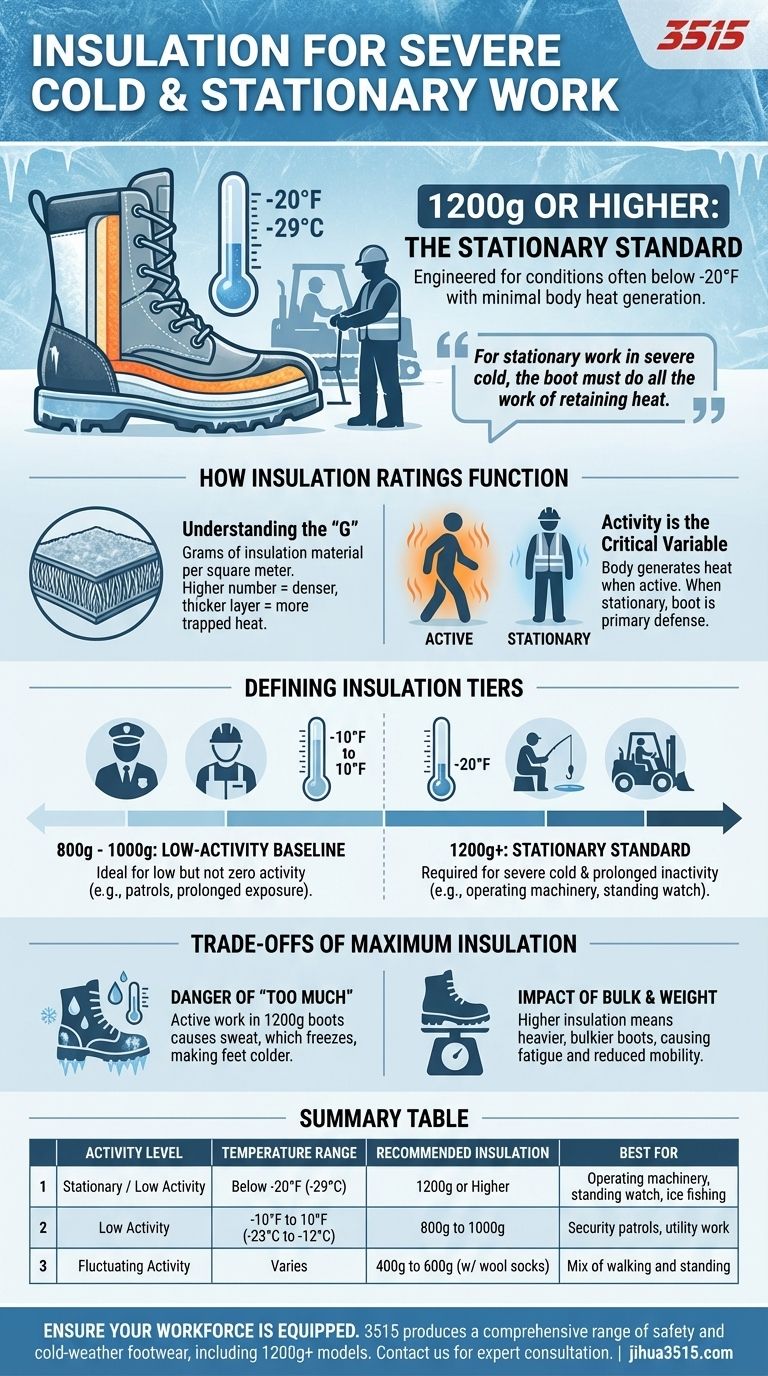
The "g" in an insulation rating, like 1200g, stands for grams of insulation material per square meter of fabric.
A higher number signifies a denser, thicker layer of insulation. This traps more of your body's natural heat within the boot, creating a more effective barrier against the cold.
Activity is the Critical Variable
Your body generates significant heat when you're active, such as when hiking or walking. This heat helps keep your feet warm.
When you are stationary, you produce very little metabolic heat. The boot's insulation becomes the primary defense against cold, requiring a much higher rating to compensate.
Defining the Insulation Tiers for Cold Weather
800g to 1000g: The Low-Activity Baseline
Boots in the 800g to 1000g range are designed for extremely cold conditions, typically between -10°F and 10°F.
This tier is ideal for workers with low but not zero activity. Think of security personnel on patrol or utility workers who experience prolonged exposure but are not completely motionless.
1200g and Higher: The Stationary Standard
Insulation of 1200g or more is engineered for the most demanding scenarios: severe cold (below -20°F) combined with prolonged inactivity.
This is the required level for tasks like ice fishing, hunting from a blind, or operating heavy machinery in arctic or deep winter conditions where you remain seated or standing for hours.
Understanding the Trade-offs of Maximum Insulation
The Danger of "Too Much" Insulation
Choosing an insulation level that is too high for your activity can be counterproductive and even dangerous.
If you wear 1200g boots while performing active work, your feet will sweat profusely. This moisture gets trapped, freezes, and will ultimately make your feet colder than a less insulated boot would have.
The Impact of Bulk and Weight
Higher insulation levels mean a heavier and bulkier boot.
While essential for stationary warmth, this added weight can cause fatigue and reduce mobility if your work requires even moderate walking or climbing. The right boot must match the specific task.
Making the Right Choice for Your Task
- If you are truly stationary for hours in temperatures below -20°F: Your only safe choice is 1200g insulation or higher.
- If your work involves low activity in temperatures from -10°F to 10°F: A boot with 800g to 1000g of insulation offers the best balance of warmth and mobility.
- If your activity level fluctuates between active and stationary: Consider a moderately insulated boot (400g-600g) paired with a high-quality, moisture-wicking wool sock system that you can adjust as needed.
Matching your insulation directly to your activity level and environment is the key to ensuring both safety and comfort.
Summary Table:
| Activity Level | Temperature Range | Recommended Insulation | Best For |
|---|---|---|---|
| Stationary / Low Activity | Below -20°F (-29°C) | 1200g or Higher | Operating machinery, standing watch, ice fishing |
| Low Activity | -10°F to 10°F (-23°C to -12°C) | 800g to 1000g | Security patrols, utility work with prolonged exposure |
| Fluctuating Activity | Varies | 400g to 600g (with wool socks) | Work that mixes walking with periods of standing |
Ensure your workforce is equipped for extreme conditions.
As a large-scale manufacturer, 3515 produces a comprehensive range of safety and cold-weather footwear for distributors, brand owners, and bulk clients. Our production capabilities encompass all types of insulated boots, including specialized models with 1200g+ insulation for maximum protection in severe cold.
We can help you source or develop the perfect boot for your specific application, ensuring safety, comfort, and compliance.
Contact our expert team today for a consultation and to discuss your requirements.
Visual Guide
Related Products
- Premium Insulated Safety Boots and Shoes for Wholesale & Bulk Orders
- High Performance Fire-Retardant Waterproof Safety Boots
- Premium Wholesale Waterproof Safety Boots High Performance Protection for Industrial Markets
- Factory Direct Wholesale Rain Boots Durable Waterproof & Fully Customizable
- Premium Waterproof High-Cut Industrial Safety Boots for Wholesale and Bulk Orders
People Also Ask
- What are the recommended insulation ratings for mild winter conditions? A Guide for Active & Stationary Workers
- How does insulation thickness correlate with temperature ranges? A Guide to Choosing the Right Warmth
- What safety advantages do insulated boots offer beyond warmth? Dielectric Protection & Superior Grip
- How does fleece lining contribute to the warmth of insulated boots? Trapping Air for Superior Cold Protection
- What are the key features of insulated boots designed for cold weather? A Guide to Warmth, Dryness & Safety