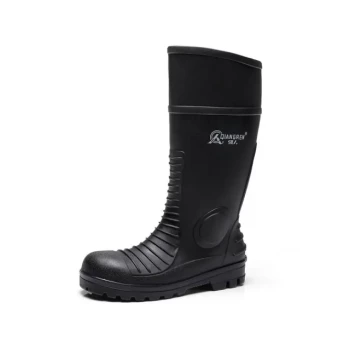
The primary necessity for distinguishing between indoor and outdoor specialized footwear is to bridge the gap in patient compliance and ensure continuous protection. While outdoor footwear is designed for durability, indoor designs prioritize lightweight materials and breathability to encourage patients to wear them within the home. Without this specific indoor option, patients frequently revert to walking barefoot or using unsupportive slippers, exposing themselves to significant injury risks during their downtime.
The core objective of this distinction is to achieve true 24-hour protection. By acknowledging that patients require different features for comfort at home versus durability outside, specialized indoor designs solve the behavioral problem of non-compliance that leads to preventable injuries.
The Challenge of Continuous Protection
The "At-Home" Compliance Gap
The greatest vulnerability for patients requiring protective footwear often exists inside their own homes. Because standard protective shoes can be heavy or cumbersome, patients are naturally inclined to remove them upon entering the house.
The Risks of Standard Alternatives
When patients remove specialized footwear, they typically switch to standard slippers or walk barefoot. These alternatives lack the necessary support and protection, frequently leading to injuries that undermine the medical treatment plan.
Addressing User Behavior
Designing specifically for the indoors acknowledges human behavior. It moves away from a "one-shoe-fits-all" approach to a strategy that fits the patient's lifestyle, ensuring the protective device is actually used.
Engineering for the Indoor Environment
Prioritizing Comfort and Breathability
Indoor protective footwear is engineered to minimize weight and maximize air circulation. These features address the primary complaints patients have regarding heavy outdoor boots, making the footwear feel less like a medical device and more like a comfortable slipper.
Ease of Application
Indoor designs focus on ease of wear, allowing patients to put them on and take them off without struggle. This reduces the friction of use, making it more likely the patient will keep them on for short trips around the house.
Retaining Core Medical Function
Despite the focus on comfort, indoor designs do not compromise on therapy. They maintain core decompression functions, ensuring that the foot remains offloaded and protected even when the materials used are lighter.
Understanding the Trade-offs
Durability vs. Weight
To achieve a lightweight profile, indoor footwear often sacrifices the rugged durability found in outdoor counterparts. These shoes are not designed to withstand abrasive outdoor surfaces or harsh weather elements.
Specificity of Use
Users must understand that indoor footwear is strictly for controlled environments. Using lightweight indoor designs for outdoor activities can compromise the shoe's structural integrity and reduce the protection level provided to the foot.
Making the Right Choice for Your Goal
To ensure the best outcomes, consider how the footwear integrates into the patient's daily routine.
- If your primary focus is improving compliance: Prioritize indoor designs that feature breathable materials and simple closure systems to discourage barefoot walking.
- If your primary focus is comprehensive injury prevention: Implement a dual-strategy that mandates robust footwear for travel and specialized lightweight footwear for immediate use upon returning home.
By treating the indoor environment as a distinct protective zone, you transform patient compliance from a struggle into a sustainable habit.
Summary Table:
| Feature | Indoor Protective Footwear | Outdoor Protective Footwear |
|---|---|---|
| Primary Goal | Patient Compliance & Comfort | Durability & Rugged Protection |
| Material Weight | Lightweight & Flexible | Heavy-duty & Robust |
| Breathability | High (Optimal for home use) | Variable (Weather-resistant) |
| Durability | Low (Controlled environments) | High (Abrasive surfaces) |
| Key Benefit | Prevents barefoot walking risks | Protects against external elements |
Secure 24-Hour Protection for Your Brand Portfolio
As a large-scale manufacturer serving distributors and brand owners, 3515 offers comprehensive production capabilities for all footwear types, anchored by our flagship Safety Shoes series. Our extensive portfolio covers work and tactical boots, outdoor shoes, training shoes, and sneakers, as well as Dress & Formal shoes to meet diverse bulk requirements.
Partner with us to provide your customers with high-quality, specialized footwear that balances medical necessity with daily comfort. From rugged outdoor work boots to specialized indoor designs, we bring the engineering expertise and scale your business needs.
Contact 3515 Today to Discuss Your Bulk Requirements
References
- Yiru Wang, Wen Qin. Perceptions of protective shoes and recommendations from patients with diabetic foot ulcers. DOI: 10.35772/ghm.2023.01029
This article is also based on technical information from 3515 Knowledge Base .
Related Products
- Wholesale Customizable Safety Boots Durable & Protective Footwear Manufacturing
- Premium Suede Sport Safety Shoes for Wholesale & Bulk Orders
- Wholesale Anti-Smash & Puncture-Proof Safety Shoes Custom Manufacturing for Brands
- Premium Safety Shoes with Rotating Buckle Safety Sneakers
- Premium Lightweight Safety Shoes for Wholesale & Bulk Orders
People Also Ask
- Why are industrial safety boots with steel toes necessary for machine operators? Essential Foot Protection for Safety
- What is the history of steel toe work boots? From German Invention to Modern Safety Standard
- What are the different types of steel toe work boots? Choose the Right Boot for Your Job
- What are the pros and cons of steel toe work boots? A Guide to Maximum Protection vs. Comfort
- What common features do safety toe work boots share regardless of style? Essential Protection Explained