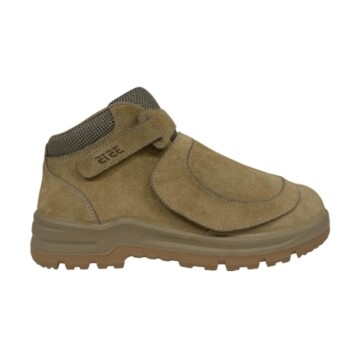
At its core, a metatarsal guard is armor for the top of your foot. It is a protective shield, made from materials like rigid plastic, metal, or advanced foams, that covers the five long metatarsal bones connecting your ankle to your toes. This guard works by absorbing and deflecting the force from heavy items that might fall, drop, or roll onto your foot, preventing severe impact injuries.
The standard safety toe protects your toes, but the metatarsal guard protects the vulnerable, bridge-like structure of your mid-foot. Understanding the difference between external and internal guards, and rigid versus flexible materials, is the key to matching the right protection to your specific work environment.
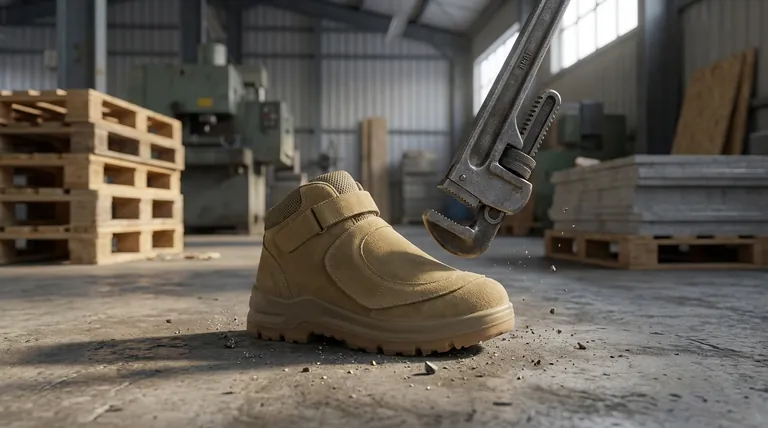
How Metatarsal Guards Prevent Injury
A metatarsal injury is debilitating and common in industrial settings. These guards are specifically engineered to prevent fractures to the delicate bones on the top of the foot.
The Anatomy of an Impact
The metatarsal bones form the dome of your foot. They are relatively thin and lack the natural protection of muscle or fat, making them highly susceptible to fracture from direct, top-down impact.
The Principle of Force Dispersion
The primary function of a metatarsal guard is to disperse energy. When an object strikes the guard, the rigid or semi-rigid material spreads the force of that impact over a much larger surface area, reducing the pressure on any single point and preventing the bone from breaking.
Common Protective Scenarios
These guards are critical in any environment with risks from falling tools, rolling pipes or cylinders, or compression from heavy materials. They provide a layer of defense that a steel or composite toe alone cannot offer.
The Two Primary Types of Guards
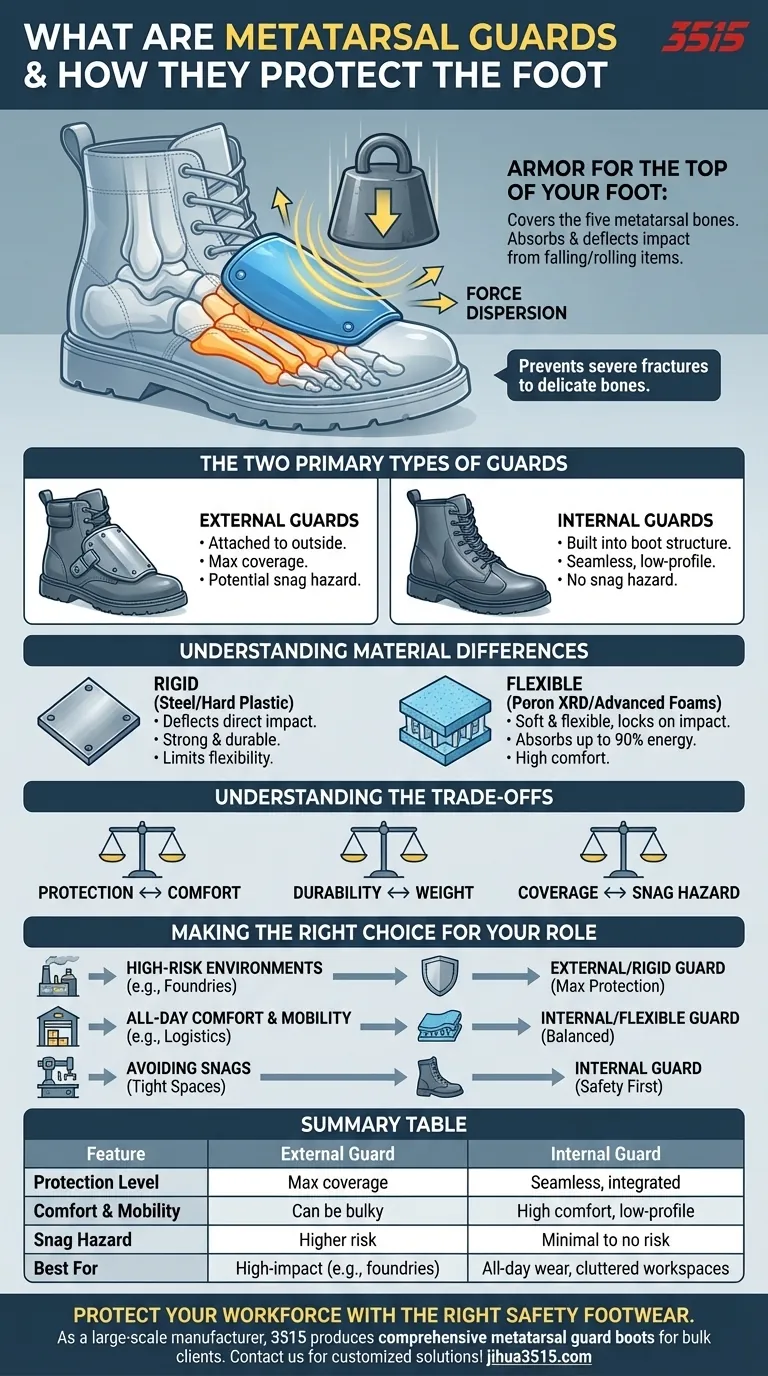
The main distinction in metatarsal protection comes down to whether the guard is integrated into the boot or attached to the outside.
External Metatarsal Guards
These are shields that are attached to the outside of the footwear, often over the laces. They typically offer the most extensive coverage area and can sometimes be added to existing boots.
The main advantage is maximum protection. The downside is that they can be bulky and may pose a snagging hazard when working around machinery or debris.
Internal Metatarsal Guards
These are built directly into the structure of the boot, sitting underneath the outer layer of leather or fabric. This creates a seamless, low-profile design.
The primary benefit is a lack of snag hazards and a more traditional boot appearance. While highly effective, some internal designs may offer slightly less coverage than the largest external models.
Understanding Material Differences
The material of the guard dictates its protective qualities and its feel during a workday.
Rigid Materials: Steel and Hard Plastics
Traditional guards often use steel, aluminum, or rigid composite plastics. These materials are excellent at deflecting direct, heavy impacts. They are incredibly strong and durable.
However, their rigidity can sometimes limit the boot's flexibility, which may be a consideration for workers who need to crouch or bend frequently.
Flexible Materials: Poron XRD and Advanced Foams
Modern guards often use specialized, impact-absorbing foams like Poron. This open-cell material is soft and flexible during normal wear, providing exceptional comfort.
Upon impact, the material's molecules instantly lock together to form a hard, protective shell that absorbs and dissipates up to 90% of the energy. This offers a high degree of protection without sacrificing comfort or mobility.
Understanding the Trade-offs
Choosing the right metatarsal guard involves balancing competing priorities. There is no single "best" option for every job.
Protection vs. Comfort
This is the central dilemma. An external steel guard may offer the absolute highest level of impact deflection, but an internal foam guard will be significantly more comfortable and flexible for all-day wear. The choice depends on a realistic assessment of your daily risks.
Durability vs. Weight
Heavier, rigid materials like steel are exceptionally durable but add weight to the boot, which can contribute to fatigue over a long shift. Lighter composite and foam materials reduce this burden but must be checked for wear and tear over time.
Coverage vs. Snag Hazard
External guards provide wide coverage but can get caught on equipment, ladders, or debris. Internal guards eliminate this risk entirely, making them a safer choice for cluttered or complex work environments.
Making the Right Choice for Your Role
Select your foot protection based on a clear-eyed analysis of your daily tasks and the most probable risks you face.
- If your primary focus is maximum protection in high-risk environments (e.g., foundries, heavy manufacturing): An external guard made from steel or rigid composite provides the most robust defense against severe impacts.
- If your primary focus is all-day comfort and mobility with moderate risk (e.g., construction, warehouse logistics): An internal guard, particularly one made from flexible materials like Poron, offers an excellent balance of protection and wearability.
- If your primary focus is avoiding snags while working in tight spaces or around machinery: An internal guard is the superior choice to ensure your footwear doesn't become a liability.
Choosing the right metatarsal guard is a critical investment in your personal safety and your ability to perform your job without injury.
Summary Table:
| Feature | External Guard | Internal Guard |
|---|---|---|
| Protection Level | Maximum coverage | Seamless, integrated protection |
| Comfort & Mobility | Can be bulky | High comfort, low-profile design |
| Snag Hazard | Higher risk | Minimal to no risk |
| Best For | High-impact environments (e.g., foundries) | All-day wear, cluttered workspaces |
Protect your workforce with the right safety footwear. As a large-scale manufacturer, 3515 produces a comprehensive range of metatarsal guard boots for distributors, brand owners, and bulk clients. Our production capabilities encompass all types of safety shoes and boots, tailored to your specific industrial needs. Ensure your team's safety and productivity—contact us today for a customized solution!
Visual Guide
Related Products
People Also Ask
- How does metatarsal protection in safety footwear work? The Essential Guide to Foot Safety
- What is a metatarsal guard in safety boots? Essential Protection for Your Entire Foot
- How do metatarsal guards enhance work shoe safety? Prevent Crushing Foot Injuries on the Job
- What does the 'MT' in ASTM F2413-18 stand for? Essential Metatarsal Protection Explained
- What is metatarsal protection in safety boots? Essential Defense for Top-of-Foot Hazards