
At its core, caring for farm boots is a critical professional practice that directly impacts your safety, financial resources, and daily comfort. Proper maintenance is not about aesthetics; it is about preserving the essential functions of your most important piece of gear, extending its lifespan, and ensuring it protects you from workplace hazards effectively.
Boot maintenance is an investment, not a chore. It ensures your footwear remains a reliable tool for safety and performance, preventing the premature costs and risks associated with neglect.
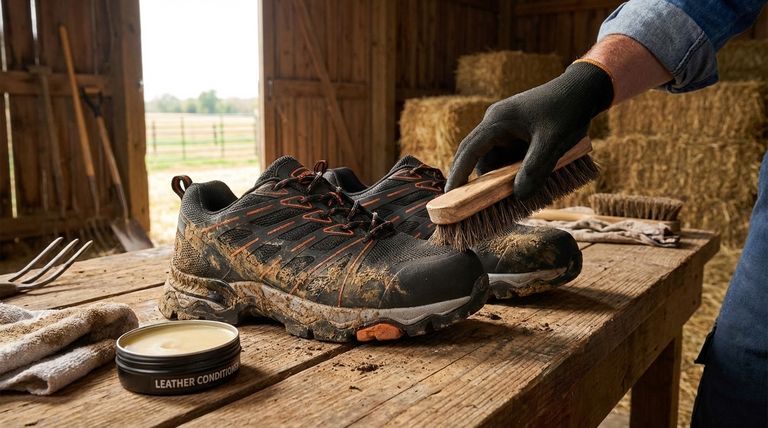
The Core Pillars of Boot Maintenance
Understanding why boot care is essential requires looking at it from several angles: financial, safety, performance, and personal well-being. Each pillar is interconnected and vital to professional farm work.
Extending Lifespan and Financial Value
Properly maintained farm boots last significantly longer, directly reducing the frequency of costly replacements. Regular care prevents premature wear and tear on materials like leather and rubber.
Well-cared-for leather, in particular, can last for many years, often improving with age as the material develops a unique character. This turns your boots from a disposable item into a long-term asset.
Preserving Critical Safety Features
Your boots are a primary piece of safety equipment. Neglect directly compromises their ability to protect you.
Waterproofing treatments and material integrity are crucial for keeping feet dry and warm, especially in winter. Without maintenance, these protective layers degrade, exposing you to the elements.
Most importantly, the structural integrity that protects against impacts and punctures can be weakened by cracks, loose stitching, or sole separation—all issues that regular inspection and care can prevent.
Maintaining Performance and Functionality
The effectiveness of your boots depends on their condition. Worn-out soles reduce traction on slippery or uneven terrain, increasing the risk of falls.
The boot's specific features, whether insulation, breathability, or ankle support, all function optimally only when the boot is in good condition.
Ensuring Comfort and Hygiene
Comfort is not a luxury; it is essential for productivity and long-term health. Boots that are stiff, cracked, or waterlogged cause significant discomfort and can lead to blisters or foot problems.
Regular cleaning and drying also maintain hygiene, preventing the buildup of bacteria and fungi that can cause odors and skin issues.
The Consequences of Neglect
Ignoring boot maintenance has tangible negative outcomes that go beyond simply having to buy a new pair sooner.
Compromised Protection
The most significant consequence is reduced safety. A boot that fails under stress is a serious hazard. Degraded materials offer less protection from machinery, animals, or environmental dangers.
Accelerated Wear and Tear
Exposure to mud, moisture, and chemicals rapidly breaks down boot materials. Without regular cleaning and conditioning, leather becomes brittle and cracks, and stitching can rot and fail.
Financial and Environmental Costs
The need for frequent replacements due to neglect adds up to a significant, and avoidable, financial expense. Furthermore, constantly discarding old boots contributes to unnecessary waste, impacting the environment.
Making the Right Choice for Your Work
Effective care starts with selecting the right tool for the job. The best maintenance routine cannot fix the problems caused by using footwear unsuited for your specific environment.
Matching Boots to Your Needs
Consider your primary work environment. Rubber boots are ideal for wet, muddy conditions, while leather offers durability and breathability for drier work.
The terrain, weather, and specific tasks—from operating machinery to animal care—should dictate your choice of insulation, ankle support, and sole type.
The Importance of Regular Inspection
No matter the type, regular inspection is key. Look for cracks, loose stitching, or excessive wear on the soles. Catching these issues early allows for prompt repairs, such as resoling, which can dramatically extend the life of high-quality boots.
Applying This to Your Goals
Your approach to boot care should align with your primary priorities.
- If your primary focus is safety: Make regular inspections for structural damage your top priority, ensuring protective features are never compromised.
- If your primary focus is saving money: View cleaning and conditioning as essential tasks that directly delay the need for a costly replacement.
- If your primary focus is long-term durability: Invest in high-quality boots and follow the manufacturer's care instructions meticulously to maximize their lifespan.
Ultimately, treating your farm boots as a vital piece of professional equipment is fundamental to your work's safety, efficiency, and sustainability.
Summary Table:
| Key Benefit of Boot Care | Why It Matters |
|---|---|
| Extends Lifespan | Reduces the frequency and cost of replacements. |
| Preserves Safety | Maintains protection against punctures, impacts, and the elements. |
| Ensures Performance | Keeps traction, support, and other functional features effective. |
| Improves Comfort | Prevents blisters and foot problems for long-day productivity. |
As a large-scale manufacturer, 3515 produces a comprehensive range of durable footwear for distributors, brand owners, and bulk clients. Our production capabilities encompass all types of work boots designed for the demands of farming and agriculture.
Ensure your team has the reliable, long-lasting footwear needed for safety and efficiency. Contact us today to discuss your specific needs and discover how our boots can become a long-term asset for your operation.
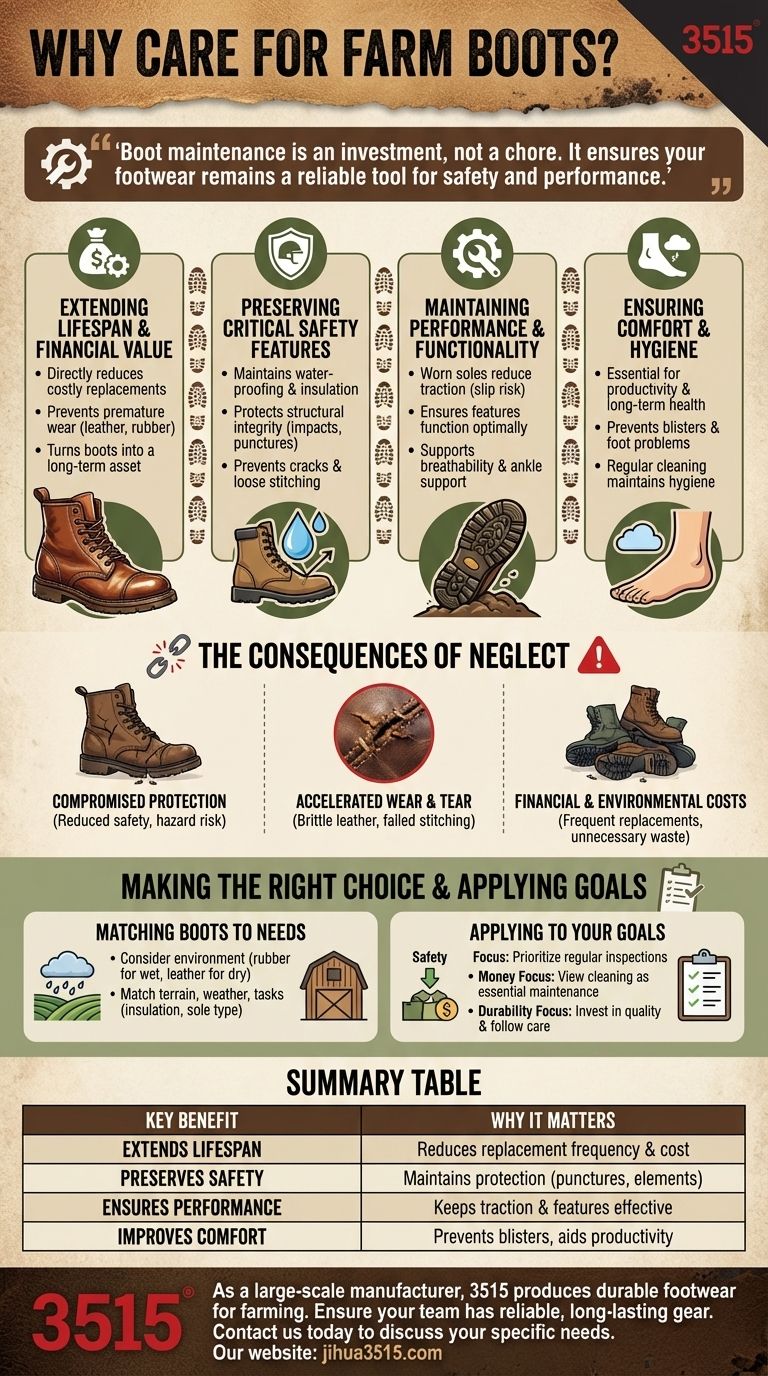
Visual Guide
Related Products
- Durable Leather Work Boots for Wholesale & Custom Manufacturing
- Durable Leather Work Boots for Wholesale & Custom OEM Manufacturing
- Durable Goodyear Welt Leather Work Boots for Wholesale & Private Label
- Factory Direct Wholesale Rain Boots Durable Waterproof & Fully Customizable
- Wholesale Customizable Safety Boots Durable & Protective Footwear Manufacturing
People Also Ask
- What is the difference between full-grain and top-grain leather? Premium Material Guide for Boot Manufacturers
- What are the common workplace hazards that can be mitigated with the right work boots? Protect Your Workforce
- What are the common foot issues workers face due to uncomfortable work boots? Prevent Pain & Deformities
- What are the advantages of leather versus synthetic work boots? A Guide to Choosing the Right Material
- What are the key components of modern work boots? Engineered for Ultimate Durability and Comfort



















