
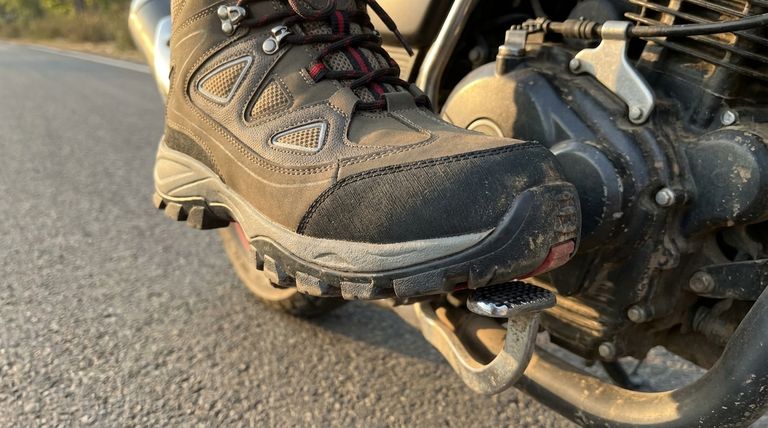
Simply put, a shifter patch is a piece of durable material on the top of the left motorcycle boot that protects it from damage. It sits at the exact point where the gear shift lever repeatedly rubs against the boot during upshifts. Its sole purpose is to prevent premature wear, scuffing, and eventual holes, thereby extending the life of your footwear.
While not an absolute necessity for a boot to be functional, a shifter patch is a critical feature for any regular rider. It solves the inevitable problem of gear lever damage, preserving both the boot's integrity and its appearance over thousands of miles.
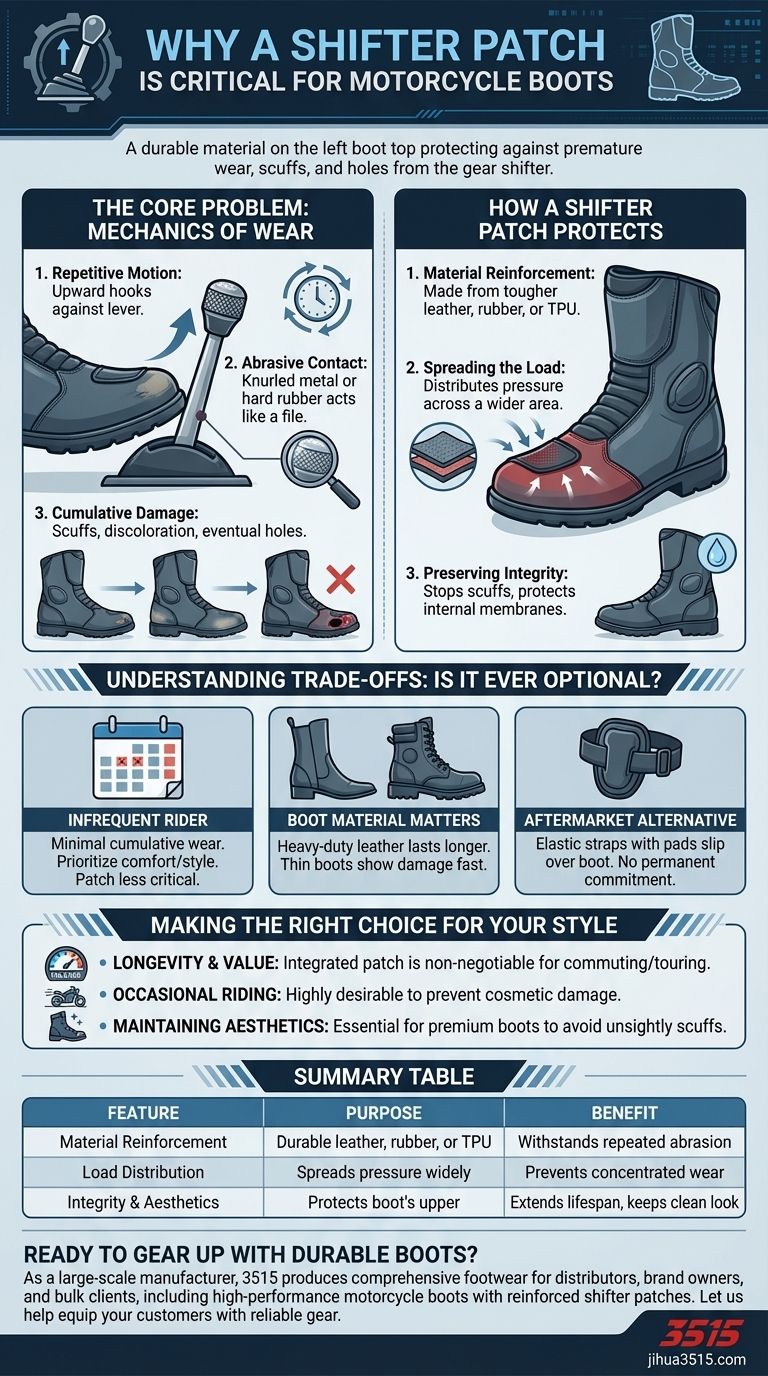
The Core Problem: The Mechanics of Wear
To appreciate the value of a shifter patch, you must first understand the small but persistent force it counteracts. Every single upshift contributes to the wear and tear on your left boot.
The Repetitive Motion
Motorcycle gear shifting requires you to hook your toes under the shift lever and lift it. This action presses the top of your boot directly against the shifter.
The Abrasive Contact Point
Most shift levers are made of knurled metal or hard rubber to provide grip. This textured surface, while good for control, acts like a file against the material of your boot with every shift.
The Cumulative Damage
This constant, focused abrasion quickly leads to visible damage. On materials like leather or synthetic textiles, this starts as a scuff mark, evolves into discoloration, and can eventually wear a hole straight through the boot.
How a Shifter Patch Provides Protection
A shifter patch is a purpose-built solution that directly addresses the mechanical wear caused by the gear lever. It's a simple feature with significant impact.
Material Reinforcement
Shifter patches are made from materials far more durable than the boot's main upper. This is often double-layered leather, textured rubber, or a tough polymer like TPU (Thermoplastic Polyurethane).
Spreading the Load
The patch distributes the pressure and friction from the small tip of the shifter across a wider, more resilient surface. This prevents the force from being concentrated on a single weak point.
Preserving Integrity and Aesthetics
Beyond just preventing a hole, the patch keeps your boots looking clean and new. It stops the infamous "shifter toe" scuff, and more importantly, it protects any underlying waterproof membranes or safety structures from being compromised by abrasion.
Understanding the Trade-offs: Is It Ever Optional?
While a shifter patch is a sign of a well-designed riding boot, there are situations where its absence might not be a deal-breaker. Objectivity is key to determining its importance for you.
For the Infrequent Rider
If you only ride a few times a year for short distances, the cumulative wear on your boot will be minimal. In this case, the lack of a patch is less of a concern, and you could prioritize other features like comfort or style.
When Boot Material Matters
Some heavy-duty boots are constructed from exceptionally thick leather where the wear process would take a very long time. Conversely, a stylish, thin leather boot will show shifter damage almost immediately without a patch.
The Aftermarket Alternative
If you own or prefer a pair of boots without an integrated patch, you can buy a separate shifter protector. These are typically elastic straps with a durable pad that you slip over your boot, offering the same protection without committing to a specific piece of footwear.
Making the Right Choice for Your Riding Style
Ultimately, the need for a shifter patch depends entirely on how you ride and what you value in your gear.
- If your primary focus is longevity and value: A boot with an integrated shifter patch is a non-negotiable feature that will protect your investment for years of commuting or touring.
- If your primary focus is occasional riding: The patch is a highly desirable feature that prevents cosmetic damage, but its absence shouldn't stop you from buying an otherwise perfect boot.
- If your primary focus is maintaining aesthetics: For riders who invest in premium or stylish boots, an integrated shifter patch is essential to prevent the unsightly scuff mark that can ruin their appearance.
Choosing the right gear is about aligning its features with your real-world needs.
Summary Table:
| Feature | Purpose | Benefit |
|---|---|---|
| Material Reinforcement | Made from durable leather, rubber, or TPU | Withstands repeated abrasion from the shifter |
| Load Distribution | Spreads pressure across a wider area | Prevents concentrated wear and tear on a single spot |
| Integrity & Aesthetics | Protects the boot's upper material | Extends boot lifespan and maintains a clean look |
Ready to gear up with durable, long-lasting motorcycle boots?
As a large-scale manufacturer, 3515 produces a comprehensive range of footwear for distributors, brand owners, and bulk clients. Our production capabilities encompass all types of shoes and boots, including high-performance motorcycle boots built with features like reinforced shifter patches for maximum durability.
Let us help you equip your customers with reliable gear that stands the test of time and the road.
Contact us today to discuss your footwear needs and explore our manufacturing solutions!
Visual Guide
Related Products
- Premium Wholesale Tactical Style Safety Shoes Boots with Quick Lacing
- Wholesale Lightweight Tactical Boots with Dial Closure OEM & Bulk Orders
People Also Ask
- How are gait analysis research findings applied to the functional design of safety shoes and tactical boots?
- How do quality certification standards for safety shoes reduce perceived risk? Buy Online with Technical Certainty
- How can specialized footwear mitigate safety risks? High-Volume OEM/ODM Solutions since 1951
- Why is the synchronization of craftsmanship and UX development emphasized for bulk customization of safety shoes?
- How does anthropomorphic design influence material selection? Enhance Footwear Performance through Biological Alignment

