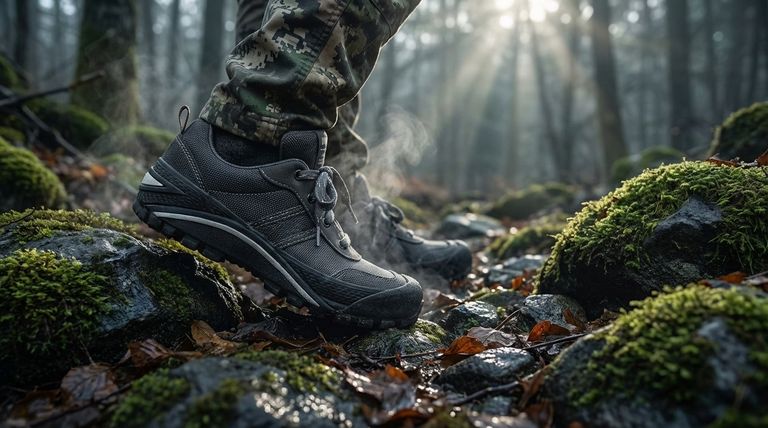
Breathability in hunting boots is the critical mechanism that regulates internal foot temperature and actively evacuates perspiration. It is the defining factor that keeps your feet dry from the inside out, preventing the moisture buildup that compromises both skin integrity and thermal insulation.
Core Takeaway: Breathability is a performance necessity, not just a comfort feature. By allowing internal moisture (sweat) to escape while shielding against external elements, breathable boots prevent blisters during high activity and prevent freezing during periods of inactivity.
The Physiology of Foot Climate
To understand the necessity of breathability, you must understand how moisture affects the foot during a hunt.
Active Moisture Management
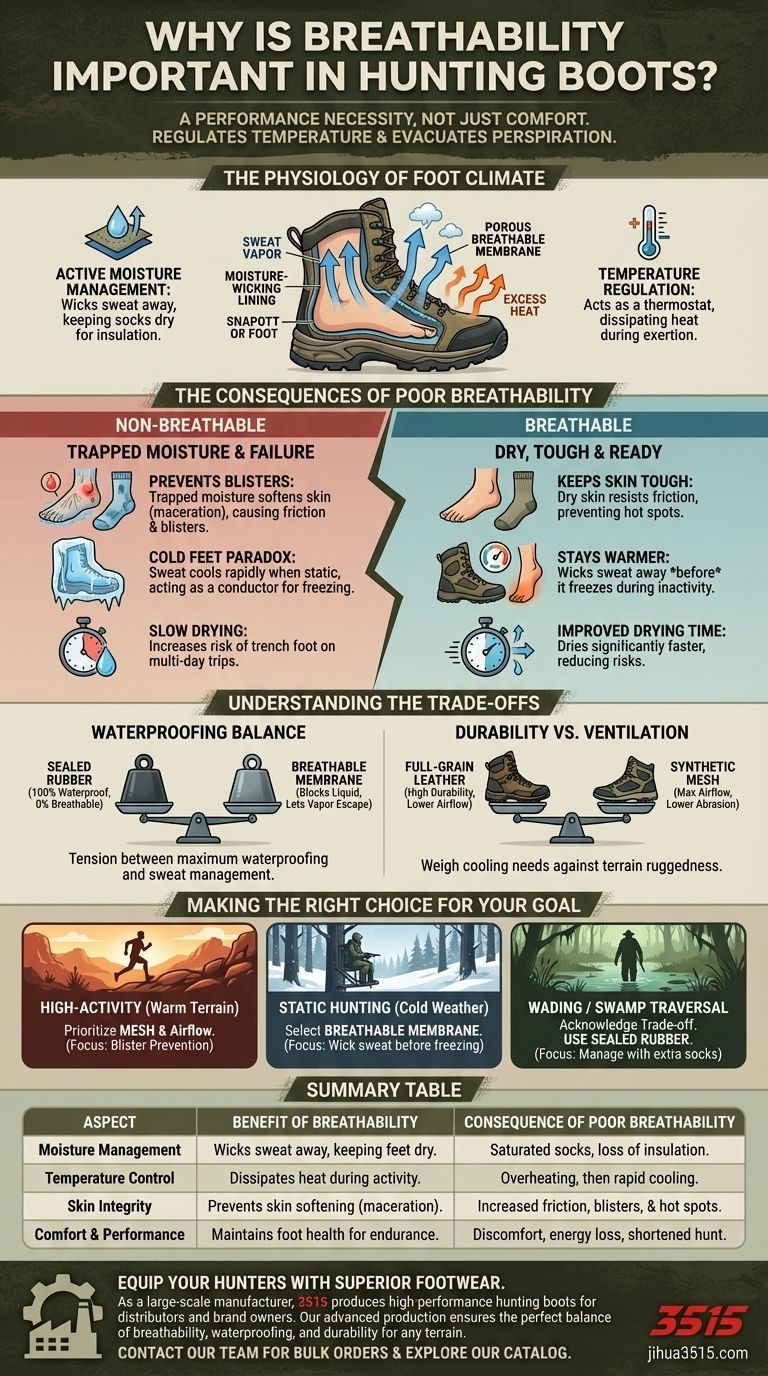
High-activity hunts involve rigorous movement which generates significant heat and perspiration. Breathable boots utilize moisture-wicking linings and porous membranes to transport sweat vapor away from the skin. If this vapor is trapped, your socks become saturated, rendering them useless as insulators or cushions.
Temperature Regulation
Breathability acts as a thermostat for your feet. By promoting airflow, these boots allow excess heat to dissipate during steep climbs or fast treks. This prevents systemic overheating, keeping your energy focused on the hunt rather than managing physical discomfort.
The Consequences of Poor Breathability
The "Deep Need" for breathability is avoiding the physical failures that can end a hunt early.
Preventing Blisters and Hot Spots
Moisture is the enemy of skin integrity. When feet stay wet, the skin softens—a process known as maceration. Soft skin is highly improved to friction, leading to hot spots and blisters. Breathability keeps the skin dry and tough, maintaining your ability to cover ground.
The Paradox of Cold Feet
One of the most dangerous misconceptions is that sealed boots are warmer. If you sweat inside a non-breathable boot while hiking to a stand, that moisture remains trapped. Once you stop moving, that sweat cools rapidly, acting as a conductor that draws heat away from your body, leading to freezing feet.
Improved Drying Time
Field conditions are unpredictable, and water may eventually enter over the cuff. Breathable materials allow boots to dry significantly faster than non-breathable rubber or heavy leather options. This reduces the risk of trench foot during multi-day expeditions.
Understanding the Trade-offs
While breathability is vital, it exists on a spectrum that requires compromise.
The Waterproofing Balance
There is an inherent tension between maximum waterproofing and maximum breathability. Rubber boots are completely waterproof but offer zero breathability, guaranteeing sweat accumulation. Breathable membranes block liquid water while letting vapor escape, but they may eventually wet-out in extreme, prolonged submersion.
Durability vs. Ventilation
Boots designed for maximum airflow often utilize synthetic mesh or lighter leathers. While excellent for cooling, these materials may not offer the same abrasion resistance as heavy, full-grain leather. You must weigh the need for air circulation against the ruggedness of the terrain you traverse.
Making the Right Choice for Your Goal
Select your footwear based on your specific activity level and environment.
- If your primary focus is high-activity hunting in warm terrain: Prioritize boots with substantial mesh panels and uninsulated linings to maximize airflow and blister prevention.
- If your primary focus is static hunting in cold weather: Select boots with a high-quality breathable membrane (like Gore-Tex) to wick sweat away from your skin before it freezes during long periods of sitting.
- If your primary focus is wading or swamp traversal: Acknowledge the trade-off and choose sealed rubber boots, but bring extra socks to manage the inevitable internal condensation.
The right boot does not just protect your feet from the ground; it manages the environment inside the boot to ensure you finish the hunt as strong as you started.
Summary Table:
| Aspect | Benefit of Breathability | Consequence of Poor Breathability |
|---|---|---|
| Moisture Management | Wicks sweat away, keeping feet dry. | Saturated socks, loss of insulation. |
| Temperature Control | Dissipates heat during activity. | Overheating, then rapid cooling. |
| Skin Integrity | Prevents skin softening (maceration). | Increased friction, blisters, and hot spots. |
| Comfort & Performance | Maintains foot health for endurance. | Discomfort, energy loss, shortened hunt. |
Ready to Equip Your Hunters with Superior Footwear?
As a large-scale manufacturer, 3515 produces a comprehensive range of high-performance hunting boots for distributors, brand owners, and bulk clients. Our advanced production capabilities ensure boots with the perfect balance of breathability, waterproofing, and durability for any terrain.
We help you provide gear that ensures your customers' success and comfort, from the first step to the last.
Contact our team today to discuss your specific needs and explore our catalog.
Visual Guide
Related Products
- Wholesale Lightweight Tactical Boots Custom Manufacturer for Desert & Combat Use
- High-Traction Suede Tactical Boots Wholesale & Custom Manufacturing
- Durable Leather Tactical Boots Wholesale & Custom Manufacturing for Brands
- Wholesale High-Traction Camo Boots - Custom Manufacturer for Brands
- Durable Spiked Camouflage Boots Wholesale & Factory Production
People Also Ask
- What are the common types of combat boots? Find the Right Boot for Your Mission
- What specialized protections do tactical boots offer? Maximize Endurance with High-Performance Footwear
- What are the different types of tactical boots available? Find the Right Boot for Your Mission
- How does additive manufacturing equipment reduce environmental risks? Sustainable Tactics for Modern Footwear Production
- How is the compatibility of polymer materials demonstrated in smart footwear? Enhancing Tactical & Training Performance