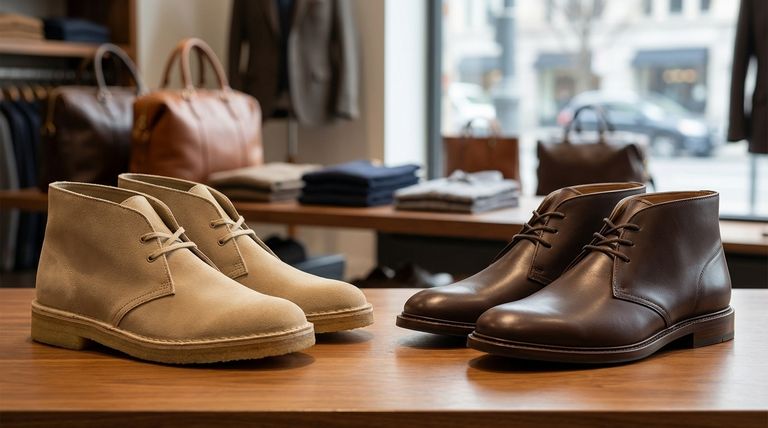
At its core, the difference is simple: a Desert boot is a specific type of Chukka boot, but not all Chukkas are Desert boots. The key distinctions lie in the sole and the upper material, which define the Desert boot as a more casual, specialized version of the broader Chukka category.
While both boots share the same ankle-high, two-to-three eyelet silhouette, the defining feature of a classic Desert boot is its soft crepe rubber sole, whereas a traditional Chukka typically uses a harder leather or rubber sole. This single difference dictates their respective levels of formality and intended use.
What Defines the Chukka Boot?
To understand the Desert boot, you must first understand the foundational design it's built upon. The Chukka is a simple, versatile ankle boot defined by a few key characteristics.
The Ankle-High Cut
A Chukka is, by definition, an ankle-length boot. This provides more coverage than a shoe but is less restrictive than a full-height boot, making it highly versatile.
The Minimalist Lacing System
The most recognizable feature is the open lacing system, which almost always consists of just two or three pairs of eyelets. This minimal design contributes to its clean, uncluttered appearance.
Simple, Unadorned Uppers
Chukkas are constructed with a few large pieces of material (often just two), resulting in a smooth and simple profile without broguing or excessive stitching.
How the Desert Boot Specializes the Design
The Desert boot takes the basic Chukka blueprint and applies specific features that were born from military necessity in North Africa during World War II.
The Signature Crepe Sole
This is the single most important distinction. A true Desert boot has a sole made of crepe rubber, a natural, crinkled latex that is lightweight, flexible, and provides excellent cushioning. This made it perfect for walking on sand.
The Unlined Suede Upper
Classic Desert boots feature a simple, unlined suede upper. This construction choice made them lightweight and breathable in hot climates. While modern versions from brands like Clarks may offer leather options, the archetype is suede.
A Legacy of Utility
The Desert boot was designed for function over form. Its purpose was to be a light, strong, and comfortable boot for soldiers in desert conditions, which explains its inherently casual and utilitarian nature.
Understanding the Trade-offs
Choosing between these boots involves recognizing the functional compromises inherent in each design. The features that make a Desert boot unique also create its limitations.
The Crepe Sole's Downside
While exceptionally comfortable, a crepe sole is also porous and soft. It absorbs dirt and stains easily, can become sticky in high heat, and tends to wear down faster than the hard leather or dense rubber soles found on more traditional Chukkas.
Suede's Vulnerability
Suede is softer and more pliable than smooth leather, but it is also more susceptible to water damage and staining. It requires more careful maintenance to keep it looking its best.
Construction and Formality
A traditional Chukka is often a more robustly constructed boot, sometimes featuring a Goodyear welt and a full leather lining. This makes it sturdier, more formal, and often more expensive than the simple, unlined construction of a classic Desert boot.
Making the Right Choice for Your Wardrobe
Your decision should be guided by your primary use case, whether that's dressing for the office, a casual weekend, or all-weather versatility.
- If your primary focus is business casual or dressier occasions: Choose a traditional Chukka boot, preferably with a smooth leather upper and a slim leather or hard rubber sole.
- If your primary focus is relaxed, everyday comfort: The classic suede Desert boot with its cushioned crepe sole is the ideal choice for smart-casual and weekend wear.
- If your primary focus is all-weather durability: Look for a modern Chukka variation with a weather-resistant leather upper and a sturdy, non-crepe rubber sole for better traction and longevity.
Ultimately, understanding that the sole and upper material dictate the boot's function is the key to selecting the right one for your needs.
Summary Table:
| Feature | Desert Boot | Chukka Boot |
|---|---|---|
| Sole Type | Soft crepe rubber | Hard leather or rubber |
| Upper Material | Typically unlined suede | Often smooth leather |
| Formality | Casual | Business casual to dressy |
| Best For | Everyday comfort, relaxed wear | Office, dressier occasions |
Ready to add these classic styles to your collection?
As a large-scale manufacturer, 3515 produces a comprehensive range of footwear for distributors, brand owners, and bulk clients. Our production capabilities encompass all types of shoes and boots, including high-quality Desert and Chukka boots built to your specifications.
Contact us today to discuss your manufacturing needs and discover how we can deliver quality, style, and value.
Visual Guide

Related Products
- Wholesale Lightweight Tactical Boots Custom Manufacturer for Desert & Combat Use
- Durable Military Combat Boots with Water Drainage for Wholesale & OEM
- Durable Spiked Camouflage Boots Wholesale & Factory Production
- Wholesale High-Traction Camo Boots - Custom Manufacturer for Brands
- Durable Leather Tactical Boots Wholesale & Custom Manufacturing for Brands
People Also Ask
- What are the common types of combat boots? Find the Right Boot for Your Mission
- What specialized protections do tactical boots offer? Maximize Endurance with High-Performance Footwear
- What are the main construction similarities between tactical boots and tactical sneakers? Built for Performance & Durability
- What are the different types of tactical boots available? Find the Right Boot for Your Mission
- How is the compatibility of polymer materials demonstrated in smart footwear? Enhancing Tactical & Training Performance