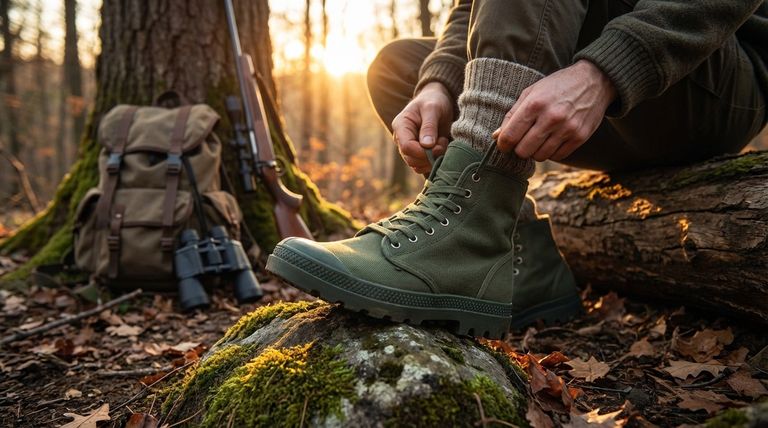
To ensure a precise fit for hunting boots, you must simulate the physiological conditions of a long hunt during the fitting process. This means trying on boots in the afternoon or evening when your feet have naturally swelled, while wearing the exact socks and liners you intend to use in the field.
Core Insight A boot’s size is static, but your foot is dynamic. True comfort requires balancing secure heel retention with enough volume in the toe box to maintain circulation; without this space, even the warmest boot will leave you with cold, blistered feet.
The Mechanics of a Proper Fit
To solve the deep need of endurance and comfort, you must look beyond the number on the size chart and focus on how the boot interacts with your foot's anatomy.
Timing and Preparation
Never fit boots early in the morning. Your feet naturally swell throughout the day due to gravity and activity, mirroring the conditions of a hunt.
Always bring the specific socks you plan to wear. If you hunt in cold climates, fit the boot with your thickest thermal socks to ensure the boot volume can accommodate them without compression.
The Importance of the Toe Box
A roomy toe box is critical for both warmth and mobility. Your toes should be able to wiggle freely; this movement generates heat and maintains blood circulation.
If the toe box is too tight, it constricts blood flow, making your feet colder regardless of insulation levels. It also increases the risk of friction blisters between toes.
Heel Retention and Alignment
While the toes need room, the heel must be locked in place. When laced up, there should be minimal lift in your heel as you walk.
Excessive movement here leads to friction blisters on the heel. The boot shape must match your heel width to provide support without causing pressure points.
Critical Features That Influence Comfort
Beyond the physical fit, the construction of the boot plays a massive role in reducing fatigue over long distances.
Weight and Sole Materials
Heavy boots act as anchors, draining your energy with every step. Look for lightweight materials like EVA (ethylene-vinyl acetate) soles.
These provide excellent cushioning and thermal efficiency without the weight penalty of traditional dense rubber, significantly reducing leg fatigue.
Customization and Support
Most factory insoles are generic placeholders. utilizing custom insoles can correct arch support issues and improve spinal alignment.
Proper lacing techniques also allow you to adjust tension zones, keeping the ankle secure while relieving pressure over the instep.
The Two-Boot Strategy
Recognize that one boot rarely covers every scenario perfectly. Just as a chef uses different knives, consider investing in two specialized pairs.
Use a versatile, lighter boot for early season or active stalking, and a dedicated, insulated boot sized up for sedentary, cold-weather sits.
Understanding the Trade-offs
Selecting the right boot involves balancing competing needs. Being aware of these pitfalls prevents buyer's remorse.
Warmth vs. Agility
Heavily insulated boots designed for extreme cold are often bulky and offer less tactile feedback. If you require high agility for navigating steep terrain, a massive pac boot may be dangerous or clumsy.
Snugness vs. Circulation
A "snug" fit is often misinterpreted as tight. While ankle support should be secure to prevent rolling, a fit that feels "glove-like" everywhere can become a tourniquet when your feet swell. Err on the side of volume for cold-weather gear; you can always fill space with socks, but you cannot create space in a tight boot.
Break-In Periods
Never trust a boot’s comfort based solely on how it feels in the store. Stiff, supportive materials require a break-in period to mold to your foot; neglecting this leads to painful field experiences.
Making the Right Choice for Your Goal
Every hunter has different priorities based on their environment. Use these guidelines to finalize your decision:
- If your primary focus is Extreme Cold: Prioritize a roomy toe box that accommodates heavy socks without compressing the foot, ensuring maximum circulation.
- If your primary focus is Active Stalking: Prioritize lightweight EVA soles and a locked-in heel fit to reduce fatigue and prevent blisters over high mileage.
- If your primary focus is Versatility: Avoid the "do-it-all" trap and consider purchasing two specific pairs to ensure peak performance in both mild and harsh conditions.
The right boot disappears on your foot, allowing you to focus entirely on the hunt rather than your discomfort.
Summary Table:
| Key Aspect | Crucial Consideration |
|---|---|
| Fitting Time | Try on boots in the afternoon/evening when feet are naturally swollen. |
| Toe Box | Must be roomy to allow toe wiggle for circulation and warmth. |
| Heel Fit | Heel should be locked in with minimal lift to prevent blisters. |
| Boot Weight | Lightweight EVA soles reduce fatigue on long treks. |
| Strategy | Consider a two-boot strategy for different hunting scenarios. |
Find Your Perfect Fit with 3515
As a large-scale manufacturer, 3515 produces a comprehensive range of high-performance hunting boots for distributors, brand owners, and bulk clients. Our expertise ensures every pair is engineered for the perfect balance of support, comfort, and durability. Let us help you equip your customers with boots that disappear on their feet, so they can focus on the hunt.
Contact 3515 today to discuss your hunting footwear needs and discover our manufacturing capabilities.
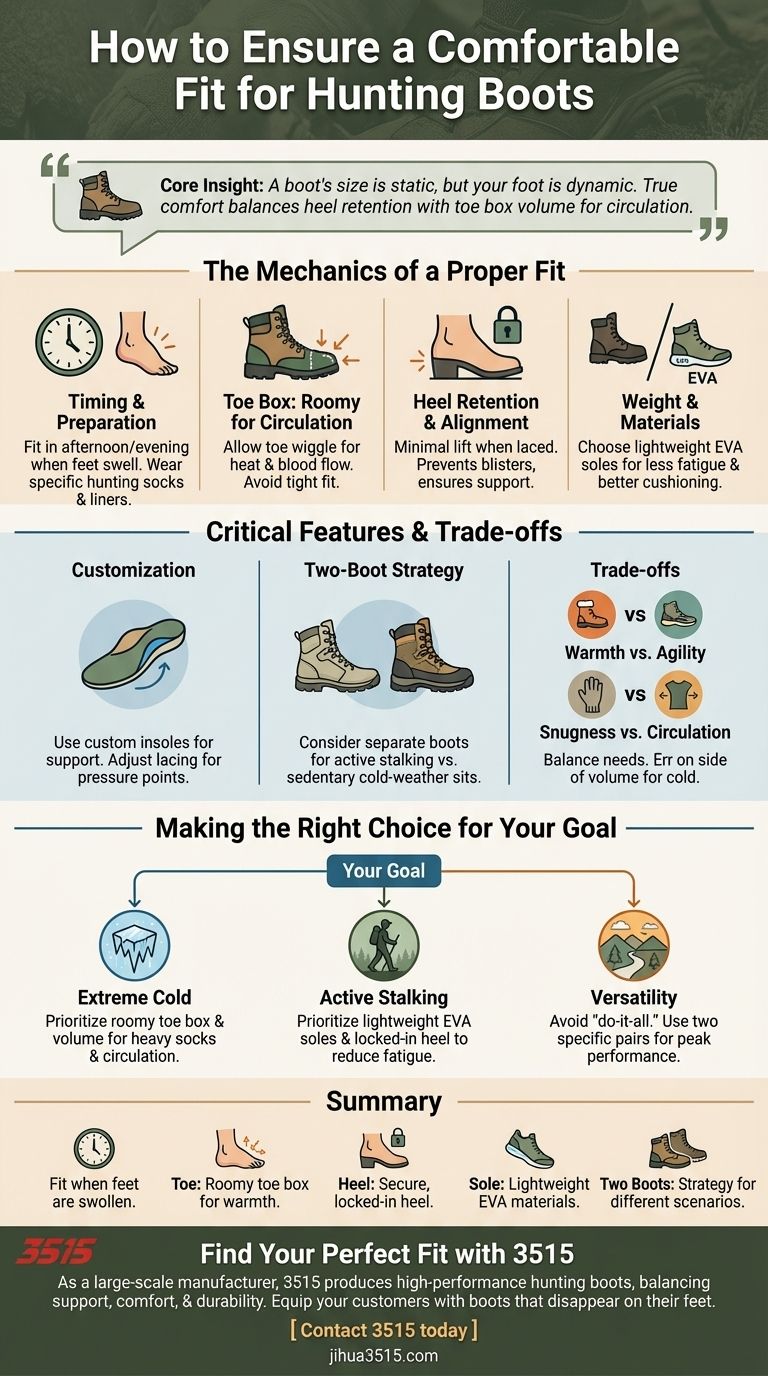
Visual Guide
Related Products
- Wholesale Lightweight Tactical Boots Custom Manufacturer for Desert & Combat Use
- High-Traction Suede Tactical Boots Wholesale & Custom Manufacturing
- Durable Leather Tactical Boots Wholesale & Custom Manufacturing for Brands
- Durable Military Combat Boots with Water Drainage for Wholesale & OEM
- Wholesale Waterproof Tactical Boots Custom Suede & High-Traction Soles
People Also Ask
- What are the common types of combat boots? Find the Right Boot for Your Mission
- What specialized protections do tactical boots offer? Maximize Endurance with High-Performance Footwear
- How does additive manufacturing equipment reduce environmental risks? Sustainable Tactics for Modern Footwear Production
- How is the compatibility of polymer materials demonstrated in smart footwear? Enhancing Tactical & Training Performance
- What are the different types of tactical boots available? Find the Right Boot for Your Mission