
In many cases, a doctor's primary recommendation instead of a traditional, full cast is an orthopedic walking boot, which is also commonly referred to as a walking cast. This modern device is designed to protect an injury while still allowing for a degree of mobility that a conventional cast completely restricts.
The decision between a full cast and an alternative like a walking boot is a calculated trade-off. It's about balancing the absolute immobilization required for certain injuries against the practical benefits of controlled mobility for others.
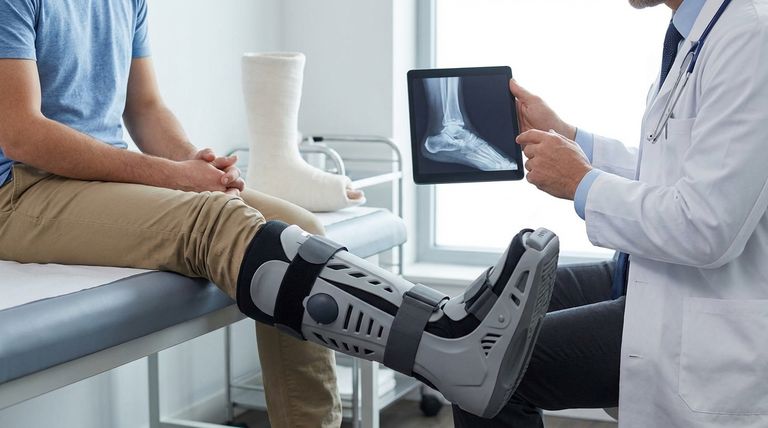
The Alternative: The Orthopedic Walking Boot
A walking boot serves as a middle ground between a simple splint and a completely rigid cast. It's a structured medical device designed to support a healing limb without completely eliminating movement.
How a Walking Boot Works
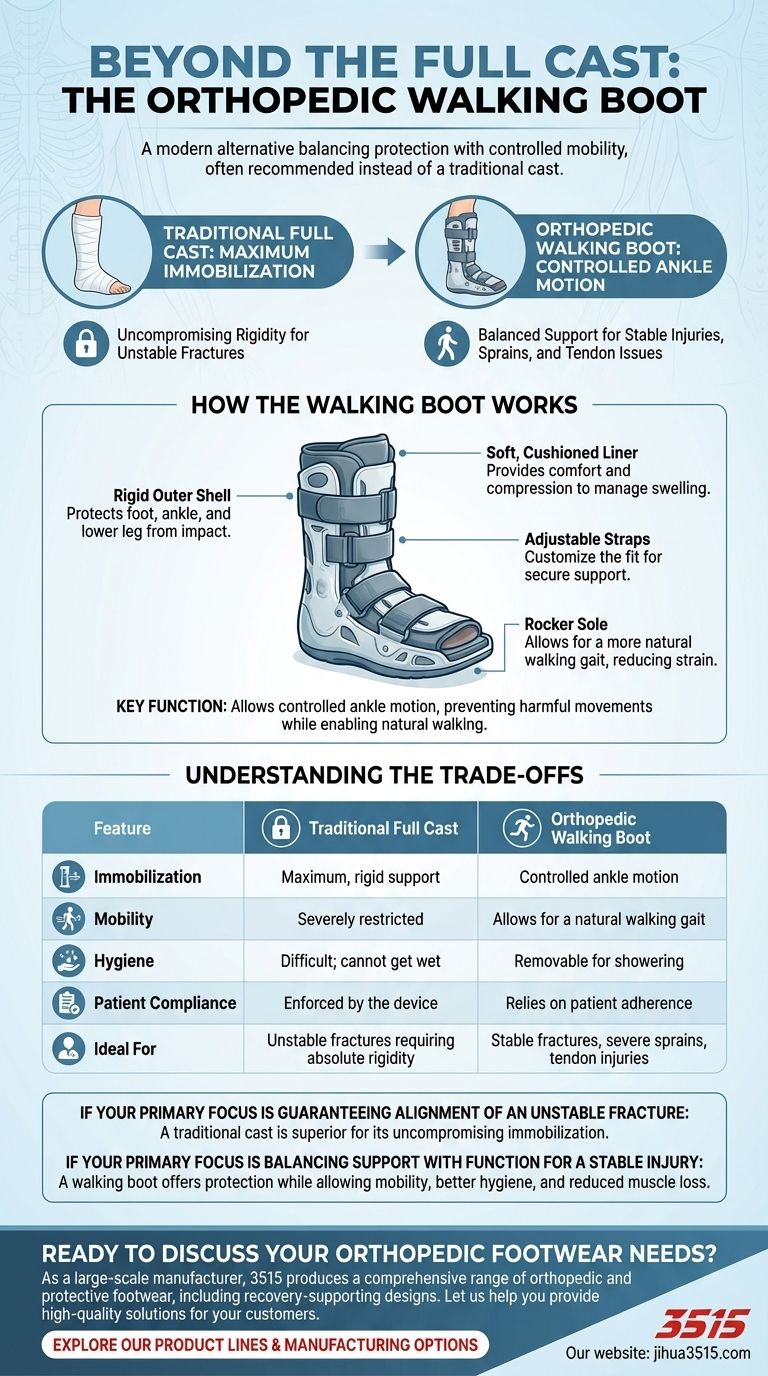
The boot typically consists of a rigid outer shell that protects the foot, ankle, and lower leg from impact. Inside, a soft, cushioned liner provides comfort and compression to help manage swelling. Adjustable straps allow the patient and doctor to customize the fit.
Its key function is to provide controlled ankle motion. While it prevents harmful side-to-side or twisting movements, its "rocker" sole allows for a more natural walking gait, reducing the strain on the injured area and the rest of the body.
When a Boot is Recommended
Doctors typically recommend a walking boot for specific types of injuries where absolute rigidity is not required. These often include stable fractures (where the bone is not displaced), severe ankle sprains, or significant tendon injuries.
The boot provides sufficient support to allow these injuries to heal properly while preventing the severe muscle atrophy and joint stiffness that often accompany prolonged use of a traditional cast.
Understanding the Trade-offs
Choosing a walking boot over a cast involves considering the balance between protection, patient responsibility, and the nature of the injury itself.
Support vs. Convenience
A traditional fiberglass or plaster cast offers the maximum level of immobilization. This is non-negotiable for unstable fractures where any movement could cause the bone to heal incorrectly.
A walking boot, while highly supportive, is removable. This is a significant advantage for hygiene, as it can be taken off for showering. However, this flexibility also introduces a critical risk.
The Critical Role of Patient Compliance
The effectiveness of a walking boot is entirely dependent on the patient. It must be worn exactly as prescribed by the doctor. Removing it too often or for too long can delay or compromise the healing process.
A traditional cast removes this variable, enforcing compliance and ensuring the injury remains protected at all times.
Making the Right Choice for Your Recovery
The appropriate device is always determined by a medical professional based on the specific type and severity of your injury.
- If your primary focus is guaranteeing the alignment of an unstable fracture: A traditional cast is almost always the superior choice for its uncompromising immobilization.
- If your primary focus is balancing support with function for a stable injury: An orthopedic walking boot offers the necessary protection while allowing for mobility, better hygiene, and reduced muscle loss.
Ultimately, understanding these options enables you to have a more informed discussion with your doctor about the best path forward for your specific recovery.
Summary Table:
| Feature | Traditional Full Cast | Orthopedic Walking Boot |
|---|---|---|
| Immobilization | Maximum, rigid support | Controlled ankle motion |
| Mobility | Severely restricted | Allows for a natural walking gait |
| Hygiene | Difficult; cannot get wet | Removable for showering |
| Patient Compliance | Enforced by the device | Relies on patient adherence |
| Ideal For | Unstable fractures requiring absolute rigidity | Stable fractures, severe sprains, tendon injuries |
Ready to discuss your orthopedic footwear needs?
As a large-scale manufacturer, 3515 produces a comprehensive range of orthopedic and protective footwear for distributors, brand owners, and bulk clients. Our production capabilities encompass all types of specialized shoes and boots, including designs that support recovery and mobility.
Let us help you provide high-quality solutions for your customers. Contact our team today to explore our product lines and manufacturing options.
Visual Guide
Related Products
- Wholesale Durable Camouflage Canvas Shoes with High-Traction Cleated Rubber Sole
- Durable Rubber Sole Outdoor Shoes Wholesale & Custom Manufacturing
- Durable Goodyear Welt Leather Work Boots for Wholesale & Private Label
- Wholesale High-Traction Camo Boots - Custom Manufacturer for Brands
- Heavy-Duty Waterproof Nubuck Safety Boots Safety Shoes for Bulk Supply
People Also Ask
- Why is the selection of high-strength fabric materials necessary in the production of canvas shoes and training shoes?
- What are the properties of canvas as a shoe material? A Guide to Lightweight Comfort & Style
- Can canvas shoes be worn in rainy conditions? The Truth About Water Resistance
- What are some examples of vulcanized shoes? Discover the Flexibility and Board Feel of Classic Sneakers
- What are the characteristics of canvas as a shoe material? A Guide to Lightweight, Breathable Footwear



















