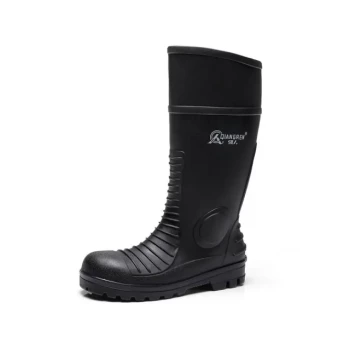
Standardizing industrial safety shoes functions as a critical control variable. By mandating uniform footwear, researchers eliminate systematic errors caused by the vast differences in personal shoe design. This ensures that any observed changes in movement or pressure are strictly the result of the worker's physical state, not inconsistencies in their equipment.
The use of identical footwear isolates the human factor, ensuring that kinetic data reflects physiological fatigue rather than the mechanical properties of a specific shoe brand or model.
The Science of Variable Isolation
Removing Mechanical Interference
In kinetic testing, every layer between the foot and the ground acts as a mechanical filter. If participants wear their own shoes, you introduce uncontrolled variables into your dataset.
Standardization removes the noise created by different brands, wear patterns, and material compositions.
Controlling Sole Dynamics
Variations in sole hardness and support structures dramatically alter how force is distributed across the foot. A soft sole absorbs energy differently than a rigid one.
Standardized shoes flatten this baseline. They ensure every participant interacts with the ground using the exact same mechanical "interface."
Normalizing Weight Distribution
Heavier boots alter gait mechanics and energy expenditure.
By controlling the weight distribution of the footwear, researchers prevent heavier or lighter shoes from artificially skewing fatigue data.
Validating the Data
Pinpointing Physical Fatigue
The primary goal of ergonomic field research is often to measure how work impacts the body over time.
Uniform shoes ensure that captured kinetic differences are attributed solely to physical fatigue or postural changes. This allows you to say with confidence that the worker is tired, not that their shoes are failing.
Enhancing Reproducibility
Scientific validity relies on the ability to repeat results under similar conditions.
Eliminating footwear variance enhances the reproducibility of the study. It allows other scientists to verify findings without worrying that shoe selection influenced the outcomes.
Understanding the Trade-offs
Control vs. Customization
While standardization is necessary for data purity, it inevitably sacrifices individual customization.
Workers often select personal footwear to accommodate specific foot shapes or existing conditions (like wide feet or high arches). A standardized shoe acts as a "one-size-fits-most" solution.
The "Break-in" Factor
Standardized shoes provided for a study are often new.
This eliminates wear-and-tear variables but introduces the risk of the "break-in" period. Participants may slightly alter their gait to avoid discomfort from stiff, unfamiliar materials, which is a calculated risk researchers must manage.
Making the Right Choice for Your Goal
- If your primary focus is scientific rigor: Prioritize standardized footwear to eliminate systematic errors and ensure data points are comparable across all subjects.
- If your primary focus is long-term compliance: Select a standardized model that is widely recognized for comfort and offer it in multiple widths to minimize the impact of the "break-in" period.
Rigorous control of footwear transforms anecdotal observation into hard, actionable ergonomic science.
Summary Table:
| Variable | Impact of Non-Standardized Shoes | Benefit of Standardization |
|---|---|---|
| Sole Dynamics | Varied hardness skews force distribution | Uniform mechanical interface with ground |
| Weight | Weight differences alter gait & energy | Controls fatigue data consistency |
| Mechanical Noise | Personal wear patterns mask physical state | Isolates human physiological factors |
| Reproducibility | Difficult to replicate results | High scientific validity & data purity |
| Data Attribution | Errors attributed to equipment failure | Changes attributed solely to physical fatigue |
Elevate Your Fleet with Precision-Engineered Safety Footwear
As a large-scale manufacturer serving global distributors and brand owners, 3515 offers comprehensive production capabilities for all footwear types. We understand that in both rigorous ergonomic testing and daily industrial operations, consistency and quality are paramount.
Our flagship Safety Shoes series is built to provide the uniform performance and durability required by the world's most demanding work environments. Beyond safety, our extensive portfolio includes:
- Tactical & Work Boots for rugged field performance.
- Outdoor & Training Shoes for versatility and movement.
- Dress & Formal Shoes for professional bulk requirements.
Partner with a manufacturer that prioritizes scientific rigor and manufacturing excellence. Contact us today to discuss your bulk production needs and discover how our footwear solutions can bring value to your brand and safety to your customers.
References
- Steven Simon, Michael Fröhlich. Impact of Fatigue on Ergonomic Risk Scores and Foot Kinetics: A Field Study Employing Inertial and In-Shoe Plantar Pressure Measurement Devices. DOI: 10.3390/s24041175
This article is also based on technical information from 3515 Knowledge Base .
Related Products
- Wholesale Mesh Steel Toe Safety Shoes with Dial Closure Factory Production
- Wholesale Anti-Smash & Puncture-Proof Safety Shoes Custom Manufacturing for Brands
- Premium Wheat Nubuck Safety Shoes for Bulk Distribution
- Durable Steel Toe Safety Boots Wholesale & Custom Manufacturing
- Premium Waterproof High-Cut Industrial Safety Boots for Wholesale and Bulk Orders
People Also Ask
- What type of safety shoe is recommended for workers exposed to heavy machinery? Steel Toe Boots for Ultimate Protection
- Why is it mandatory to wear safety shoes with steel toe protection during metal loading? Prevent Crushing Injuries
- What are the main materials used in steel toe safety shoes? A Guide to Protective Footwear Construction
- Why are steel toes popular in safety footwear? The Ultimate Guide to Heavy-Duty Protection
- Is the myth about steel toe shoes cutting off toes true? Debunking the Safety Footwear Myth