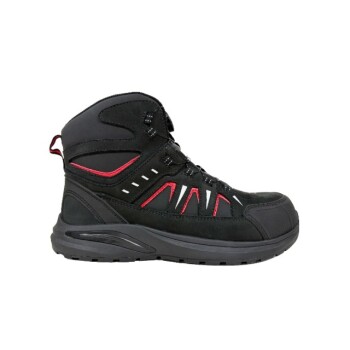
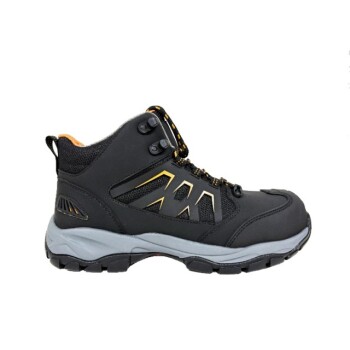
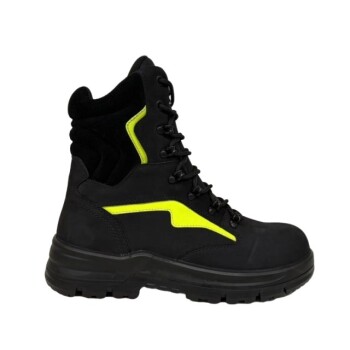
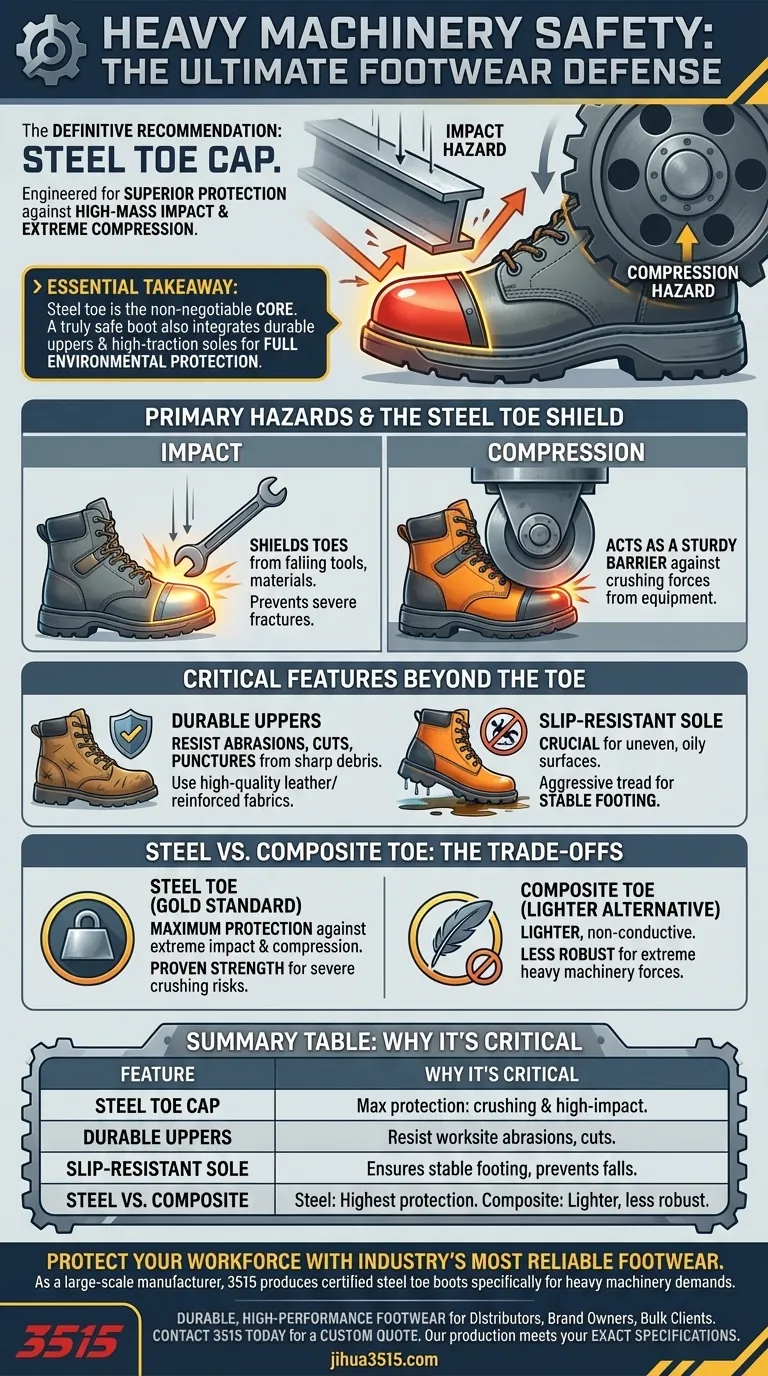
For workers exposed to heavy machinery, the definitive recommendation is a safety shoe with a steel toe cap. This specific feature is engineered to provide superior protection against the two most critical hazards in this environment: high-mass impact and extreme compression.
The essential takeaway is that while a steel toe is the non-negotiable core of protection around heavy machinery, a truly safe boot also integrates features like durable uppers and high-traction, slip-resistant soles to address the full spectrum of environmental risks.
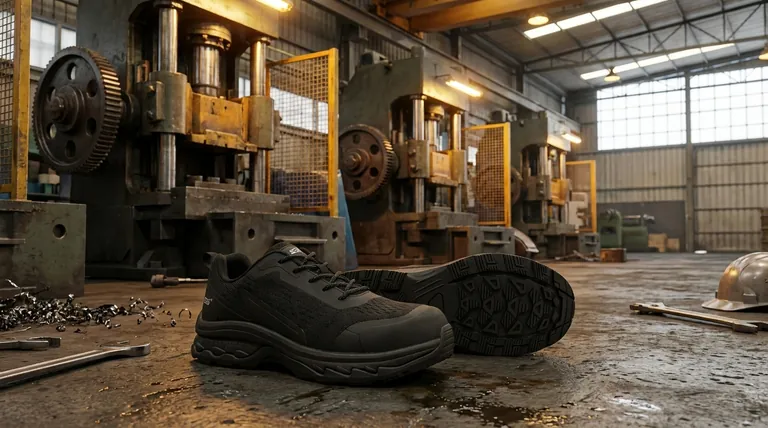
Why Impact and Compression are the Primary Hazards
When working with or near heavy equipment, the feet are uniquely vulnerable to life-altering injuries from falling objects or crushing forces. The choice of footwear is a critical engineering control to mitigate these specific risks.
The Role of the Steel Toe Cap
A steel toe cap is a reinforced protective covering integrated into the front of the boot. Its primary function is to shield the toes from the force of falling tools, materials, or equipment parts.
This feature is designed to withstand significant impact energy, preventing severe fractures and amputations.
Preventing Crushing Injuries
Heavy machinery, by its very nature, presents a significant compression hazard. A vehicle or piece of equipment rolling over a foot can exert immense pressure.
The rigid structure of a steel toe acts as a sturdy barrier, distributing the force and preventing the foot from being crushed under the weight.
Essential Features Beyond the Toe Cap
While the protective toe cap is paramount, other features of the shoe are critical for overall safety and performance in a demanding industrial environment. A comprehensive approach to safety footwear is essential.
Durable Upper Materials
The upper part of the boot must be made from durable materials that can resist abrasions, cuts, and punctures common on job sites with heavy machinery.
Look for high-quality leather or reinforced synthetic fabrics that ensure the boot's structural integrity over time.
Critical Slip Resistance
Floors in industrial settings can be uneven or contaminated with oil and other liquids, creating a high risk for slips and falls.
A slip-resistant outsole with a deep, aggressive tread pattern is crucial for maintaining stable footing on rough or slick surfaces.
Understanding the Trade-offs: Steel vs. Composite Toe
While steel is the traditional standard, modern alternatives like composite toes exist. Understanding their core differences is key to making an informed decision for a specific hazard profile.
Steel Toe: The Gold Standard for Protection
For environments with heavy machinery, steel toes remain the top recommendation. They generally offer the highest possible level of protection against extreme impact and compression forces.
Their proven strength and reliability make them the default choice where the risk of crushing injury is most severe.
Composite Toe: A Lighter Alternative
Composite toes are made from non-metal materials like Kevlar, carbon fiber, or plastic. They are lighter than steel and do not conduct heat, cold, or electricity.
However, for the specific threat posed by heavy machinery, the absolute strength of steel is often prioritized over the secondary benefits of composite materials.
Making the Right Choice for Your Environment
Selecting the appropriate safety shoe requires a clear assessment of your primary risks.
- If your primary focus is maximum protection against crushing and impact: A steel toe shoe is the unequivocal choice, providing the highest level of defense against the unique hazards of heavy machinery.
- If your primary focus is overall safety in a dynamic environment: Ensure the steel toe boot also features a highly slip-resistant outsole and durable upper materials to protect against slips, trips, and abrasions.
Ultimately, choosing the right safety footwear is a foundational element of personal protection in any high-risk industrial setting.
Summary Table:
| Feature | Why It's Critical for Heavy Machinery |
|---|---|
| Steel Toe Cap | Provides maximum protection against crushing injuries and high-impact falling objects. |
| Durable Uppers | Resists abrasions, cuts, and punctures from sharp debris on the worksite. |
| Slip-Resistant Sole | Ensures stable footing on oily, wet, or uneven surfaces to prevent slips and falls. |
| Steel vs. Composite | Steel offers the highest level of protection; composite is lighter but less robust for extreme forces. |
Protect your workforce with the industry's most reliable safety footwear. As a large-scale manufacturer, 3515 produces a comprehensive range of certified steel toe boots designed specifically for the demands of heavy machinery environments. We provide durable, high-performance footwear for distributors, brand owners, and bulk clients seeking to mitigate risk and enhance workplace safety. Contact 3515 today for a custom quote and discover how our production capabilities can meet your exact specifications.
Visual Guide
Related Products
- Wholesale Mesh Steel Toe Safety Shoes with Dial Closure Factory Production
- Durable Steel Toe Safety Boots Wholesale & Custom Manufacturing
- Advanced KPU Athletic Safety Shoe with Steel Toe Cap Anti-Slip Rotary Lacing System
- Heavy Duty Nubuck Safety Boots Safety Shoes for Global Distribution
- Premium Wheat Nubuck Safety Shoes for Bulk Distribution
People Also Ask
- Why is it mandatory to wear safety shoes with steel toe protection during metal loading? Prevent Crushing Injuries
- What are the main materials used in steel toe safety shoes? A Guide to Protective Footwear Construction
- Why are steel toes popular in safety footwear? The Ultimate Guide to Heavy-Duty Protection
- What are the recommended uses for steel toe safety shoes? Essential Protection for High-Risk Industries
- Is the myth about steel toe shoes cutting off toes true? Debunking the Safety Footwear Myth