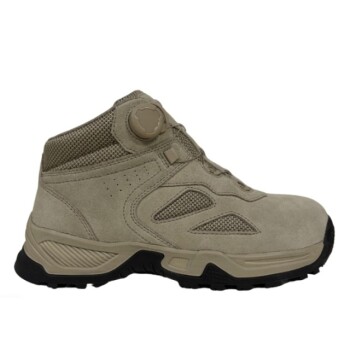
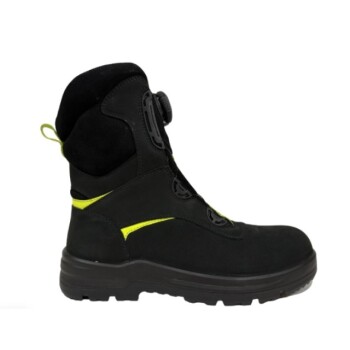
Lace-to-toe boots masterfully bridge the gap between demanding workwear and timeless heritage style. They accomplish this by leveraging a single core feature—an extended lacing system that runs down to the vamp—to deliver both superior functional support and a distinct, traditional aesthetic that is rooted in history.
The key insight is that the lace-to-toe design is not merely a stylistic choice. It is a functional system that provides a highly customized and secure fit, a quality that is equally valuable in a hazardous work environment and for achieving the solid, grounded silhouette of classic footwear.

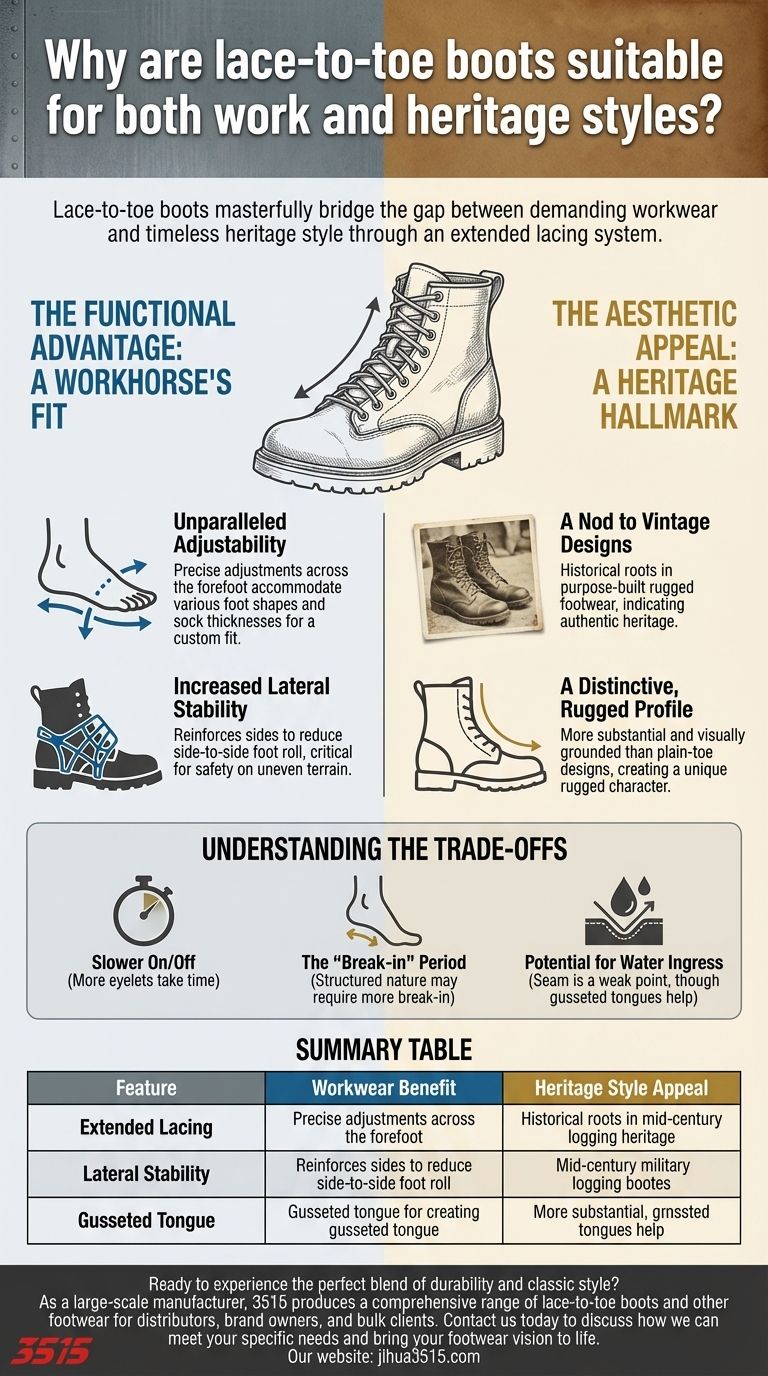
The Functional Advantage: A Workhorse's Fit
The primary benefit of the lace-to-toe design is its superior ability to secure the foot. This level of control is what makes it a staple in serious work and outdoor boots.
Unparalleled Adjustability
By extending the eyelets closer to the toe, the lacing system allows for precise adjustments across the entire forefoot, not just the ankle.
This accommodates a wider range of foot shapes, including those with high or low arches and varying widths, ensuring a near-custom fit. It also allows the wearer to adapt the fit for different sock thicknesses.
Increased Lateral Stability
The extended lacing pattern acts as an external cage, reinforcing the sides of the boot.
This structure significantly reduces side-to-side foot roll, providing crucial lateral stability on uneven terrain or when carrying heavy loads. This is a critical safety and comfort feature for workers like loggers, linesmen, and wildland firefighters.
The Aesthetic Appeal: A Heritage Hallmark
Beyond its practical benefits, the lace-to-toe design has a distinct visual character that firmly places it within heritage style.
A Nod to Vintage Designs
The lace-to-toe silhouette has strong historical roots in mid-century military, logging, and mountaineering boots.
Its appearance immediately signals a connection to this era of purpose-built, rugged footwear, making it an authentic choice for heritage enthusiasts.
A Distinctive, Rugged Profile
The lines created by the eyelets draw the eye down the boot, creating a more substantial and visually grounded look compared to a standard plain-toe design.
This gives the boot a unique and intentionally rugged character that pairs exceptionally well with classic workwear materials like raw denim, canvas, and flannel.
Understanding the Trade-offs
While highly effective, the lace-to-toe design is not without its compromises. Objectively understanding these limitations is key to making an informed choice.
Slower On and Off
The most obvious drawback is the time it takes to lace up. More eyelets mean more time and effort are required to put the boots on and take them off, making them less convenient for casual, everyday wear.
The "Break-in" Period
The highly structured nature of a lace-to-toe boot, especially across the flex point at the ball of the foot, can sometimes lead to a more intensive break-in period compared to less structured designs.
Potential for Water Ingress
The long seam where the tongue meets the vamp can be a potential weak point for water entry. While a quality gusseted tongue (one that is attached to the upper on both sides) largely mitigates this risk, a plain-toe boot with a seamless vamp technically offers more inherent water resistance.
Making the Right Choice for Your Goal
Your ideal boot style depends entirely on what you prioritize. The lace-to-toe design offers a specific blend of function and form.
- If your primary focus is maximum support and a custom fit: The lace-to-toe design is functionally superior for securing your foot in demanding conditions.
- If your primary focus is a classic, rugged aesthetic: This style offers a distinct vintage profile that stands out from more common boot patterns.
- If your primary focus is convenience and maximum water resistance: A plain-toe or moc-toe boot with fewer eyelets may be a more practical choice.
Ultimately, the lace-to-toe boot’s enduring appeal lies in its honest design, where function dictates form to create a timeless and capable piece of footwear.
Summary Table:
| Feature | Workwear Benefit | Heritage Style Appeal |
|---|---|---|
| Extended Lacing | Customizable fit for varied foot shapes and socks | Creates a distinctive, rugged profile |
| Lateral Stability | Reduces foot roll on uneven terrain for safety | Authentic look inspired by mid-century boots |
| Gusseted Tongue | Mitigates water ingress (on quality models) | Complements classic workwear materials |
| Key Consideration | Slower on/off, potential for longer break-in | Prioritizes aesthetic and historical authenticity |
Ready to experience the perfect blend of durability and classic style? As a large-scale manufacturer, 3515 produces a comprehensive range of lace-to-toe boots and other footwear for distributors, brand owners, and bulk clients. Our production capabilities encompass all types of work and heritage boots, ensuring quality and authenticity. Contact us today to discuss how we can meet your specific needs and bring your footwear vision to life.
Visual Guide
Related Products
- Durable Goodyear Welt Leather Work Boots for Wholesale & Private Label
- Premium Wholesale Wheat Nubuck Safety Boot with Rapid Lacing System
- Wholesale Classic Leather Lace-Up Ankle Boots for Brand Manufacturing
- Premium Wholesale Tactical Style Safety Shoes Boots with Quick Lacing
- Advanced KPU Athletic Safety Shoe with Steel Toe Cap Anti-Slip Rotary Lacing System
People Also Ask
- What is the difference between full-grain and top-grain leather? Premium Material Guide for Boot Manufacturers
- What are the advantages of leather as an upper material for work boots? Unmatched Durability & Custom Comfort
- Why is it important to waterproof leather work boots? Protect Your Investment and Performance
- How should new leather work boots be broken in? A Guide to Comfort and Durability
- What are the advantages of leather uppers in work boots? Unmatched Durability & Protection