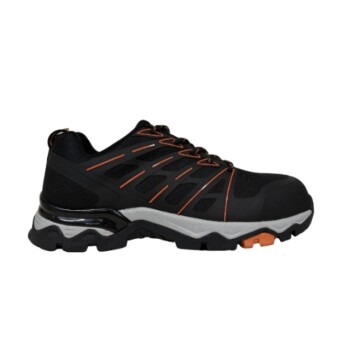
A centralized supply of high-quality safety shoes fundamentally serves as an equalizer. It directly impacts the safety climate by removing financial barriers that often prevent vulnerable workers from accessing adequate protection. By ensuring every employee receives the same high standard of gear regardless of their economic status, the organization actively dismantles disparities in safety management.
A centralized footwear program is more than a logistical choice; it is a driver of equity. It establishes a fair, inclusive, and diverse safety climate by guaranteeing that an employee's physical safety is never compromised by their personal financial situation.
The Mechanics of Safety Equity
Addressing Economic Disparities
Many vulnerable workers face a difficult trade-off between financial stability and purchasing premium safety gear. Left to their own devices, economic constraints may force them to settle for sub-par protection. A centralized supply eliminates this variable entirely, ensuring personal budget never dictates safety.
Standardizing Physical Protection
When employees are responsible for their own equipment, the quality of protection across the workforce becomes inconsistent. Centralized provision ensures a baseline of high-quality defense for everyone. This creates a uniform safety standard that does not fluctuate based on individual purchasing power.
Cultivating an Inclusive Culture
Promoting Fairness and Inclusion
A robust safety climate relies heavily on the perception of fairness. By distributing high-quality equipment to all staff, the organization sends a clear signal that every life is valued equally. This helps establish a culture where safety is a collective right rather than an individual privilege.
Supporting a Diverse Workforce
Standardizing equipment is a critical step in managing a diverse workforce. It ensures that systemic economic differences among employees do not translate into physical safety risks on the job. This inclusivity fosters trust and psychological safety, which are essential components of a positive safety climate.
Operational Considerations and Trade-offs
The Challenge of Individual Fit
While centralization guarantees quality, it can sometimes struggle to address unique physiological needs. A strict "one-style-fits-all" approach may unintentionally reduce comfort for some workers. To maintain the safety climate, the centralized supply must offer enough variety to accommodate different foot shapes and needs.
Administrative Complexity
Moving from a stipend model to a centralized supply requires significant logistical oversight. The organization must manage sizing, inventory, and replacement cycles directly. If this process is slow or bureaucratic, it can lead to frustration that counteracts the positive cultural impact.
Making the Right Choice for Your Goal
To derive the most value from a centralized footwear program, consider your primary organizational objectives:
- If your primary focus is organizational equity: Implement a centralized model to ensure that no worker is left vulnerable or exposed to hazards due to personal financial constraints.
- If your primary focus is risk standardization: Use centralized distribution to strictly control the quality of gear on-site, eliminating the variability inherent in employee-purchased equipment.
By removing the financial burden of safety from the individual, you build a culture where protection is guaranteed, not purchased.
Summary Table:
| Impact Factor | Centralized Supply Benefit | Safety Climate Outcome |
|---|---|---|
| Economic Disparity | Removes personal financial burden | Equalizes protection for all workers |
| Quality Control | Uniform high-standard equipment | Eliminates risks from sub-par gear |
| Cultural Perception | Demonstrates equal value of every life | Enhances trust and inclusion |
| Risk Management | Standardized site-wide protection | Consistent and predictable safety levels |
Elevate Your Workplace Safety Standards with 3515
As a large-scale manufacturer serving distributors and brand owners, 3515 offers comprehensive production capabilities for all footwear types, anchored by our flagship Safety Shoes series. We understand that a centralized supply of high-quality gear is critical to fostering a fair and inclusive safety climate. Our extensive portfolio covers work and tactical boots, outdoor shoes, training shoes, and sneakers, as well as Dress & Formal shoes to meet your diverse bulk requirements.
Partner with us to provide your workforce with premium protection that eliminates safety disparities and reinforces your commitment to every employee's well-being. Contact us today to explore our bulk manufacturing solutions and see how we can add value to your safety program.
References
- Martina Morando, Leonardo Brullo. Promoting Safety Climate Training for Migrant Workers through Non-Technical Skills: A Step Forward to Inclusion. DOI: 10.3390/merits2010004
This article is also based on technical information from 3515 Knowledge Base .
Related Products
- Premium Suede Sport Safety Shoes for Wholesale & Bulk Orders
- Premium Lightweight Safety Shoes for Wholesale & Bulk Orders
- Wholesale Anti-Smash & Puncture-Proof Safety Shoes Custom Manufacturing for Brands
- Premium KPU Injection Athletic Style Safety Shoes
- Premium Safety Shoes with Rotating Buckle Safety Sneakers
People Also Ask
- What are the primary functions of professional safety shoes? Maximize Safety in Water Supply Confined Spaces
- What industries have specific OSHA footwear requirements? Ensure Compliance & Protect Your Workforce
- What role do specialized safety shoes play in preventing falls? Engineering Stability in Industrial Environments
- How do complex outsole tread designs in safety shoes work with coated floors? Master Slip Resistance Engineering
- What happens during the cutting stage of safety shoes manufacturing? Precision, Process & Quality