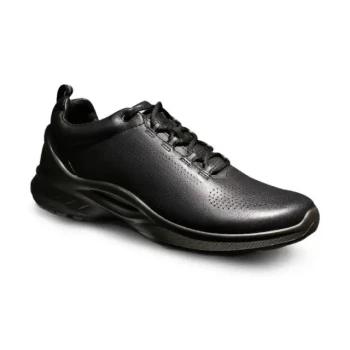
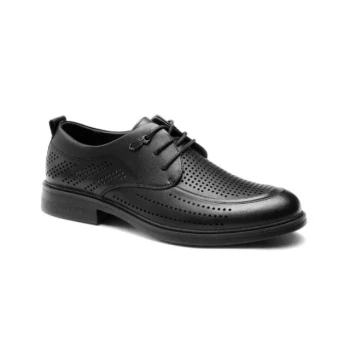
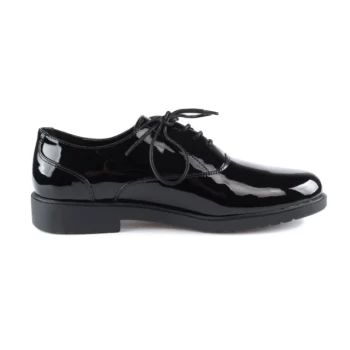
Customized high-performance shoes serve as critical experimental benchmarks primarily to eliminate the production process deviations found in mass-manufactured footwear. By strictly standardizing the uppers, outsole materials, and general structure, researchers ensure that any observed changes in biomechanics are the result of specific design adjustments, not manufacturing inconsistencies.
The core value of a customized benchmark is the assurance of physical consistency across all test conditions. This isolation allows researchers to attribute performance data solely to intended variables, providing the precision required for high-level biomechanical analysis.
The Science of Variable Isolation
Eliminating Manufacturing Noise
In scientific testing, consistency is paramount. Mass-produced shoes often contain subtle variances in stitching, glue application, or material density.
Customized benchmarks remove this noise. By employing footwear with identical uppers and outsole materials for every test, researchers guarantee that the baseline "control" remains physically constant throughout the experiment.
Precision in Design Validation
Once the baseline is standardized, researchers can modify a single variable to test its impact.
For example, when investigating midfoot torsional stiffness, the benchmark shoe allows the team to isolate this specific feature. Because the rest of the shoe is uniform, any change in performance can be definitively linked to the change in stiffness, providing precise parametric guidance for future designs.
Capturing Accurate Biomechanical Data
The Critical Contact Point
The feet act as the sole contact points generating interaction forces between the human body and the ground.
To accurately evaluate manual handling processes or athletic performance, the interface—the shoe—must be a known quantity. If the benchmark shoe varies, the data regarding Ground Reaction Forces (GRF) becomes unreliable.
Validating Complex Metrics
High-performance benchmarks are often integrated with advanced measurement tools, such as force sensors or motion capture systems.
These tools allow for sophisticated analysis, such as estimating lumbar stress or evaluating shock absorption. Using a customized, consistent shoe ensures that these sensitive measurements reflect the body's actual mechanics rather than the shoe's inconsistent construction.
Understanding the Trade-offs
Specificity vs. Generalizability
While customized benchmarks offer high internal validity, they represent an idealized scenario.
Data derived from a perfectly constructed custom shoe may not always perfectly predict the performance of a mass-produced version, which will inherently have more variability.
Cost and Complexity
Creating customized benchmarks requires significant resources.
It demands a level of manufacturing precision that exceeds standard production, potentially slowing down the initial phases of research in exchange for higher quality data.
Making the Right Choice for Your Goal
To determine when to rely on customized benchmarks, consider your specific research objectives:
- If your primary focus is fundamental research: Prioritize customized benchmarks to isolate variables like torsional stiffness and ensure the scientific validity of your data.
- If your primary focus is industrial safety application: Use standardized footwear equipped with sensors to accurately capture Ground Reaction Forces and validate energy feedback capabilities.
True innovation in footwear requires separating the signal from the noise; customized benchmarks are the filter that makes this possible.
Summary Table:
| Feature | Customized Benchmark Shoes | Mass-Produced Footwear |
|---|---|---|
| Physical Consistency | High (Strictly standardized) | Variable (Production deviations) |
| Variable Isolation | Precise (Isolates specific design changes) | Difficult (Noise from manufacturing) |
| Data Reliability | High (Consistent GRF & motion data) | Lower (Inconsistencies skew results) |
| Primary Use | Fundamental research & design validation | Market distribution & daily use |
| Manufacturing Focus | Scientific precision | Cost-efficiency & scale |
Elevate Your Brand with Precision Manufacturing
At 3515, we understand that high-performance footwear begins with consistency and technical excellence. As a leading large-scale manufacturer serving global distributors and brand owners, we provide the comprehensive production capabilities needed to turn biomechanical insights into market-ready products.
Whether you require our flagship Safety Shoes series or high-quality tactical boots, outdoor shoes, training sneakers, or formal dress shoes, our facilities ensure every pair meets your rigorous standards for quality and performance. Partner with a manufacturer that values scientific precision as much as you do.
Contact 3515 today to discuss your bulk production needs!
References
- Siqin Shen, Yaodong Gu. Influence of Torsional Stiffness in Badminton Footwear on Lower Limb Biomechanics. DOI: 10.52082/jssm.2024.196
This article is also based on technical information from 3515 Knowledge Base .
Related Products
- Wholesale Durable & Breathable Training Shoes for Custom Brands
- Custom OEM Training Shoes Wholesale Manufacturer Durable & Breathable
- Wholesale Breathable & Cushioned Training Shoes Custom Factory Production
- Wholesale Breathable Training Shoes Custom Athletic Footwear Manufacturer
- Wholesale Training Shoes with Dial Lacing System Custom OEM Manufacturing
People Also Ask
- Why is structural stability in footwear required during dual-task walking tests? Ensure Sensor Precision & Data Integrity
- Why is the integration of advanced cushioning in training shoes necessary for athletes? Boost Recovery and Performance
- Why is the use of flat-soled or professional training shoes essential for WBV? Maximize Vibration Energy Transfer
- Why is it necessary for participants to wear professional training shoes? Ensuring Data Accuracy & Patient Safety
- How does the Ground Reaction Force (GRF) constancy hypothesis influence professional training shoes and sneakers?