
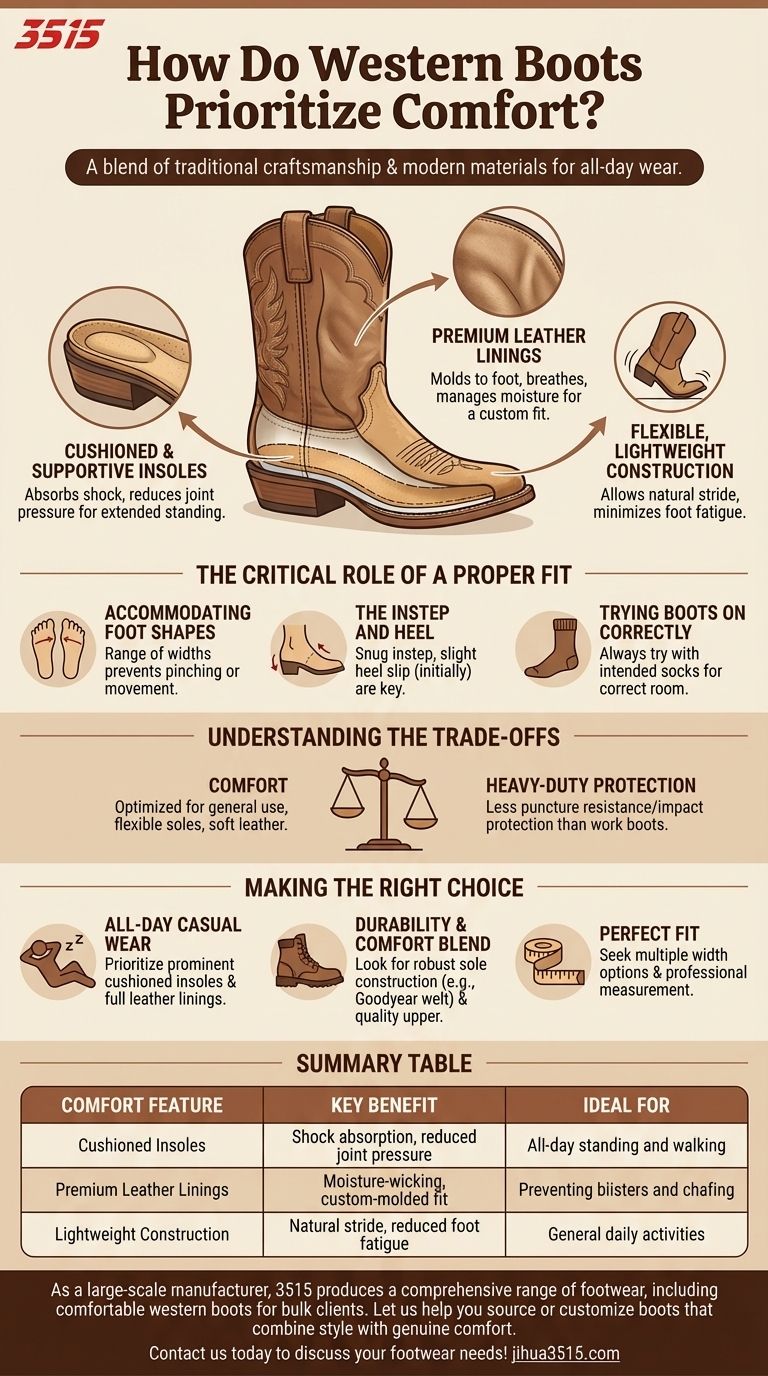
At their core, Western boots prioritize comfort by combining three key elements: cushioned insoles for shock absorption, soft leather linings that mold to the foot, and lightweight, flexible materials that reduce fatigue. This design philosophy is engineered for extended, all-day wear in general conditions rather than for specific, high-hazard environments.
The central principle behind Western boot comfort is a balance between traditional craftsmanship and modern materials. They are designed to become an extension of your foot, prioritizing flexibility and long-term wearability over the rigid protection found in specialized work boots.

The Anatomy of Western Boot Comfort
To understand how Western boots achieve their renowned comfort, we must look at their core components. Each element is deliberately chosen to support the foot during long periods of standing or walking.
Cushioned and Supportive Insoles
The foundation of any comfortable boot is the insole. Modern Western boots incorporate cushioned footbeds that absorb impact and reduce pressure on your joints. This is a critical feature for anyone spending the entire day on their feet.
Premium Leather Linings
Unlike boots lined with synthetic materials, high-quality Western boots use soft, supple leather. This natural material breathes, helps manage moisture, and over time, conforms perfectly to the unique shape of your foot, creating a near-custom fit that prevents chafing and blisters.
Flexible, Lightweight Construction
Western boots are designed for movement. They use materials that are both durable and flexible, allowing for a natural stride. This lightweight construction minimizes the energy you expend with each step, significantly reducing foot fatigue over the course of a day.
The Critical Role of a Proper Fit
No amount of premium material can compensate for a poor fit. Achieving true comfort in a Western boot goes beyond just your standard shoe size.
Accommodating Different Foot Shapes
The best boot manufacturers recognize that feet are not one-size-fits-all. They offer a range of widths, from narrow to extra-wide, ensuring that the boot properly supports the entire foot without pinching or allowing excessive movement.
The Instep and Heel
A key element of Western boot fit is the "slip" in the heel when the boot is new. A small amount of slip is normal and will disappear as the leather sole breaks in. However, the boot should fit snugly across the instep (the top of your foot) to hold it securely in place.
Trying Boots On Correctly
Always try on boots with the type of socks you intend to wear with them. A thicker sock can drastically change the fit. Proper fit means your toes have room to move, but your foot feels secure and supported through the instep and heel.
Understanding the Trade-offs
To appreciate where Western boots excel, it's essential to understand their design limitations. Their comfort is a direct result of specific trade-offs.
Comfort vs. Heavy-Duty Protection
Western boots are built for extended wear in less dangerous environments. The flexible soles and soft leathers that make them comfortable mean they do not offer the same puncture resistance or impact protection as a steel-toed work boot.
General Wear vs. Specialized Function
A Western boot is a master of general use, but it is not a specialized tool. Unlike insulated winter boots or waterproof safety wellingtons designed for specific, harsh conditions, the Western boot's comfort is optimized for everyday life on varied, but not extreme, terrain.
Making the Right Choice for Your Needs
Selecting the right boot depends entirely on your primary goal.
- If your primary focus is all-day casual wear: Prioritize models with prominent cushioned insoles and full leather linings for maximum comfort.
- If your primary focus is a blend of durability and comfort: Look for a boot with a robust sole construction, like a Goodyear welt, combined with high-quality, flexible upper leather.
- If your primary focus is achieving the perfect fit: Seek out brands that offer multiple width options and take the time to be measured professionally.
By understanding these design principles, you can confidently choose a Western boot that delivers both iconic style and genuine, all-day comfort.
Summary Table:
| Comfort Feature | Key Benefit | Ideal For |
|---|---|---|
| Cushioned Insoles | Shock absorption, reduced joint pressure | All-day standing and walking |
| Premium Leather Linings | Moisture-wicking, custom-molded fit | Preventing blisters and chafing |
| Lightweight Construction | Natural stride, reduced foot fatigue | General daily activities |
As a large-scale manufacturer, 3515 produces a comprehensive range of footwear for distributors, brand owners, and bulk clients. Our production capabilities encompass all types of shoes and boots, including comfortable western boots designed for long-term wearability. Let us help you source or customize boots that combine style with genuine comfort. Contact us today to discuss your footwear needs!
Visual Guide
Related Products
- Durable Goodyear Welt Leather Work Boots for Wholesale & Private Label
- High-Traction Suede Tactical Boots Wholesale & Custom Manufacturing
- Durable Leather Tactical Boots Wholesale & Custom Manufacturing for Brands
- Durable High-Ankle Tactical Boots for Wholesale & Custom Manufacturing
- Wholesale Safety Boots Manufacturer for Custom & Private Label Orders
People Also Ask
- What is the difference between full-grain and top-grain leather? Premium Material Guide for Boot Manufacturers
- What are the advantages of leather as an upper material for work boots? Unmatched Durability & Custom Comfort
- Why is it important to waterproof leather work boots? Protect Your Investment and Performance
- How should new leather work boots be broken in? A Guide to Comfort and Durability
- What are the advantages of leather uppers in work boots? Unmatched Durability & Protection
















