
In show jumping, flexibility is not a luxury; it is a fundamental requirement for performance. A flexible boot allows a rider’s leg, and specifically their ankle, to move in harmony with the horse’s motion over a jump. This freedom of movement is essential for maintaining balance, absorbing shock through a deep heel, and providing clear, effective aids to the horse.
The core purpose of a show jumping boot is to act as a supportive second skin, not a restrictive cast. Its flexibility is what allows for the precise, dynamic leg and ankle adjustments required to maintain a seamless connection with the horse through every phase of a jump.
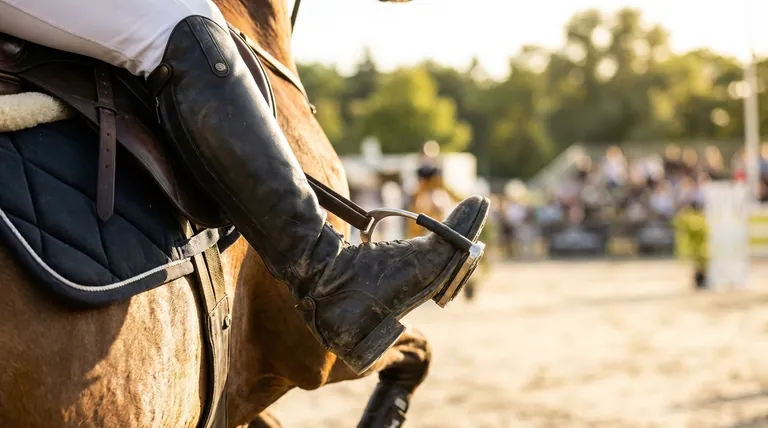
The Biomechanics of the Rider's Leg
To understand why boot flexibility is critical, you must first understand the demands placed on a rider's leg during a jump. The leg is not a static pillar but a dynamic system of shock absorbers and levers.
The Critical Role of the Ankle
The rider's ankle joint is the primary shock absorber. For a secure and balanced position, the rider's heel must sink down, stretching the calf muscle and allowing the ankle to flex deeply. A rigid boot physically prevents this crucial movement, forcing the leg into a stiff, insecure position.
Following the Horse's Movement
As a horse goes over a fence, its body creates an arc. The rider must fold and unfold their body in sync with this movement. A flexible boot allows the rider's leg to conform to the horse's sides and adjust as needed, maintaining close contact and balance from takeoff to landing.
Accommodating a Shorter Stirrup
Show jumpers use a shorter stirrup length than in flatwork. This creates a more acute angle in the knee and ankle. Boots must be flexible enough to allow the rider to comfortably and securely hold this more athletic, flexed position for extended periods.
How Boot Design Creates Functional Flexibility
Modern boot design uses specific materials and construction techniques to provide movement where it is needed most, without sacrificing essential support.
The Importance of Soft Leather
High-quality, soft leather is the foundation of a flexible boot. It is designed to mold to the rider's leg over time, breaking in to allow for a custom fit that moves with the rider's anatomy.
The Function of Elastic Panels
Elastic panels, typically placed alongside the zipper, are a key feature for enhancing mobility. They allow the boot to stretch and expand as the calf muscle flexes, ensuring the rider has a full range of motion without restriction.
A Well-Engineered Sole
The sole of the boot must have a firm structure for support but also be engineered to bend at the ball of the foot. This allows the foot to articulate naturally within the stirrup, which is vital for maintaining a deep, secure heel.
Understanding the Trade-offs: Flexibility vs. Support
While flexibility is paramount, it must be balanced with adequate support. The goal is not to find the most flexible boot, but the one with the right kind of flexibility.
The Danger of Insufficient Support
A boot that is too soft or unstructured fails to provide the necessary ankle support. This can lead to an unstable lower leg, which hinders clear communication with the horse and offers less protection against twists or strains.
Finding the Optimal Balance
The ideal show jumping boot is a paradox: it must be supportive and flexible at the same time. This is achieved by building structure around the ankle while incorporating flexion points and elastic materials to facilitate movement.
The "Break-In" Period
Even the best boots require a break-in period. Initial stiffness in high-quality leather is normal. This period allows the leather to soften and mold to your specific leg and ankle movements, eventually creating a perfect balance of custom support and flexibility.
Making the Right Choice for Your Goal
Your ideal boot depends on your specific needs as a rider. Focus on how the boot's features will support your primary objective.
- If your primary focus is peak performance and close contact: Prioritize boots made from exceptionally soft, premium leather with strategically placed elastic panels for a true second-skin feel.
- If your primary focus is a balance of durability and function: Look for a boot with a more structured ankle design but that still incorporates engineered flexion points and a flexible sole.
- If your primary focus is developing a secure position: Choose a boot that offers moderate support to help stabilize your leg, while still having enough flexibility to allow you to learn and practice a correct deep heel.
Ultimately, the right flexible boot enhances your connection with your horse, translating your movements into a seamless and confident partnership over every fence.
Summary Table:
| Aspect | Impact of Flexibility |
|---|---|
| Ankle Movement | Allows deep heel for shock absorption and balance. |
| Horse's Motion | Enables leg to conform and move in sync with the horse. |
| Stirrup Position | Accommodates a shorter, more athletic leg position. |
| Rider Aids | Facilitates clear, effective communication with the horse. |
Ready to enhance your performance with the perfect balance of flexibility and support?
As a large-scale manufacturer, 3515 produces a comprehensive range of equestrian footwear for distributors, brand owners, and bulk clients. Our production capabilities encompass all types of show jumping boots, designed with premium soft leather and elastic panels to provide the dynamic flexibility and structured support you need.
Let us help you find or create the ideal boot for your riding goals. Contact our expert team today to discuss your requirements and elevate your partnership with your horse.
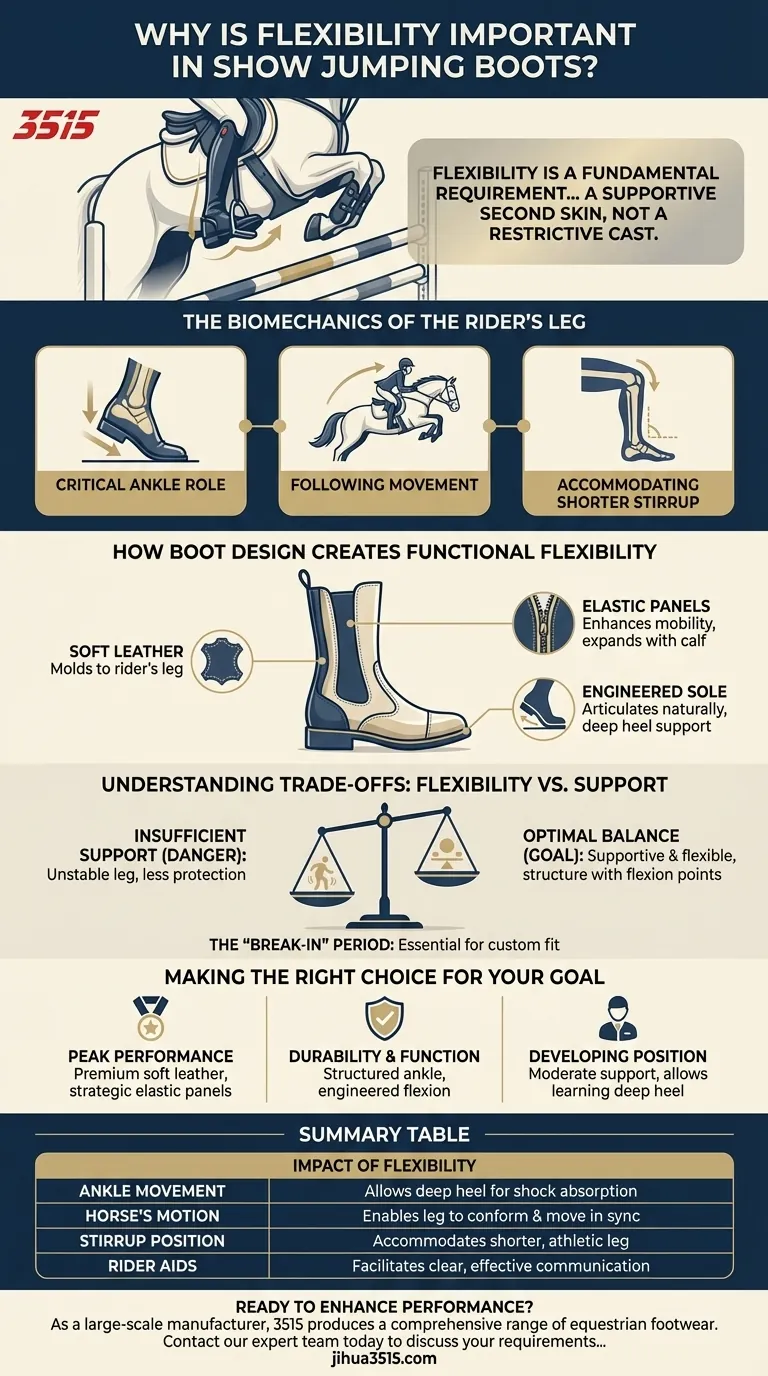
Visual Guide
Related Products
- Wholesale High-Traction Camo Boots - Custom Manufacturer for Brands
- Wholesale Tactical Boots High-Traction & Reflective for Bulk & Brand Orders
- Durable High-Ankle Tactical Boots Wholesale Manufacturer for Custom & Bulk Orders
- Durable Leather High-Ankle Tactical Boots for Wholesale & Custom Manufacturing
- Premium Wholesale Tactical Style Safety Shoes Boots with Quick Lacing
People Also Ask
- What are the key features of the new line of camo boots? Built for Extreme Cold & Rugged Terrain
- Are camo boots necessary for hunting success? Prioritize Performance Over Pattern
- How does the Rank Score Test identify the primary causes of premature failure in tactical and work boots? Key Insights
- What is the technical logic behind using closed-eye testing for tactical boots? Unlocking Peak Footwear Stability
- What shoes to wear for a security job? Durable, Protective Footwear for Long Shifts



















