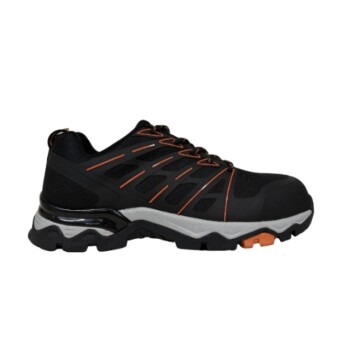
Incorporating customized foot sensors and professional safety shoes is essential for precise data acquisition and experimental control. These tools serve as the critical interface for capturing Ground Reaction Forces (GRF), which are necessary for accurately estimating internal body stresses—such as lumbar load—while simultaneously eliminating manufacturing inconsistencies that could otherwise skew experimental results.
Core Takeaway To achieve scientifically valid biomechanical data, you cannot rely on standard footwear alone. Integrating sensors into stabilized, professional-grade shoes provides the necessary rigidity to maintain accurate measurement axes while isolating specific design variables, ensuring that observed data reflects actual human performance rather than equipment error.
Enhancing Measurement Accuracy
The Critical Role of Ground Reaction Forces
In manual handling and physical tasks, the feet act as the sole contact points between the body and the ground. This makes them the primary generators of interaction forces.
By utilizing professional safety shoes equipped with force sensors or plantar pressure systems, researchers can capture Ground Reaction Forces (GRF) with high fidelity.
Improving Biomechanical Modeling
Capturing raw force data is only the first step. When GRF data is integrated with motion capture systems, it significantly improves the accuracy of downstream calculations.
This integration is particularly vital for lumbar stress estimations. Precise data at the foot level allows for scientific validation of safety features, such as shock absorption and energy feedback capabilities in industrial footwear.
Establishing Experimental Control
Eliminating Manufacturing Deviations
In rigorous testing, slight variations in shoe production can lead to noisy data. Customized high-performance shoes serve as experimental benchmarks to solve this problem.
By employing footwear with uniform uppers, outsole materials, and structures, researchers ensure physical consistency across all test conditions.
Isolating Design Variables
Once consistency is established, researchers can attribute biomechanical differences solely to specific design changes.
For example, by controlling the chassis of the shoe, a researcher can isolate the impact of midfoot torsional stiffness. This provides precise, parametric guidance for designing high-performance footwear without the interference of uncontrolled variables.
Ensuring Real-World Validity and Safety
Ecological Validity in Data
Laboratory data must translate to the real world. Integrating embedded sensors into structurally stable shoes allows for long-term monitoring without interfering with a subject's daily activities.
This setup provides "ecologically valid" data—measurements that reflect how the body actually moves in natural environments rather than just in a sterile lab setting.
Stability on Complex Terrain
Standard sensors may shift or tilt when walking on uneven surfaces, compromising data integrity.
Integrating sensors into safety or outdoor shoes utilizes the footwear's inherent support characteristics. This ensures the sensor maintains a constant measurement axis, even on slopes or uneven roads, protecting the precision of the electronic components.
The Trade-off: Rigidity vs. Natural Movement
Balancing Support and Simulation
While professional safety shoes provide the necessary platform for sensors, there is a nuance to their application.
The structure required to house sensors and protect electronics adds rigidity. However, this is a necessary trade-off to ensure the safety of the subject during high-impact tasks, such as step-down jumps.
Avoiding Data Artifacts
If one were to use non-standardized footwear, the lack of grip and cushioning could alter the subject's natural movement strategy (kinematics) due to fear of slipping or injury.
Therefore, using professional training shoes ensures that the knee joint angles and moments observed are genuine, rather than artifacts of the subject compensating for unstable footwear.
Making the Right Choice for Your Goal
- If your primary focus is Industrial Ergonomics: Prioritize safety shoes with integrated force sensors to accurately model lumbar stress and validate shock absorption features.
- If your primary focus is Footwear R&D: Use customized, uniform benchmark shoes to eliminate production deviations and isolate specific design variables like torsional stiffness.
- If your primary focus is Clinical Assessment: Select structurally stable outdoor shoes with embedded sensors to ensure data accuracy on complex terrains and slopes.
Ultimately, the validity of your biomechanical model depends entirely on the stability and accuracy of your data at the point of ground contact.
Summary Table:
| Key Factor | Role in Biomechanical Testing | Benefit to Research |
|---|---|---|
| Ground Reaction Forces (GRF) | Captures interaction forces at contact points | Improves lumbar load and stress estimation accuracy |
| Manufacturing Consistency | Uses uniform uppers and outsole materials | Eliminates data noise caused by production deviations |
| Experimental Control | Stabilizes measurement axes on uneven terrain | Ensures high data fidelity and sensor protection |
| Design Isolation | Parametric testing of specific shoe components | Attributes performance changes to specific design variables |
| Ecological Validity | Embedded sensors in stable footwear | Reflects real-world movement in natural environments |
Elevate Your Product Performance with 3515 Footwear Solutions
As a premier large-scale manufacturer serving global distributors and brand owners, 3515 provides the technical excellence required for rigorous biomechanical standards. Whether you are conducting industrial ergonomics research or developing high-performance gear, our comprehensive production capabilities ensure your footwear meets the highest benchmarks of stability and precision.
Our extensive portfolio includes:
- Flagship Safety Shoes: Engineered for shock absorption and lumbar protection.
- Tactical & Work Boots: Built for durability and constant measurement stability on complex terrain.
- Outdoor, Training & Sneakers: Optimized for natural movement and energy feedback.
- Dress & Formal Shoes: High-quality bulk solutions for diverse professional requirements.
Partner with 3515 to leverage our advanced manufacturing and R&D support. Contact us today to discuss your bulk production needs and see how our footwear can validate your brand's performance claims.
References
- Iván Nail-Ulloa, Sean Gallagher. Estimating Compressive and Shear Forces at L5-S1: Exploring the Effects of Load Weight, Asymmetry, and Height Using Optical and Inertial Motion Capture Systems. DOI: 10.3390/s24061941
This article is also based on technical information from 3515 Knowledge Base .
Related Products
- Premium Suede Sport Safety Shoes for Wholesale & Bulk Orders
- Premium Lightweight Safety Shoes for Wholesale & Bulk Orders
- Premium KPU Injection Athletic Style Safety Shoes
- Advanced KPU Athletic Safety Shoe with Steel Toe Cap Anti-Slip Rotary Lacing System
- Premium KPU Athletic Safety Shoes for Wholesale
People Also Ask
- What industries have specific OSHA footwear requirements? Ensure Compliance & Protect Your Workforce
- What are the primary functions of professional safety shoes? Maximize Safety in Water Supply Confined Spaces
- What role do specialized safety shoes play in preventing falls? Engineering Stability in Industrial Environments
- What happens during the cutting stage of safety shoes manufacturing? Precision, Process & Quality
- How do the 3R principles influence green footwear design? Master Sustainable Safety Shoe Manufacturing