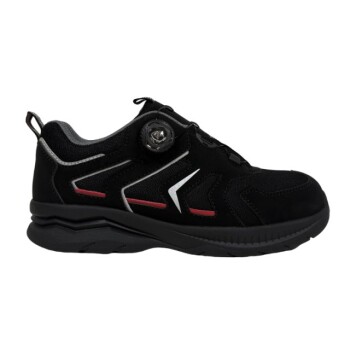
The single most important factor in selecting protective footwear is a thorough assessment of your specific workplace hazards. Choosing the right boot is not about finding the toughest one available; it's about precisely matching the shoe's protective features to the real-world risks you face every day.
Your choice of protective footwear should be a direct response to a formal hazard assessment. The goal is to find the perfect intersection of task-specific protection, all-day comfort, and correct anatomical fit.
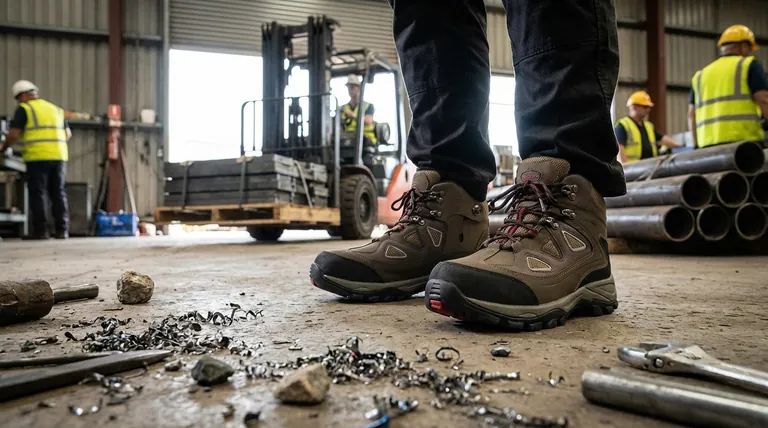
The Foundation: Your Workplace Hazard Assessment
Before you ever look at a boot, you must first look at your work environment. This assessment is the critical first step in any effective Personal Protective Equipment (PPE) program.
Identifying Your Core Risks
The primary purpose of this assessment is to identify all possible foot hazards. Are you working around heavy materials that could fall? Is the floor often littered with sharp objects? Understanding these risks is non-negotiable.
The Impact of Job Demands
Consider the physical demands of your role. Manufacturing workers, for example, often stand for prolonged periods on hard surfaces, making certain features essential for long-term health and safety.
Key Features for Protection and Comfort
Once you understand the risks, you can evaluate footwear based on its specific features. A good shoe is a balance of safety components and ergonomic design.
The Anatomy of a Proper Fit
An incorrect fit can be as dangerous as a lack of protection, leading to fatigue and distraction. Look for a shoe that has a straight inner side from your heel to your big toe, allowing your foot to sit naturally.
Ensuring Stability and Movement
Your footwear should have a firm heel grip to prevent your foot from sliding. It must also have an instep fastening system to keep the shoe securely in place, preventing slipping that could lead to a fall.
Freedom for Your Toes
Ensure there is enough room in the toe box for your toes to move freely. Constricted toes can lead to significant discomfort and long-term foot problems.
The Right Foundation
The heel should be low with a wide base; flat is often recommended for maximum stability. This provides a solid and safe foundation for standing and walking throughout the day.
Common Pitfalls to Avoid
Many workers make easily avoidable mistakes when choosing their footwear. Being aware of these common errors can save you from discomfort and potential injury.
The "It Will Stretch" Myth
Never purchase tight shoes with the expectation that they will stretch over time. Protective footwear is often made of rigid materials that will not conform to your foot, leading to pain and blisters. The fit should be correct from the first wear.
Forgetting About the Floor
If your job requires extended periods of standing or walking, especially on hard concrete floors, shock absorption is critical. Look for high-quality, shock-absorbing insoles to reduce the cumulative impact on your feet, legs, and back.
Making the Right Choice for Your Goal
Your specific role and environment should be the ultimate guide for your selection.
- If your primary focus is compliance in a high-risk area: Begin with a formal hazard assessment to create a checklist of non-negotiable protective features required for your specific job.
- If your primary focus is all-day comfort on hard surfaces: Prioritize footwear with excellent arch support, superior shock-absorbing insoles, and a fit that provides ample toe room.
- If your primary focus is stability and preventing slips: Look for a shoe with a low, wide-based heel and a secure fastening system to lock your foot in place.
Ultimately, the right protective footwear is a critical tool that empowers you to perform your job safely and effectively.
Summary Table:
| Selection Focus | Key Considerations |
|---|---|
| Compliance in High-Risk Areas | Start with a formal hazard assessment. Prioritize required protective features (e.g., impact resistance, puncture-proof soles). |
| All-Day Comfort on Hard Surfaces | Prioritize excellent arch support, superior shock-absorbing insoles, and a fit with ample toe room. |
| Stability & Slip Prevention | Look for a low, wide-based heel and a secure instep fastening system to lock the foot in place. |
Ensure your workforce is equipped with the right protective footwear. As a large-scale manufacturer, 3515 produces a comprehensive range of safety shoes and boots designed to meet the specific hazards and comfort needs of distributors, brand owners, and bulk clients. Our production capabilities encompass all types of protective footwear, ensuring durability, compliance, and superior ergonomic design. Contact us today to discuss your requirements and discover how we can enhance your safety program with high-quality, reliable footwear solutions.
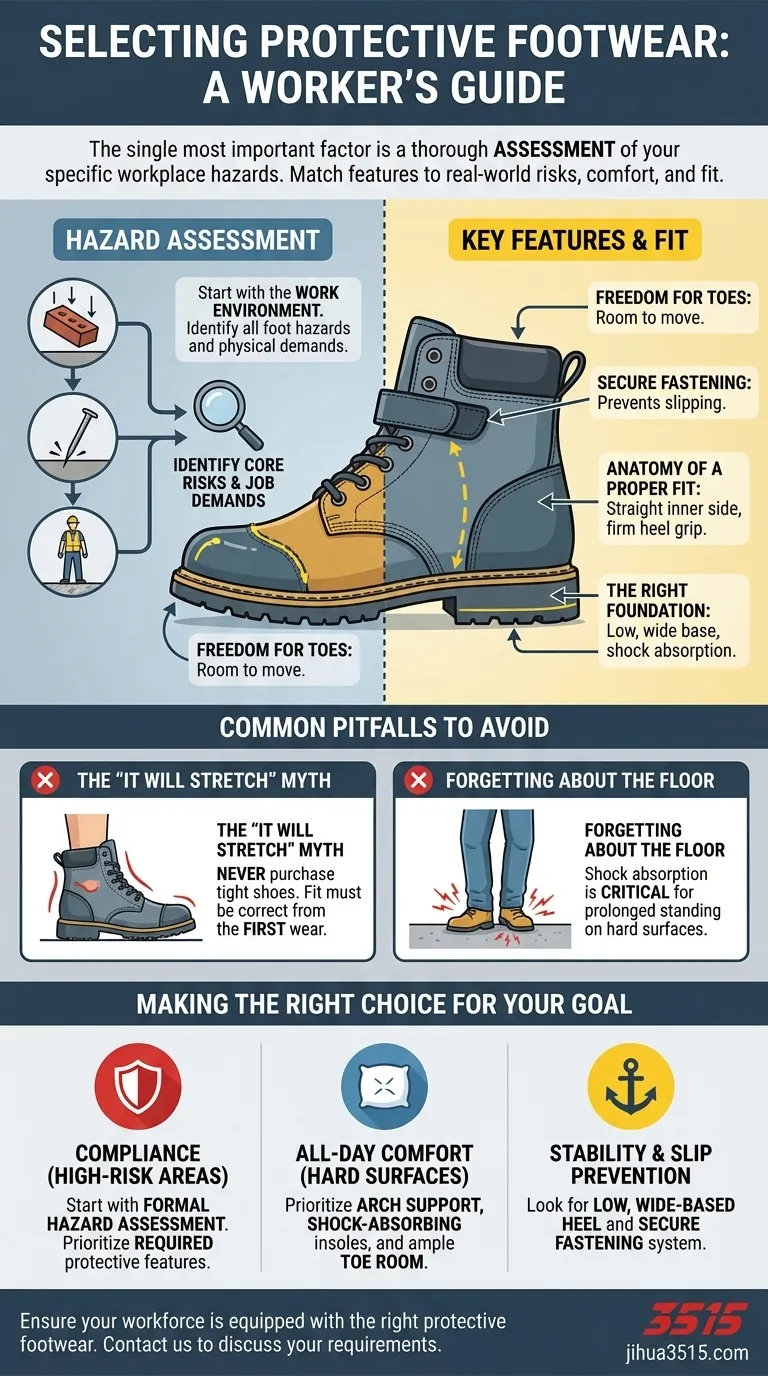
Visual Guide
Related Products
- Wholesale Customizable Safety Boots Durable & Protective Footwear Manufacturing
- Premium Suede Sport Safety Shoes for Wholesale & Bulk Orders
- Wholesale Anti-Smash & Puncture-Proof Safety Shoes Custom Manufacturing for Brands
- Premium Lightweight Safety Shoes for Wholesale & Bulk Orders
- Premium Safety Shoes with Rotating Buckle Safety Sneakers
People Also Ask
- Why are industrial safety boots with steel toes necessary for machine operators? Essential Foot Protection for Safety
- What is the history of steel toe work boots? From German Invention to Modern Safety Standard
- What are the different types of steel toe work boots? Choose the Right Boot for Your Job
- What are the pros and cons of steel toe work boots? A Guide to Maximum Protection vs. Comfort
- What common features do safety toe work boots share regardless of style? Essential Protection Explained