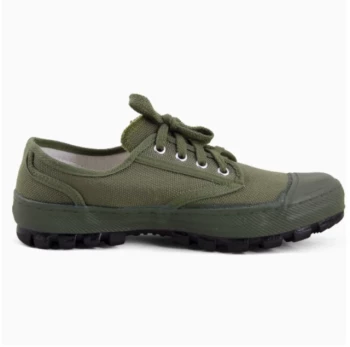
Choosing the right work shoe is a critical decision that extends far beyond simple comfort. Your selection must be based on a precise evaluation of your specific work environment, the physical demands of your job, and a correct fit from the moment you try them on. Unlike casual footwear, safety shoes do not "break in," making the initial fit the most important factor for long-term wear.
The core challenge is not just finding a shoe that meets a safety checklist, but selecting a piece of essential equipment that balances non-negotiable protection against workplace hazards with the ergonomic support required to prevent daily fatigue and long-term injury.
Deconstructing Your Needs: Beyond the Basics
To select the right shoe, you must first become an expert on your own work conditions. This requires a systematic assessment of your environment, tasks, and personal physical needs.
Assess Your Environment's Hazards
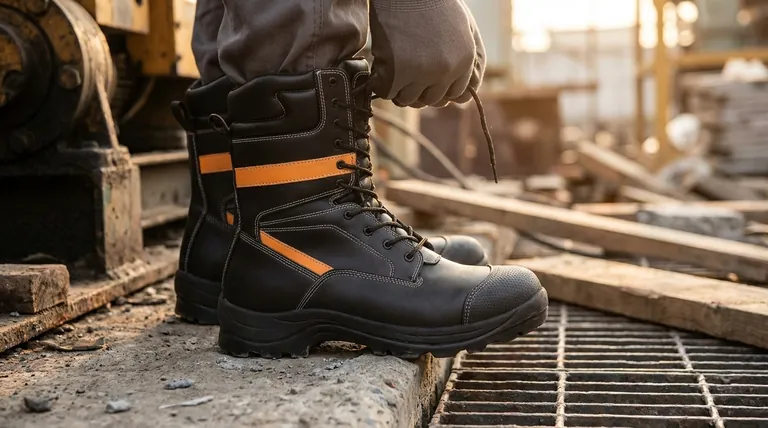
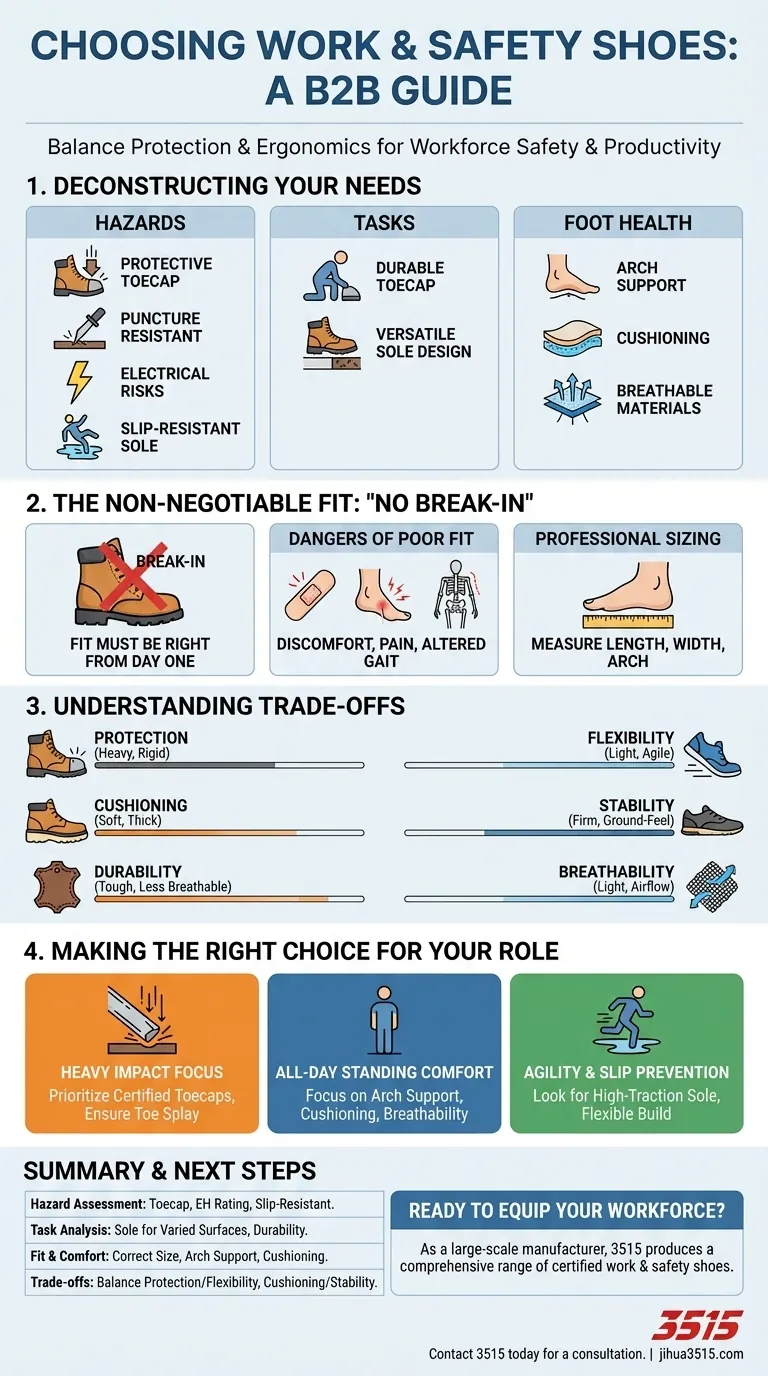
The primary function of a safety shoe is protection. Identify the specific risks you face daily, which could include falling objects requiring a protective toecap, sharp materials on the ground, electrical risks, or slippery surfaces demanding high-traction soles.
Analyze Your Daily Tasks
Consider the physical movements your job requires. If you spend significant time kneeling, a durable toecap is essential to prevent wear. If you walk across varied surfaces, from concrete to grating, the sole's design and material are critical for stability and slip resistance.
Prioritize Long-Term Foot Health
Comfort is not a luxury; it is a key component of safety and productivity. Look for features like proper arch support to distribute pressure, adequate cushioning to absorb impact, and breathable materials to manage moisture and prevent foot issues.
The Non-Negotiable Element: A Perfect Fit
The most technologically advanced shoe will fail if it doesn't fit correctly. This is the single most common point of failure in work footwear selection.
Safety Shoes Don't "Break In"
You must discard the idea that a safety shoe will become more comfortable over time. The structural reinforcements that provide protection prevent the shoe from stretching or conforming to your foot like a leather trainer. The fit must be right from day one.
The Dangers of a Poor Fit
An ill-fitting shoe—whether too tight or too loose—can cause immediate discomfort, blisters, and foot pain. Over time, it can negatively alter your gait (the way you walk), leading to strain on your ankles, knees, and back.
Seek Professional Sizing
Whenever possible, get your feet measured by a professional. An expert can help you account for not only length but also crucial factors like width and arch type, ensuring you select a shoe that properly supports your foot's unique structure.
Understanding the Trade-offs
Every design choice in a work shoe involves a trade-off. Recognizing these compromises is key to choosing the best option for your specific role, not just the one with the longest list of features.
Protection vs. Flexibility
A shoe with maximum reinforcement, such as a steel toe and metatarsal guard, offers incredible protection from impact. However, this often comes at the cost of increased weight and reduced flexibility, which can lead to fatigue over a long shift.
Cushioning vs. Stability
While thick cushioning can feel comfortable, excessive padding can sometimes reduce your stability on uneven surfaces. In certain environments, a slightly thinner, more flexible sole can provide better ground-feel and put less rotational stress on your knees.
Durability vs. Breathability
Heavy-duty materials like thick leather are exceptionally durable but can be less breathable, leading to heat and moisture buildup. Modern synthetic materials may offer superior breathability and lighter weight but can have different wear characteristics.
Making the Right Choice for Your Role
Filter your options based on your highest-priority need. Your goal is to find the shoe that offers the best combination of features for the realities of your workday.
- If your primary focus is protection from heavy impact: Prioritize shoes with certified composite or steel toecaps and ensure the fit still allows for natural toe splay.
- If your primary focus is all-day comfort while standing: Focus on superior arch support, a well-designed cushioning system, and a lightweight, breathable construction.
- If your primary focus is agility and slip prevention: Look for shoes with a certified high-traction sole and a flexible build that doesn't compromise on core safety standards.
Ultimately, investing in the right work shoe is an investment in your most valuable professional tool: your own body.
Summary Table:
| Key Consideration | What to Look For |
|---|---|
| Hazard Assessment | Protective toecap, electrical hazard rating, slip-resistant sole. |
| Task Analysis | Sole material for varied surfaces, durability for kneeling, flexibility. |
| Fit & Comfort | Correct size (length/width), arch support, cushioning, breathable materials. |
| Trade-offs | Balance protection vs. flexibility, cushioning vs. stability, durability vs. breathability. |
Ready to equip your workforce with the perfect safety footwear?
As a large-scale manufacturer, 3515 produces a comprehensive range of certified work and safety shoes for distributors, brand owners, and bulk clients. Our production capabilities encompass all types of occupational footwear, from heavy-duty boots with steel toes to lightweight, breathable shoes for all-day comfort.
We help you provide footwear that meets the highest safety standards while ensuring worker comfort and productivity. Let's discuss your specific needs and find the ideal solution for your team.
Contact 3515 today for a consultation and let's step up your safety standards together.
Visual Guide
Related Products
- Durable Canvas Work Shoes with Rubber Lug Sole | Wholesale Manufacturer
- Durable Goodyear Welt Leather Work Boots for Wholesale & Private Label
- Durable Leather Work Boots for Wholesale & Custom OEM Manufacturing
- Durable Leather Work Boots for Wholesale & Custom Manufacturing
- Durable Leather Safety Boots for Wholesale & Custom OEM Manufacturing
People Also Ask
- What are the properties of canvas as a shoe material? A Guide to Lightweight Comfort & Style
- Why is the selection of high-strength fabric materials necessary in the production of canvas shoes and training shoes?
- What types of jobs are canvas work boots suitable for? Ideal for Light-Duty, High-Mobility Roles
- Can canvas shoes be worn in rainy conditions? The Truth About Water Resistance
- What are the functional advantages of choosing rubber soles over leather soles for work boots? Superior Safety & Durability