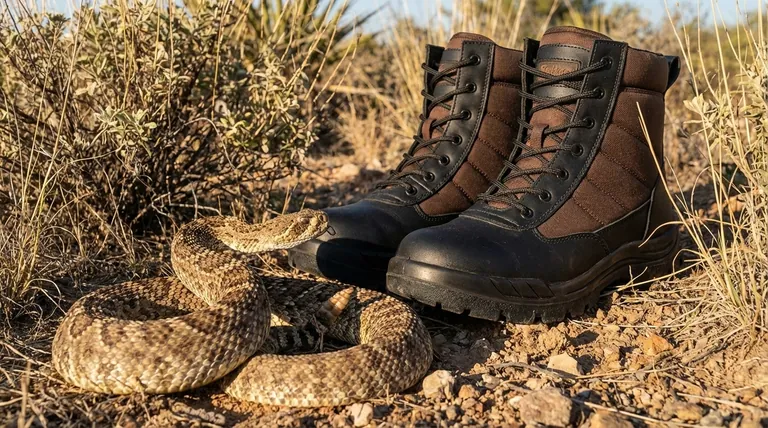
Yes, certain snakes can absolutely bite through leather boots. The most common North American venomous snakes, such as larger rattlesnakes and copperheads, possess fangs long and strong enough to penetrate typical leather footwear, especially if the snake is over 2.5 feet in length.
The belief that standard leather boots provide reliable protection against snakebites is a dangerous misconception. A snake's ability to penetrate a boot depends entirely on the snake's size, the length of its fangs, and the specific thickness and quality of the boot's material.
The Mechanics of a Snakebite vs. Leather
To understand the risk, you need to think less about the type of snake and more about the physics of the bite. It is a simple battle between the fang and the barrier.
Fang Length is the Primary Factor
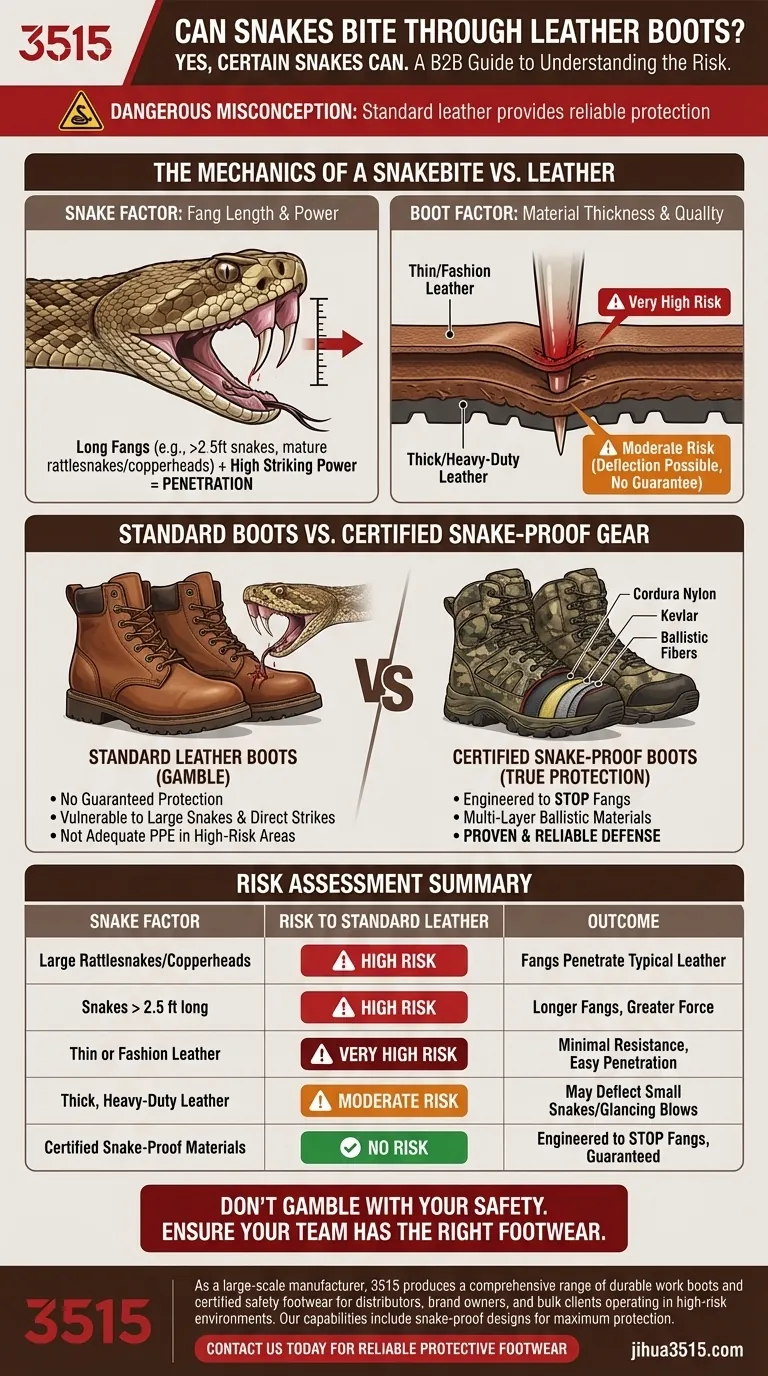
The single most important variable is the length of the snake's fangs. A fang that is longer than the thickness of the boot material can deliver venom.
Larger, mature venomous snakes have longer fangs. This is why a 4-foot rattlesnake poses a significantly greater threat to your footwear than a 1-foot-long juvenile.
The Role of Striking Power
A larger snake also strikes with more force and momentum. This power helps drive the fangs through a resistant material like leather, increasing the chance of a successful puncture.
Not All Leather is Created Equal
The term "leather boot" is broad. A thin, pliable leather used in a fashion boot offers far less resistance than the thick, rigid leather of a heavy-duty work boot.
Most consumer-grade hiking and work boots are not designed or tested to withstand a direct strike from a large pit viper.
Understanding the Trade-offs: Standard Boots vs. Snake-Proof Gear
Relying on standard boots for snake protection is a gamble. True protection comes from materials specifically engineered for the task.
The Limits of Standard Leather
A thick leather boot might deflect a bite from a smaller snake or a glancing blow. However, it provides no guaranteed protection and should not be considered adequate personal protective equipment (PPE) in snake-heavy environments.
What Makes a Boot "Snake-Proof"?
Certified snake-proof boots are not typically made of leather alone. They utilize layers of extremely tough, dense, and tightly-woven synthetic materials like Cordura nylon, Kevlar, or other ballistic fibers.
These materials are designed to stop the sharp, needle-like point of a fang from puncturing through to the skin. This is the only reliable way to ensure protection.
Debunking a Common Myth
The idea that snakes cannot bite through leather is entirely false. This myth likely originates from instances where smaller snakes failed to penetrate exceptionally thick boots, but it does not apply to the larger, more dangerous snakes you are likely concerned about.
Making the Right Choice for Your Situation
Your choice of footwear should directly match your level of risk exposure.
- If your primary focus is casual hiking on clear, well-maintained trails: A high-quality, thick leather boot offers some incidental protection, but your greatest defense is remaining aware of your surroundings.
- If your primary focus is working or exploring in high-risk areas (like dense brush, tall grass, or rocky outcrops): You must invest in certified snake-proof boots or snake gaiters for reliable protection.
- If your primary focus is guaranteed peace of mind in any outdoor scenario: Dedicated snake boots are the only equipment specifically designed and proven to defeat a venomous snake's bite.
Ultimately, choosing the right protection begins with understanding the true limitations of your gear.
Summary Table:
| Snake Factor | Risk to Standard Leather Boots |
|---|---|
| Large Rattlesnakes/Copperheads | High Risk - Fangs can penetrate typical leather. |
| Snakes > 2.5 feet long | High Risk - Longer fangs and greater striking force. |
| Thin or Fashion Leather | Very High Risk - Offers minimal resistance. |
| Thick, Heavy-Duty Leather | Moderate Risk - May deflect small snakes or glancing blows. |
| Certified Snake-Proof Materials | No Risk - Engineered with layers like Kevlar to stop fangs. |
Don't gamble with your safety. Ensure your team is equipped with the right protective footwear.
As a large-scale manufacturer, 3515 produces a comprehensive range of durable work boots and certified safety footwear for distributors, brand owners, and bulk clients operating in high-risk environments. Our production capabilities encompass all types of safety shoes and boots designed for maximum protection.
Contact us today to discuss your needs for reliable, high-quality protective footwear.
Visual Guide
Related Products
- Premium Wholesale Waterproof Safety Boots High Performance Protection for Industrial Markets
- Premium High-Cut Waterproof Safety Boots Manufacturing & Wholesale Solutions
- Wholesale Waterproof Tactical Boots Custom Suede & High-Traction Soles
- High Performance Fire-Retardant Waterproof Safety Boots
- Wholesale Premium Waterproof Nubuck Safety Shoes Boots
People Also Ask
- What weather and chemical protections do premium boots offer? Your Complete Guide to Safety & Performance
- Why are waterproof safety boots recommended for certain work environments? Essential Protection for Wet & Hazardous Jobs
- What are the primary protective functions of industrial safety boots in oil palm plantations? Master Rough Terrain Safety
- Why are oil-resistant and anti-slip properties critical for industrial safety boots? Expert Outsole Engineering Guide
- What are the best types of shoes for different gardening conditions? Find Your Perfect Match.