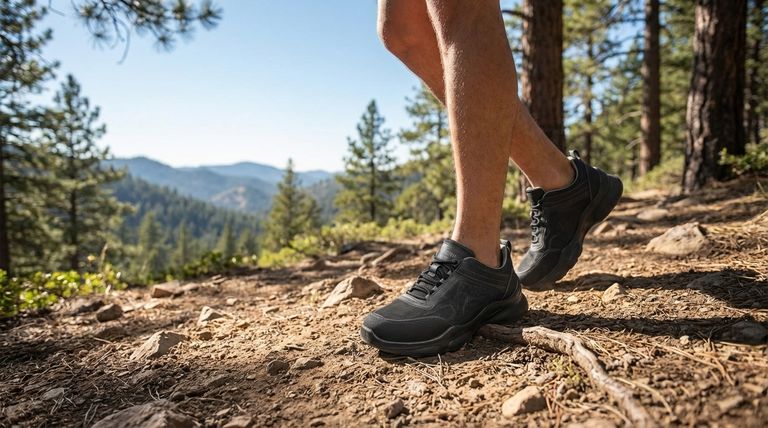
For hikers with strong ankles and lighter packs, the best footwear choices are trail runners and low-cut hiking shoes. These options provide sufficient stability for most conditions while offering significant advantages in weight and comfort over traditional hiking boots, which are often unnecessary for this scenario.
The modern approach to hiking footwear prioritizes matching the tool to the task. For hikers with good biomechanics and moderate loads, the benefits of lightweight, flexible footwear far outweigh the rigid support of a traditional boot on most trails.
Why Traditional Boots Are Often Overkill
The long-standing belief that all hikers need high-top boots for ankle support is outdated. That level of rigidity is designed for specific challenges that don't apply to every hiker or every trail.
The Role of Ankle Strength
Your description of having "solid ankles" is the most critical factor. Footwear does not create ankle stability; it can only brace an ankle that is already weak or under extreme stress.
For a hiker with a history of strong, injury-free ankles, the muscles and ligaments are already doing their job effectively. A heavy, stiff boot can inhibit natural foot movement and may not be necessary.
The Impact of Pack Weight
The reference to a "light to moderate load" (up to 30 pounds) is also key. Heavier packs change your center of gravity and increase the forces on your joints with every step.
This is when the stiff sole and supportive upper of a backpacking boot become essential to prevent foot fatigue and injury. With a lighter load, your body can manage these forces without needing a heavy, rigid chassis on your feet.
Differentiating the Top Recommendations
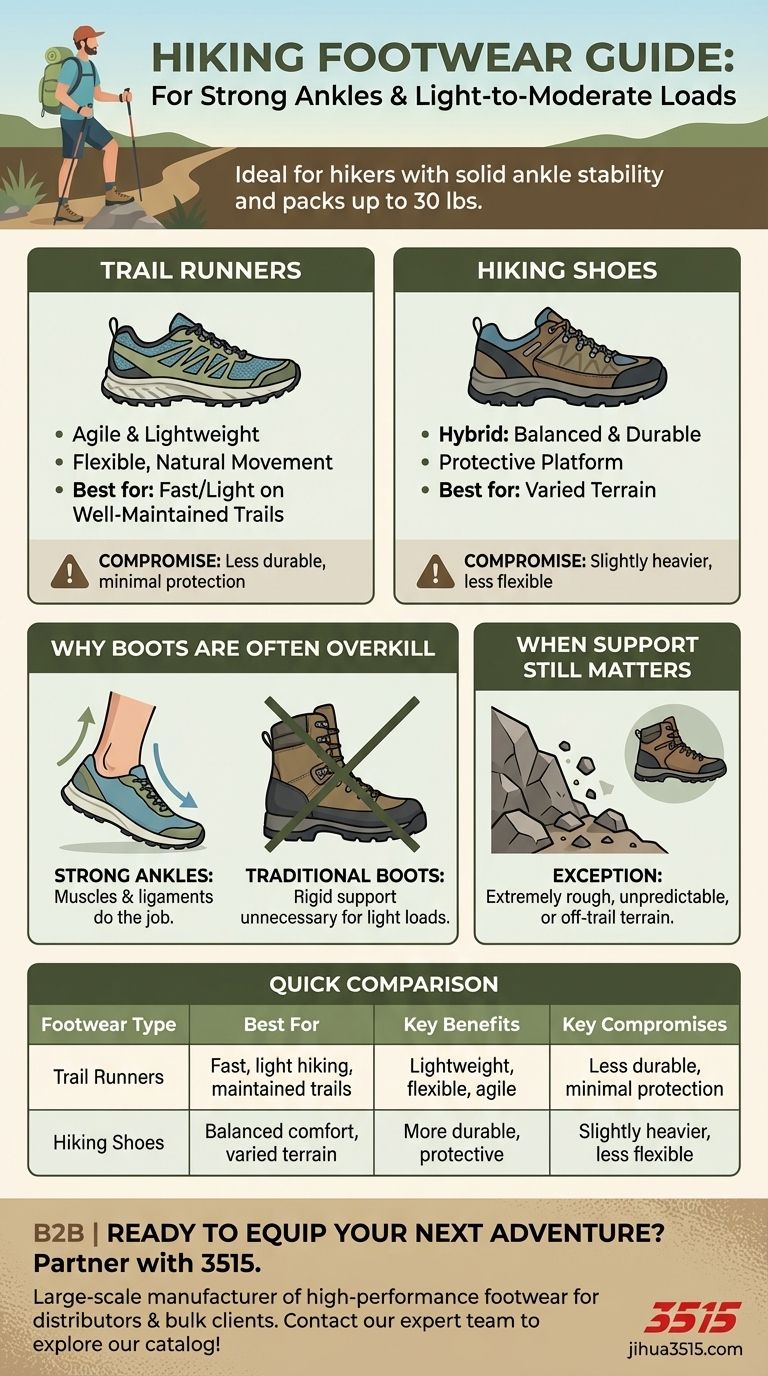
Both trail runners and hiking shoes are excellent choices, but they serve slightly different purposes. The decision between them comes down to prioritizing either agility or durability.
Trail Runners: The Case for Agility
Trail runners are essentially running shoes with enhanced features for the trail, such as more aggressive tread for grip and better underfoot protection from rocks.
Their primary advantage is being extremely lightweight and flexible. This reduces fatigue over long miles and allows your foot to move naturally, making you feel more nimble on the trail.
Hiking Shoes: The Hybrid Approach
Hiking shoes are the middle ground. They adopt the low-cut style and lighter weight of a trail runner but incorporate more durability and support from hiking boots.
They typically feature stiffer soles and more robust materials than trail runners. This makes them more durable and protective on rocky trails, though they are slightly heavier and less flexible.
Understanding the Trade-offs
Choosing lighter footwear involves accepting certain compromises. Objectivity requires acknowledging when these options may not be the best choice, even for a hiker with strong ankles.
When Support Still Matters: Rough Terrain
The primary exception for this advice is extremely rough and unpredictable terrain. On trails with constant loose rock, off-trail scrambling, or dense brush, the added protection of a more substantial shoe or boot is invaluable.
Low-cut shoes offer minimal protection from scrapes and ankle-bone impacts on jagged terrain.
Durability and Protection
The lightweight materials used in trail runners, particularly the mesh uppers, will wear out much faster than the materials in a hiking shoe or boot.
They also offer less protection from water unless you specifically choose a waterproof model, which can in turn reduce breathability.
Making the Right Choice for Your Hike
Ultimately, the ideal choice depends on your specific goals and the conditions you expect.
- If your primary focus is moving fast and light on well-maintained trails: Trail runners are your best choice for their unmatched comfort and agility.
- If your primary focus is a balance of comfort and durability for varied terrain: Hiking shoes provide a more robust platform without the bulk of a full boot.
- If your hikes frequently involve very rocky, unstable, or off-trail sections: You may still want to consider a mid-cut hiking boot for its superior protection and rigidity.
The most crucial step is to visit an outdoor specialty store to get properly fitted, as comfort and fit will always be the ultimate factors in your performance on the trail.
Summary Table:
| Footwear Type | Best For | Key Benefits | Key Compromises |
|---|---|---|---|
| Trail Runners | Fast, light hiking on well-maintained trails | Lightweight, flexible, agile feel | Less durable, minimal protection |
| Hiking Shoes | Balanced comfort & durability on varied terrain | More durable, protective than trail runners | Slightly heavier, less flexible |
Ready to equip your next adventure with the perfect footwear?
As a large-scale manufacturer, 3515 produces a comprehensive range of footwear for distributors, brand owners, and bulk clients. Our production capabilities encompass all types of shoes and boots, including high-performance trail runners and durable hiking shoes designed for comfort and agility. Let us help you provide your customers with the ideal gear for their hiking needs.
Contact our expert team today to discuss your footwear requirements and explore our extensive catalog!
Visual Guide
Related Products
- Durable Rubber Sole Outdoor Shoes Wholesale & Custom Manufacturing
- Premium Wheat Nubuck Safety Shoes for Bulk Distribution
- Wholesale High-Traction Camo Boots - Custom Manufacturer for Brands
- Lightweight Breathable Training Shoes for Wholesale & Custom OEM Manufacturing
- Wholesale Durable & Breathable Training Shoes for Custom Brands
People Also Ask
- What is the function of the sole in outdoor shoes? Find the Perfect Grip and Support
- What role do outdoor shoes and sneakers play in navigating external terrains? Engineered Stability for Every Surface
- How is AI utilized in the design of outdoor and safety footwear? Harnessing Big Data for Market-Driven Shoe Innovation
- Why is durability important when selecting outdoor shoes? A Guide to Safety & Long-Term Value
- What are the key components of outdoor shoes that affect comfort and sturdiness? A Guide to Durable, High-Performance Footwear