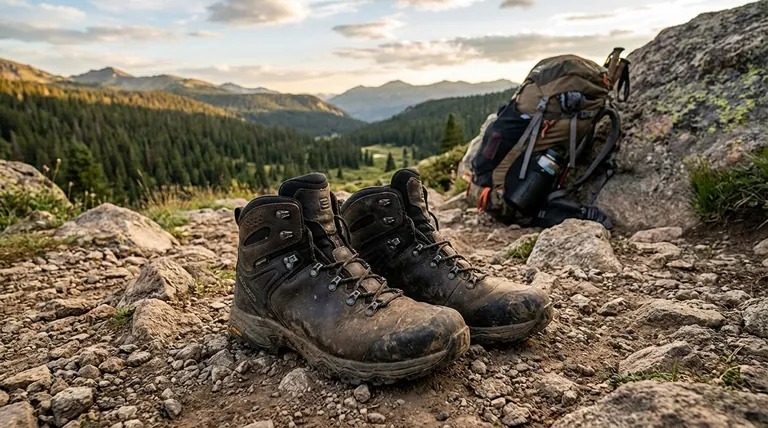
A midweight hiking boot is the quintessential choice for backpackers, designed as a versatile workhorse that balances support with comfort. They are defined by three core features: higher ankle collars for stability, more substantial midsoles and internal shanks for underfoot protection, and more durable upper materials, often incorporating leather or rugged synthetics. This construction makes them ideal for multi-day trips on varied terrain while carrying a moderate pack load.
The essential purpose of a midweight boot is to provide a strategic compromise. It offers significantly more support and durability than a lightweight hiker without the extreme rigidity and weight of a true mountaineering boot, making it the default choice for serious backpacking.
Deconstructing the Midweight Boot
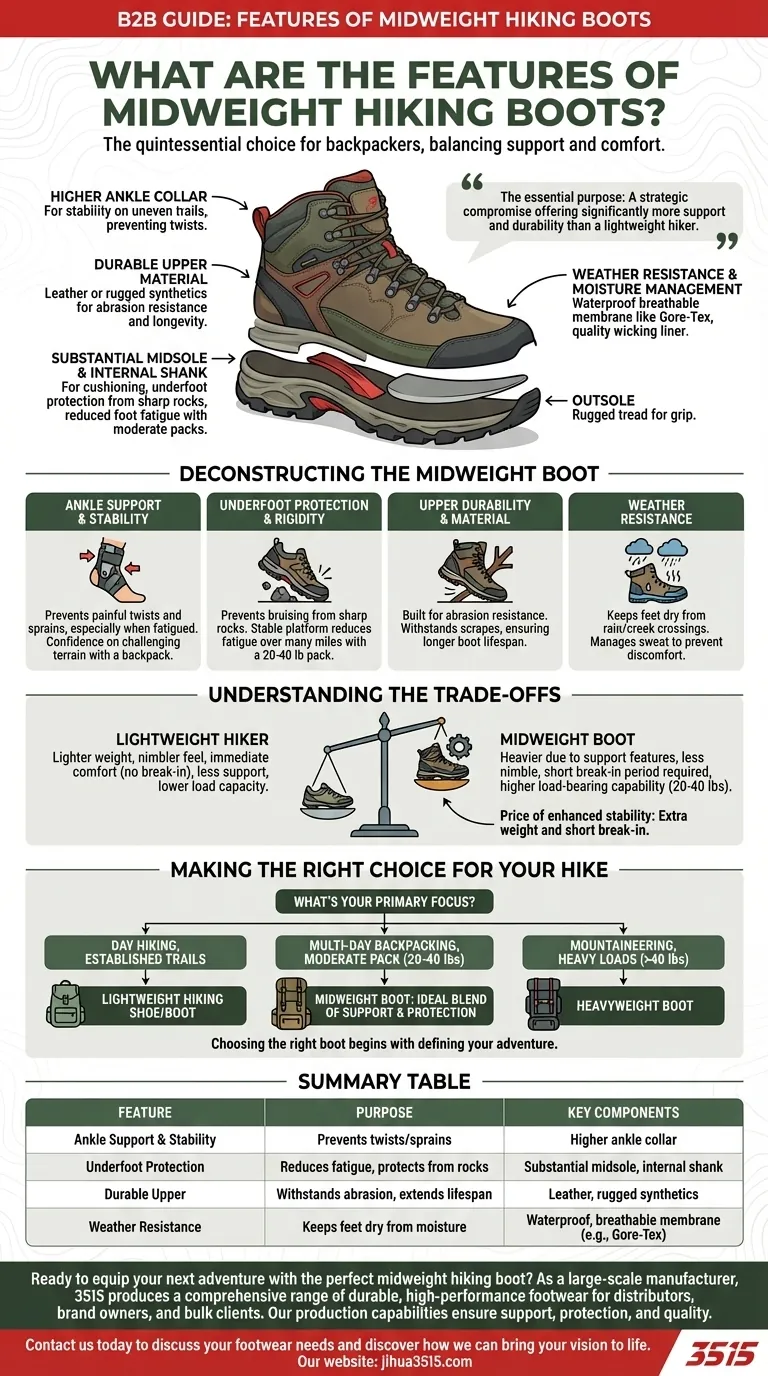
To understand if a midweight boot is right for you, it’s crucial to understand how its specific components contribute to its performance on the trail.
Ankle Support and Stability
The most visible feature is a higher ankle collar that extends over the ankle bones. This design provides crucial support on uneven, rocky, or root-filled trails, helping to prevent painful twists and sprains, especially when you are fatigued at the end of a long day.
This added structure gives you the confidence to move over challenging terrain while carrying the extra weight of a backpack.
Underfoot Protection and Rigidity
Midweight boots contain more substantial midsoles for cushioning and internal plates called shanks. The shank is a semi-rigid piece of material (like nylon or TPU) embedded in the midsole that adds stiffness.
This rigidity is vital. It prevents sharp rocks from bruising the bottom of your foot and provides a stable platform that reduces foot fatigue over many miles, particularly when carrying a pack weighing 20-40 pounds.
Upper Durability and Material
The uppers of midweight boots are built for abrasion resistance. They often use a combination of leather and durable synthetic fabrics to withstand scrapes from rocks and branches.
This robust construction not only protects your foot but also ensures the boot has a longer lifespan compared to lighter, all-synthetic options.
Weather Resistance and Moisture Management
Most boots in this category feature a waterproof, breathable membrane (like Gore-Tex). This keeps your feet dry from external sources like rain or creek crossings.
Equally important for multi-day trips is how the inner materials manage sweat. Quality liners are designed to wick moisture, which is critical when boots may not fully dry overnight in damp conditions.
Understanding the Trade-offs
Choosing a midweight boot involves accepting a set of deliberate compromises. Its greatest strengths are also the source of its primary trade-offs when compared to a lightweight hiker.
Weight vs. Support
A pair of midweight boots typically weighs more than a lightweight hiker. This extra weight comes directly from the features that provide more support: the taller collar, thicker midsole, internal shank, and more durable upper materials.
While modern designs are lighter than ever, they will always feel less nimble than a trail runner or low-cut hiking shoe. This is the price you pay for enhanced stability and protection.
Load-Bearing Capability
This is the defining difference. Lightweight boots are best for day hikes with a light pack. Midweight boots are specifically engineered to provide the structural integrity needed to comfortably carry a moderate load for multiple days.
Attempting a multi-day backpacking trip in lightweight shoes can lead to significant foot fatigue and an increased risk of injury, as they lack the necessary underfoot support.
Break-in Period
Due to their stiffer materials, especially those with leather components, midweight boots often require a short break-in period. Wearing them for a few shorter walks before a big trip allows the materials to mold to your feet.
In contrast, most lightweight hikers are made from softer synthetics and are generally comfortable right out of the box.
Making the Right Choice for Your Hike
Your intended use is the only factor that matters. Select the boot that aligns directly with the demands of the adventures you have planned.
- If your primary focus is day hiking on established trails: A more nimble lightweight hiking shoe or boot is likely the better and more comfortable choice.
- If your primary focus is multi-day backpacking with a moderate pack (20-40 lbs): The midweight boot is precisely what you need, offering the ideal blend of support, durability, and protection.
- If your primary focus is mountaineering or carrying heavy loads (over 40 lbs): You should be looking at heavyweight boots, which offer even more rigidity and support for extreme conditions.
Ultimately, choosing the right boot begins with clearly defining your adventure.
Summary Table:
| Feature | Purpose | Key Components |
|---|---|---|
| Ankle Support & Stability | Prevents twists/sprains on uneven terrain | Higher ankle collar |
| Underfoot Protection | Reduces foot fatigue, protects from sharp rocks | Substantial midsole, internal shank |
| Durable Upper | Withstands abrasion, extends boot lifespan | Leather, rugged synthetic materials |
| Weather Resistance | Keeps feet dry from external moisture | Waterproof, breathable membrane (e.g., Gore-Tex) |
Ready to equip your next adventure with the perfect midweight hiking boot?
As a large-scale manufacturer, 3515 produces a comprehensive range of durable, high-performance footwear for distributors, brand owners, and bulk clients. Our production capabilities encompass all types of hiking boots, ensuring you get the support, protection, and quality you need for demanding trails.
Contact us today to discuss your footwear needs and discover how we can bring your vision to life.
Visual Guide
Related Products
- Wholesale High-Traction Camo Boots - Custom Manufacturer for Brands
- Wholesale Lightweight Tactical Boots Custom Manufacturer for Desert & Combat Use
- Wholesale Durable Mid-Cut Tactical Boots for Custom & Private Label Brands
- Wholesale Lightweight Tactical Boots with Dial Closure OEM & Bulk Orders
- Durable Mid-Cut Tactical Boots for Wholesale & Private Label
People Also Ask
- What are the key features of the new line of camo boots? Built for Extreme Cold & Rugged Terrain
- Are camo boots necessary for hunting success? Prioritize Performance Over Pattern
- What is the technical logic behind using closed-eye testing for tactical boots? Unlocking Peak Footwear Stability
- How does the Rank Score Test identify the primary causes of premature failure in tactical and work boots? Key Insights
- What shoes to wear for a security job? Durable, Protective Footwear for Long Shifts