At their core, trail running shoes are a direct trade-off between speed and support. They offer significant advantages in weight, flexibility, and out-of-the-box comfort, making them incredibly agile on varied terrain. However, these benefits come at the cost of the ankle support, long-term durability, and stability under load that is characteristic of traditional hiking footwear.
The central decision is not about whether trail runners are "good" or "bad," but about aligning their design philosophy with your specific activity. They prioritize agility for fast movement with a light load, intentionally sacrificing the rugged protection required for carrying heavy packs over long distances.
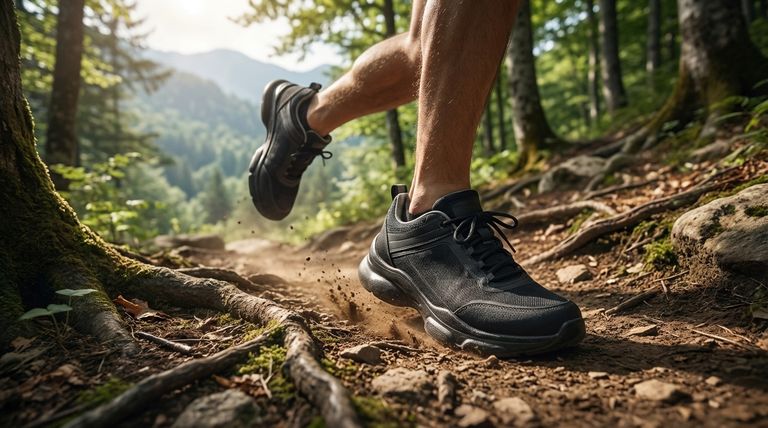
The Core Advantages: Speed and Agility
The primary benefits of trail running shoes stem from their running-shoe DNA. They are engineered to facilitate quick, nimble movement over uneven ground, a stark contrast to the slow, deliberate pace for which hiking boots are designed.
Engineered for Lightness
Trail runners are significantly lighter than hiking shoes and especially hiking boots. This reduction in weight on your feet translates directly to less fatigue over miles, allowing you to move faster and conserve energy.
Superior Flexibility
Unlike the rigid chassis of a hiking boot, a trail runner's sole is highly flexible. This allows your foot to adapt naturally to the contours of the trail, providing better ground-feel and promoting a more agile gait.
Aggressive Traction
The outsoles of trail running shoes feature deep, multi-directional lugs made from sticky rubber compounds. This design provides exceptional grip on loose dirt, mud, and rock, which is critical for maintaining control while moving quickly.
Out-of-the-Box Comfort
Built more like a sneaker than a boot, most trail runners require little to no break-in period. Their breathable mesh uppers and cushioned midsoles offer immediate comfort, reducing the risk of hotspots and blisters on your first few outings.
Understanding the Trade-offs
The very features that make trail runners light and agile also create their primary limitations. It's crucial to understand what you are giving up in exchange for that speed and comfort.
Minimal Ankle Support
This is the most significant compromise. Trail runners offer virtually no ankle support, making them less suitable for hikers prone to ankle rolls or anyone carrying a pack that raises their center of gravity.
Reduced Stability Under Load
The flexible sole that provides great ground-feel becomes a liability when carrying a heavy backpack. The shoe can twist and flex under the weight, leading to foot fatigue and an increased risk of injury on technical terrain.
Durability Compared to Hiking Boots
Trail runners are not built to last as long as hiking boots. The lightweight mesh uppers are more susceptible to abrasion, and the softer foam midsoles compress and lose their cushioning much faster—often in as few as 300-500 miles. A sturdy hiking boot can often last for thousands of miles.
Limited Weather Protection
Standard trail runners are designed for maximum breathability, not water resistance. While this is excellent for warm, dry conditions, your feet will get wet almost immediately in rain or when crossing streams. Waterproof (e.g., Gore-Tex) versions exist, but they are less breathable and take much longer to dry out once wet.
Trail Runners vs. Hiking Boots: Key Distinctions
Choosing between these two categories depends entirely on your objective. One is a tool for speed; the other is a tool for support.
The Philosophy: Agility vs. Protection
A trail runner is designed to help you move around obstacles nimbly. A hiking boot is designed to help you power through obstacles safely, protecting your feet and ankles from impact and instability.
The Impact of Pack Weight
Pack weight is the critical factor. For a light daypack (under 20 lbs), the benefits of a trail runner are clear. As your pack weight increases, the need for the stability and support of a hiking boot becomes exponentially more important.
Footwear Lifespan and Cost
While trail runners have a lower initial cost, their shorter lifespan means you will likely replace them more frequently. The higher cost of a quality hiking boot is an investment in long-term durability and protection.
Making the Right Choice for Your Activity
Your decision should be guided by your primary use case. Assess your goals honestly to choose the right tool for the job.
- If your primary focus is trail running or fastpacking with a minimal load: Trail runners are the specifically designed tool and will dramatically outperform any other footwear.
- If your primary focus is day hiking on well-maintained trails: Trail runners offer an ideal balance of comfort, grip, and low weight for most hikers.
- If your primary focus is multi-day backpacking with a heavy pack (over 25-30 lbs): The superior support, stability, and durability of a hiking boot are almost always the safer and more comfortable choice.
Understanding these fundamental trade-offs empowers you to select the footwear that serves your specific objective, not just your feet.
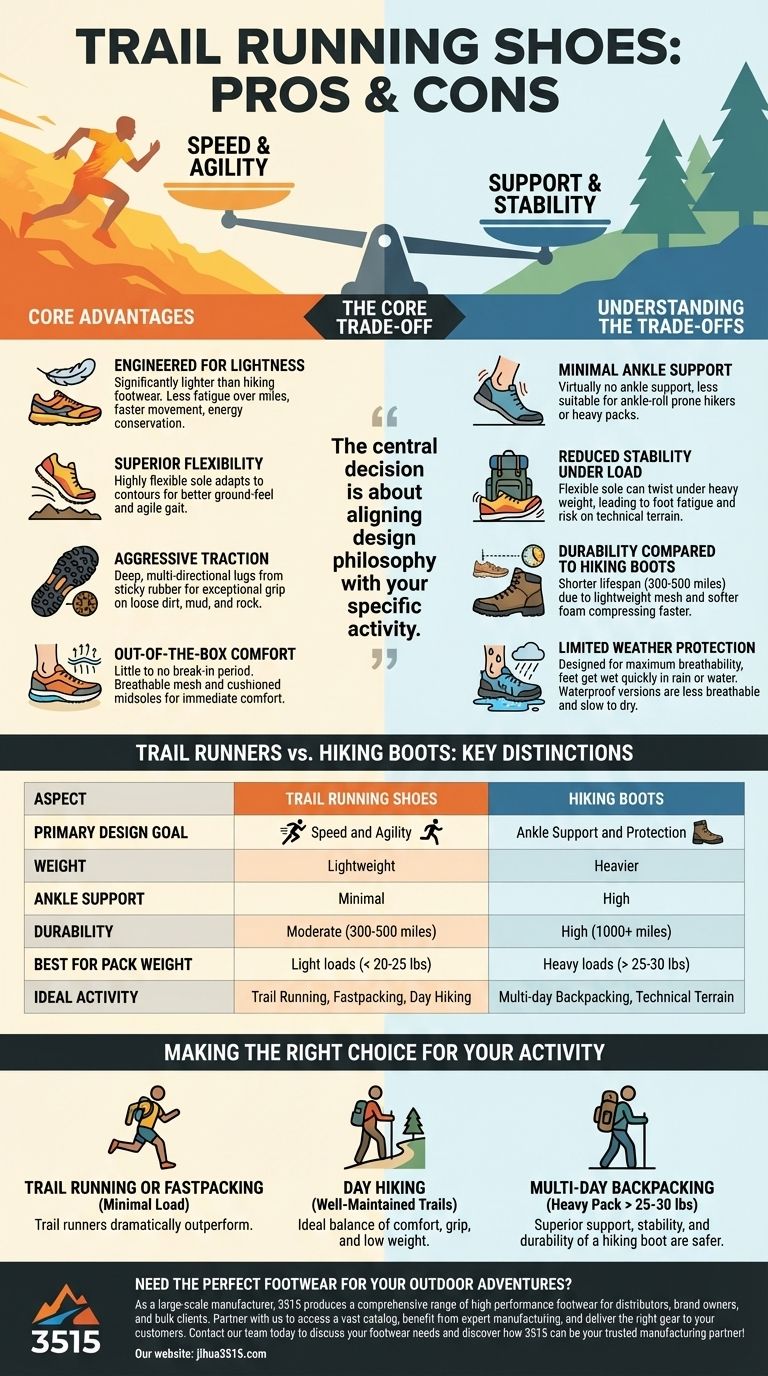
Summary Table:
| Aspect | Trail Running Shoes | Hiking Boots |
|---|---|---|
| Primary Design Goal | Speed and Agility | Ankle Support and Protection |
| Weight | Lightweight | Heavier |
| Ankle Support | Minimal | High |
| Durability | Moderate (300-500 miles) | High (1000+ miles) |
| Best For Pack Weight | Light loads (< 20-25 lbs) | Heavy loads (> 25-30 lbs) |
| Ideal Activity | Trail Running, Fastpacking, Day Hiking | Multi-day Backpacking, Technical Terrain |
Need the Perfect Footwear for Your Outdoor Adventures?
As a large-scale manufacturer, 3515 produces a comprehensive range of high-performance footwear for distributors, brand owners, and bulk clients. Whether your customers need the agility of trail runners or the rugged support of hiking boots, our production capabilities encompass all types of shoes and boots to meet any demand.
Partner with us to:
- Access a vast catalog of durable, purpose-built footwear.
- Benefit from expert manufacturing that balances performance, comfort, and quality.
- Deliver the right gear to your customers, tailored for their specific activities.
Contact our team today to discuss your footwear needs and discover how 3515 can be your trusted manufacturing partner!
Visual Guide
Related Products
- Durable Rubber Sole Outdoor Shoes Wholesale & Custom Manufacturing
- Wholesale Durable Camouflage Canvas Shoes with High-Traction Cleated Rubber Sole
- Wholesale Breathable Perforated Leather Derby Shoes with Modern Comfort Sole
- Wholesale Durable & Breathable Training Shoes for Custom Brands
- Custom OEM Training Shoes Wholesale Manufacturer Durable & Breathable
People Also Ask
- What is the function of the sole in outdoor shoes? Find the Perfect Grip and Support
- What role do outdoor shoes and sneakers play in navigating external terrains? Engineered Stability for Every Surface
- How is AI utilized in the design of outdoor and safety footwear? Harnessing Big Data for Market-Driven Shoe Innovation
- Why is durability important when selecting outdoor shoes? A Guide to Safety & Long-Term Value
- What are the key components of outdoor shoes that affect comfort and sturdiness? A Guide to Durable, High-Performance Footwear