
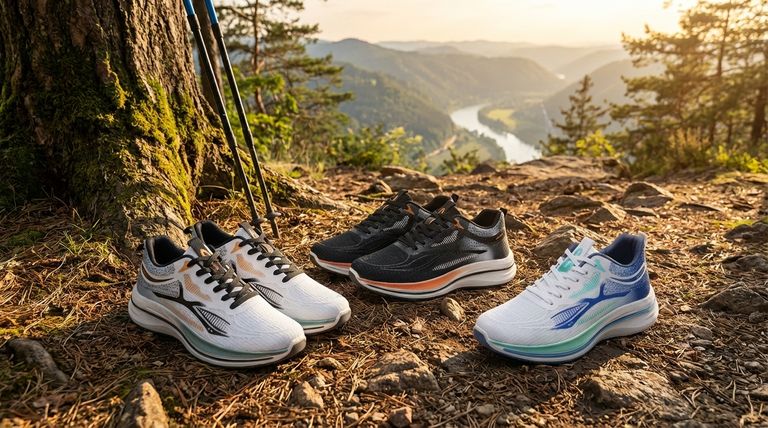
For lightweight hiking, the best alternatives to traditional hiking boots are trail running shoes, lightweight hiking shoes, and specialized hiking sandals. These options prioritize reducing foot fatigue and increasing agility by using modern synthetic materials, flexible soles, and more breathable designs, making them ideal for a wide range of trail conditions.
The core principle behind modern hiking footwear is to match the shoe to the specific demands of the trail and the hiker. Moving away from heavy, rigid boots towards lighter, more agile alternatives can drastically reduce fatigue and increase comfort, provided you understand the trade-offs in support and durability.
The Rationale: Why Move Beyond Traditional Boots?
The shift away from heavy leather boots is not just a trend; it's a strategic choice rooted in efficiency and comfort. Understanding the "why" helps you make a more informed decision for your own hiking style.
Reducing Fatigue
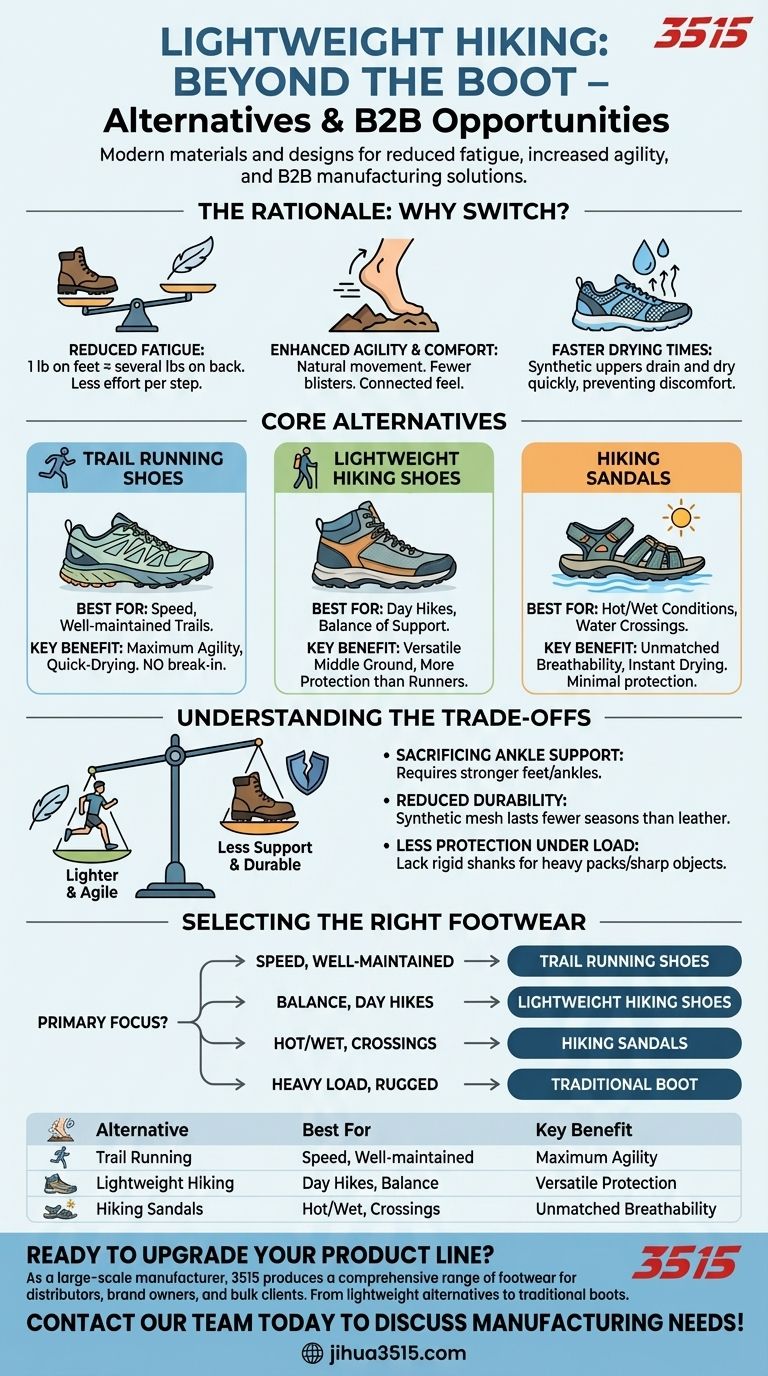
Every pound on your feet is equivalent to carrying several extra pounds on your back in terms of energy expenditure. Lightweight footwear, often weighing 2 pounds or less per pair, significantly reduces the effort required with each step, leading to less fatigue over a long day.
Enhancing Comfort and Agility
Lighter, more flexible shoes allow your foot to move more naturally, which can drastically reduce the likelihood of blisters and hotspots. This increased agility allows for more precise foot placement on varied terrain, making you feel more connected to the trail.
Faster Drying Times
Traditional leather boots, once wet, can take days to dry out. Most lightweight alternatives use synthetic mesh uppers that drain quickly and dry in a fraction of the time, which is critical for preventing discomfort and foot issues on multi-day trips.
A Breakdown of the Core Alternatives
Each alternative to a traditional boot occupies a specific niche, offering a unique blend of weight, support, and protection.
Trail Running Shoes
These are the go-to choice for many thru-hikers and minimalist backpackers. They are designed for running on uneven surfaces, so they offer aggressive tread for excellent traction, ample cushioning, and exceptional breathability. They require virtually no break-in period.
Lightweight Hiking Shoes
This category represents a direct evolution from traditional boots. They look like a boot but are built like a sneaker, often featuring a lower ankle cut, synthetic uppers, and a more flexible sole. They offer a middle ground, providing more support and durability than a trail runner but without the weight and rigidity of a classic boot.
Hiking Sandals
For hiking in hot climates or on trails with numerous water crossings, hiking sandals are a viable option. They offer unparalleled ventilation and dry almost instantly. Their open design, however, provides minimal protection from rocks, roots, and insects.
Augmenting Lighter Footwear
To bridge the gap in protection, many hikers pair lighter footwear with other gear. Gaiters can be added to keep debris and water out of your shoes, while some hikers use elastic ankle wraps to provide a mild sense of additional support without the bulk of a high-top boot.
Understanding the Trade-offs
Choosing lighter footwear is not without its compromises. Being aware of the downsides is crucial for safety and enjoyment.
Sacrificing Ankle Support
The most significant trade-off is reduced ankle support. Lighter footwear demands stronger feet and ankles, as well as more mindful foot placement, to prevent rolls and sprains. This is especially true when carrying a pack.
Reduced Durability
The synthetic mesh fabrics that make lightweight shoes breathable and quick-drying are inherently less durable than full-grain leather. A pair of trail runners may only last one season of heavy use, whereas a traditional boot can last for many years.
Less Protection Under Load
The rigid shanks and stiff midsoles of traditional boots are designed to protect your feet from sharp objects and absorb the impact of carrying a heavy backpack. Most lightweight options lack this structure, meaning you will feel the terrain more acutely and your feet will bear more of the load.
Selecting the Right Footwear for Your Hike
Your choice should be dictated by your personal needs, the weight of your pack, and the conditions of the trail you plan to tackle.
- If your primary focus is speed and minimal weight on well-maintained trails: Trail running shoes are your best choice for maximum efficiency and comfort.
- If your primary focus is a balance of support and comfort for day hikes: Lightweight hiking shoes provide a versatile middle ground with more protection than a trail runner.
- If your primary focus is hiking in hot, wet conditions with frequent water crossings: Hiking sandals offer unmatched breathability, but be mindful of the lack of protection.
- If your primary focus is carrying a heavy pack or navigating rugged, off-trail terrain: A traditional hiking boot still provides the necessary support and durability for these demanding situations.
Ultimately, the best hiking footwear is the one that allows you to move confidently and comfortably through your chosen environment.
Summary Table:
| Alternative Footwear | Best For | Key Benefit |
|---|---|---|
| Trail Running Shoes | Speed, well-maintained trails | Maximum agility, quick-drying |
| Lightweight Hiking Shoes | Day hikes, balance of support | Versatile, more protection than runners |
| Hiking Sandals | Hot/wet conditions, water crossings | Unmatched breathability, instant drying |
Ready to upgrade your hiking experience? As a large-scale manufacturer, 3515 produces a comprehensive range of footwear for distributors, brand owners, and bulk clients. Our production capabilities encompass all types of shoes and boots, including the lightweight, agile alternatives discussed here. Let us help you provide the perfect footwear for your customers' next adventure. Contact our team today to discuss your manufacturing needs!
Visual Guide
Related Products
- Durable Rubber Sole Outdoor Shoes Wholesale & Custom Manufacturing
- Wholesale High-Traction Camo Boots - Custom Manufacturer for Brands
- Wholesale Durable Camouflage Canvas Shoes with High-Traction Cleated Rubber Sole
- Wholesale Durable Camo Canvas Shoes with High-Traction Rubber Soles
- Wholesale Breathable Perforated Leather Derby Shoes with Modern Comfort Sole
People Also Ask
- What is the function of the sole in outdoor shoes? Find the Perfect Grip and Support
- What role do outdoor shoes and sneakers play in navigating external terrains? Engineered Stability for Every Surface
- How is AI utilized in the design of outdoor and safety footwear? Harnessing Big Data for Market-Driven Shoe Innovation
- Why is durability important when selecting outdoor shoes? A Guide to Safety & Long-Term Value
- What are the key components of outdoor shoes that affect comfort and sturdiness? A Guide to Durable, High-Performance Footwear



















