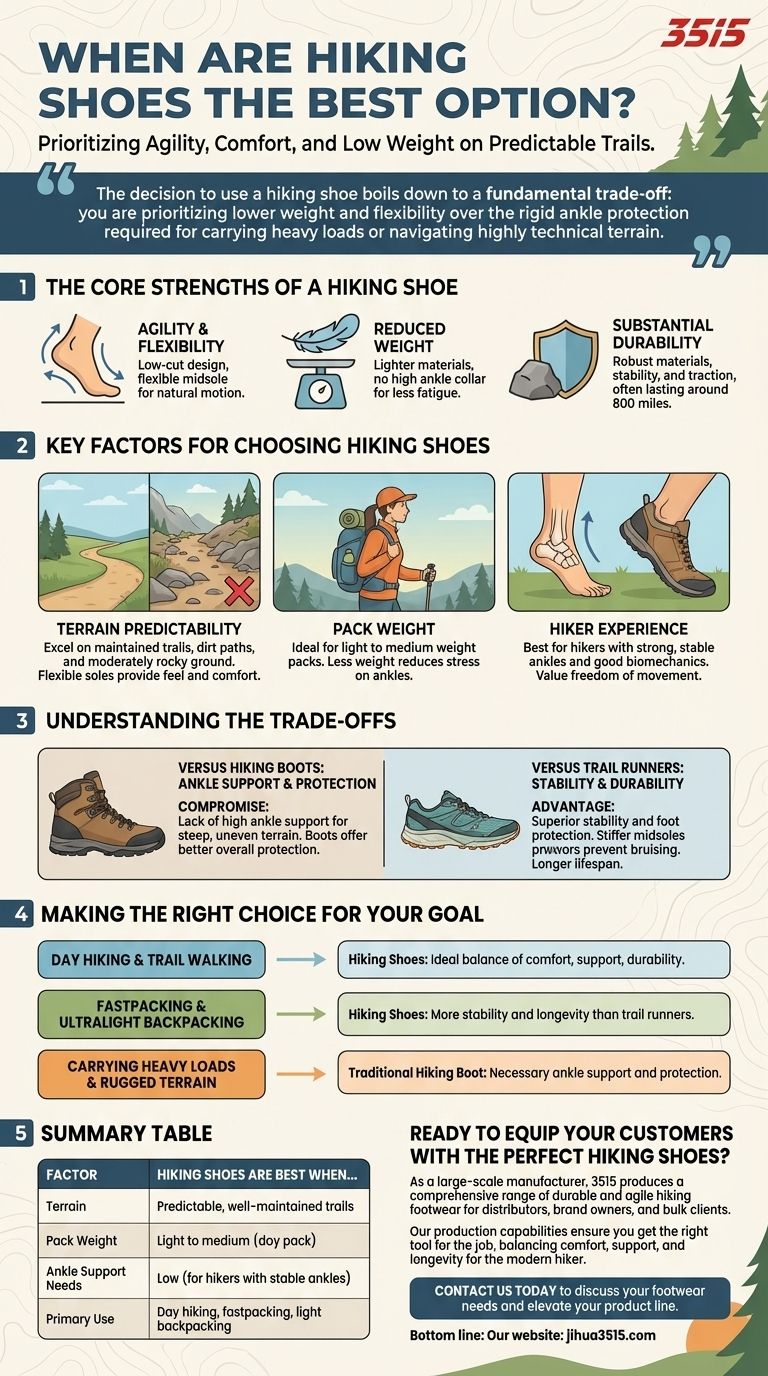
In short, hiking shoes are the best option when your priorities are agility, comfort, and low weight for hikes on predictable, well-maintained trails. They are specifically designed for day hikes or short backpacking trips where you are carrying a light pack and do not require the rigid ankle support of a traditional boot.
The decision to use a hiking shoe boils down to a fundamental trade-off: you are prioritizing lower weight and flexibility over the rigid ankle protection required for carrying heavy loads or navigating highly technical terrain.

The Core Strengths of a Hiking Shoe
A hiking shoe occupies the middle ground between a lightweight trail runner and a heavy-duty hiking boot. It is engineered to provide a specific blend of features that excel in common hiking scenarios.
Agility and Flexibility
Hiking shoes are built with a low-cut design and a more flexible midsole than a boot. This construction allows for a more natural range of motion, making you feel quicker and more agile on the trail.
Reduced Weight
By eliminating the high ankle collar and using lighter materials, hiking shoes significantly reduce the weight on your feet. This translates to less fatigue over the course of a day hike.
Substantial Durability
Compared to trail-running shoes, dedicated hiking shoes are built with more robust materials. They are designed for stability and traction on trail surfaces and typically last longer, often around 800 miles.
Key Factors for Choosing Hiking Shoes
Your decision should be based on a clear-eyed assessment of your planned activity. Hiking shoes are the superior choice under the following conditions.
Terrain Predictability
Hiking shoes excel on maintained trails, dirt paths, and moderately rocky ground. Their flexible soles provide excellent feel and comfort on these predictable surfaces.
They are less suited for off-trail scrambling or terrain with loose, unstable rock where ankle rolls are a primary concern.
Pack Weight
These shoes are ideal when you are carrying a light to medium weight pack. The less weight on your back, the less stress is placed on your ankles, reducing the need for rigid support.
Hiker Experience
Hikers with strong, stable ankles and good biomechanics often prefer the freedom of movement that hiking shoes provide. They value agility and comfort over the constraints of a boot.
Novice hikers or those with a history of ankle injuries may benefit more from the protection of a full boot, even on easier terrain.
Understanding the Trade-offs
Choosing footwear is never about finding a single "best" option, but the right tool for the job. Being objective about the limitations of hiking shoes is critical.
Versus Hiking Boots: Ankle Support and Protection
The most significant compromise is the lack of high ankle support. On steep, uneven, or loose terrain, a traditional high-cuffed boot provides critical protection against dangerous ankle twists.
Boots also offer more overall protection from rocks and roots, which can be a deciding factor in highly rugged environments.
Versus Trail Runners: Stability and Durability
While trail runners are even lighter and more flexible, hiking shoes offer superior stability and foot protection. Their midsoles are typically stiffer, preventing sharp rocks from bruising your feet.
Hiking shoes are also constructed with more durable materials, giving them a longer lifespan under the consistent abrasion of trail use.
Making the Right Choice for Your Goal
Base your decision on the most demanding aspects of your intended hikes.
- If your primary focus is day hiking and trail walking: Hiking shoes offer the ideal balance of comfort, support, and durability for these activities.
- If your primary focus is fastpacking or ultralight backpacking: Hiking shoes provide more stability and longevity than trail runners, making them a superior choice for logging high miles on maintained paths.
- If your primary focus is carrying heavy loads or hiking on rugged terrain: You must opt for a traditional hiking boot to get the necessary ankle support and foot protection.
Choosing the right footwear is about matching the tool to the task, ensuring your comfort and safety on the trail.
Summary Table:
| Factor | Hiking Shoes Are Best When... |
|---|---|
| Terrain | Predictable, well-maintained trails |
| Pack Weight | Light to medium (day pack) |
| Ankle Support Needs | Low (for hikers with stable ankles) |
| Primary Use | Day hiking, fastpacking, light backpacking |
Ready to equip your customers with the perfect hiking shoes?
As a large-scale manufacturer, 3515 produces a comprehensive range of durable and agile hiking footwear for distributors, brand owners, and bulk clients. Our production capabilities ensure you get the right tool for the job, balancing comfort, support, and longevity for the modern hiker.
Contact us today to discuss your footwear needs and elevate your product line.
Visual Guide
Related Products
- Durable Rubber Sole Outdoor Shoes Wholesale & Custom Manufacturing
- Wholesale High-Traction Camo Boots - Custom Manufacturer for Brands
- Wholesale Durable Camouflage Canvas Shoes with High-Traction Cleated Rubber Sole
- Wholesale Durable Camo Canvas Shoes with High-Traction Rubber Soles
- Wholesale Lightweight Tactical Boots Custom Manufacturer for Desert & Combat Use
People Also Ask
- What is the function of the sole in outdoor shoes? Find the Perfect Grip and Support
- What role do outdoor shoes and sneakers play in navigating external terrains? Engineered Stability for Every Surface
- How is AI utilized in the design of outdoor and safety footwear? Harnessing Big Data for Market-Driven Shoe Innovation
- Why is durability important when selecting outdoor shoes? A Guide to Safety & Long-Term Value
- What are the key components of outdoor shoes that affect comfort and sturdiness? A Guide to Durable, High-Performance Footwear