
Lace-up boots offer fundamentally better fit retention over time. Their design incorporates an adjustable fastening system that allows you to counteract the natural stretching of materials. In contrast, slip-on boots rely on the initial shape and elasticity of their components, which inevitably degrade and lead to a looser, less supportive fit.
The core difference is mechanical versus material reliance. Lace-up boots use a mechanical system (laces) to reclaim a secure fit throughout the boot's life, while slip-on boots depend on material elasticity that permanently degrades with use.
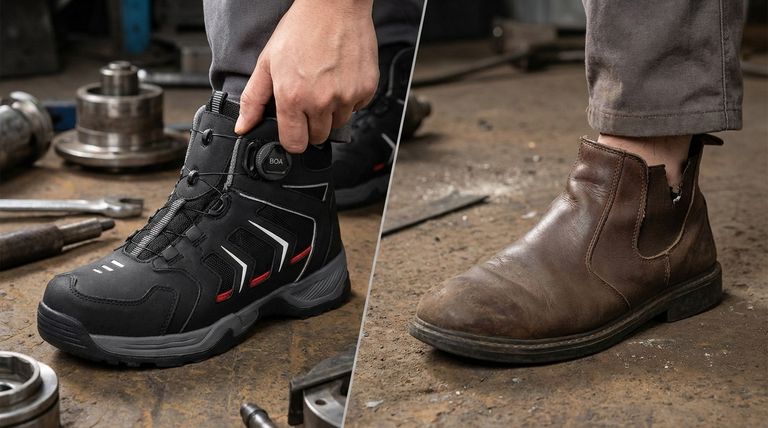
The Mechanics of Fit: Lace-Up Boots
The Power of Mechanical Fastening
Lace-up boots feature a dedicated system for securing your foot. The laces and eyelets work together to distribute pressure evenly across the instep.
This mechanical advantage allows for precise, repeatable adjustments at any time. You can tighten the boot to reclaim its original snugness long after the initial break-in period.
Counteracting Material Stretch
All boots, particularly those made of leather, will stretch and mold to your foot over time. In a lace-up boot, this process is a benefit, leading to a custom-fit feel.
As the material gives, you can simply pull the laces tighter to compensate. This ensures the boot remains supportive and secure, preventing your foot from sliding inside.
The Inevitable Decline: Slip-On Boots
A Reliance on Elasticity
Slip-on boots achieve their fit through a precisely shaped ankle opening and, often, elastic side panels (gores). Their security depends entirely on these materials retaining their original shape and tension.
This design prioritizes convenience over long-term adjustability. There is no mechanical way to tighten the boot once these components begin to wear out.
The Cycle of Stretching
The very act of putting on and taking off a slip-on boot contributes to its decline. Each time you force your foot through the opening, you stretch the elastic gores and the collar of the boot.
Over time, this repeated stress causes the elastic and surrounding materials to lose their ability to snap back. This is a permanent change that cannot be reversed.
When the Fit is Gone
Once a slip-on boot loses its snugness, the fit is gone for good. The boot can become loose and sloppy, leading to heel slip, chafing, and a significant reduction in foot and ankle support.
At this stage, the only remedies are temporary fixes like thicker socks or insoles. Ultimately, the boot will need to be replaced far sooner than a comparable lace-up.
Understanding the Trade-offs
Convenience vs. Longevity
The primary advantage of a slip-on boot is convenience. They are quick and easy to put on and take off, which is a major benefit for many users.
However, this convenience comes at the direct cost of fit longevity. Lace-up boots require a few extra moments to secure but offer a vastly longer lifespan of proper, supportive fit.
The True Cost of Ownership
While a slip-on might seem practical, its shorter functional lifespan can lead to a higher long-term cost. Replacing a loose, unsupportive slip-on boot every couple of years can be more expensive than investing in a durable lace-up that maintains its integrity for much longer.
Making the Right Choice for Your Needs
Choosing the right boot depends on balancing your need for convenience with your requirement for long-term performance and value.
- If your primary focus is long-term value and consistent support: A lace-up boot is the superior choice, as its adjustability ensures a secure fit for the entire life of the boot.
- If your primary focus is maximum convenience for casual, light-duty use: A slip-on is a viable option, but you must accept that its fit will degrade and it will need to be replaced sooner.
Ultimately, understanding the distinction between mechanical adjustment and material elasticity empowers you to invest in footwear that truly aligns with your goals.
Summary Table:
| Feature | Lace-Up Boots | Slip-On Boots |
|---|---|---|
| Fit Retention Mechanism | Mechanical (Laces & Eyelets) | Material (Elasticity & Shape) |
| Long-Term Adjustability | Yes, easily adjustable | No, permanent degradation |
| Foot & Ankle Support | Consistent and long-lasting | Degrades over time |
| Functional Lifespan | Longer | Shorter |
| Primary Advantage | Long-term performance & value | Maximum convenience |
Need durable, long-lasting boots that maintain a perfect fit?
As a large-scale manufacturer, 3515 produces a comprehensive range of footwear for distributors, brand owners, and bulk clients. Our production capabilities encompass all types of durable lace-up and slip-on work boots, ensuring superior quality and consistent performance for your customers.
Contact our experts today to discuss your boot requirements and discover how we can deliver lasting value to your business.
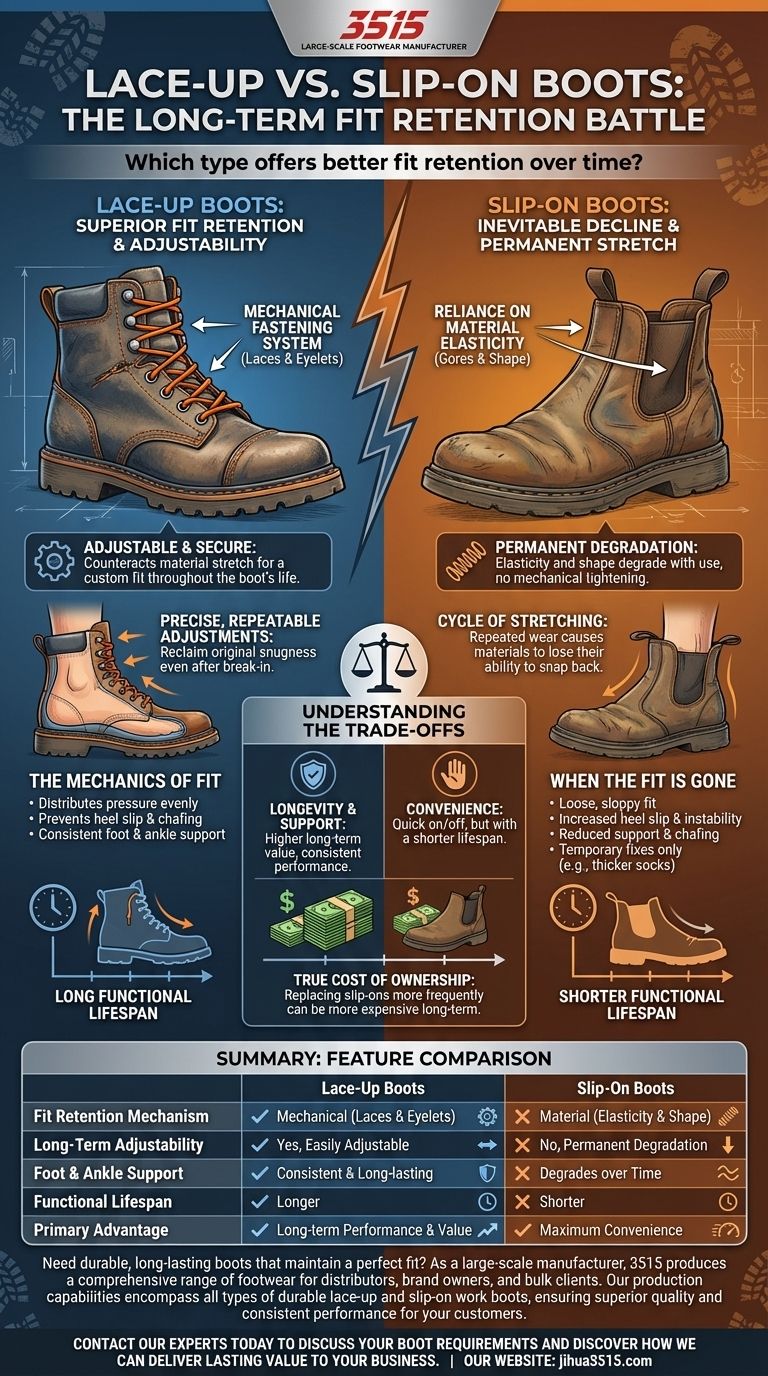
Visual Guide
Related Products
- Wholesale Classic Leather Lace-Up Ankle Boots for Brand Manufacturing
- Premium Wholesale Tactical Style Safety Shoes Boots with Quick Lacing
- Durable Goodyear Welt Leather Work Boots for Wholesale & Private Label
- Wholesale Training Shoes with Dial Lacing System Custom OEM Manufacturing
- Wholesale Lightweight Tactical Boots with Dial Closure OEM & Bulk Orders
People Also Ask
- How are oils used to waterproof leather boots? A Guide to Deep Conditioning & Protection
- Why is regular maintenance necessary for the performance of leather boots? Boost Durability & Brand Reputation
- Why might it be beneficial to pre-heat the boots before applying wax? Achieve Deeper, Longer-Lasting Protection
- How can leather boots maintain their water resistance? A Guide to Lasting Protection
- What is the biggest enemy of leather boots? Protect Your Investment from Water Damage

















