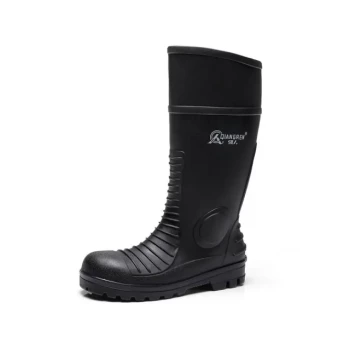
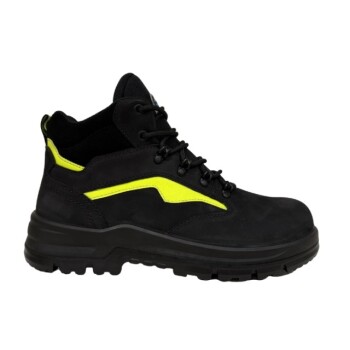
To put it directly, Western work boots are best suited for demanding jobs in agriculture, ranching, and general outdoor labor on varied or rough terrain. Their unique design blends rugged durability with all-day comfort, making them a practical choice for roles in landscaping, general construction, and even some specialized industrial settings like oilfields or factories, provided they have the necessary safety features.
The core decision to use a Western work boot comes down to a trade-off: you are choosing superior comfort and freedom of movement over the maximum ankle support and specialized grip found in traditional lace-up work boots.
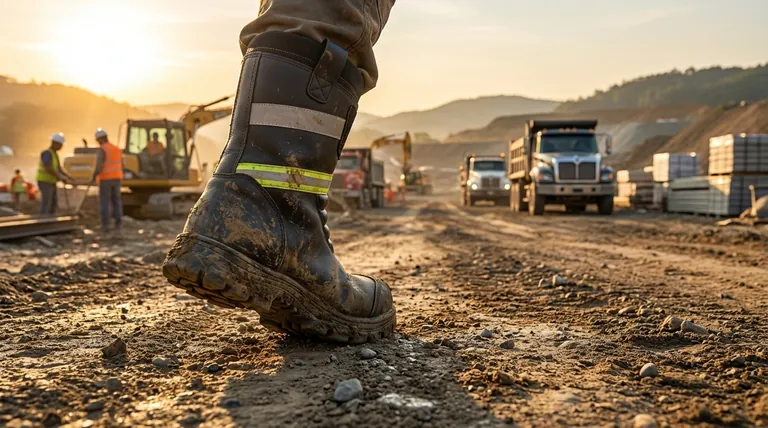
The Defining Features of a Western Work Boot
To understand where these boots excel, we must first understand their functional design. They are not simply a matter of style; every element is engineered for a specific purpose.
Built for All-Day Durability
Western work boots are constructed from thick, durable leather designed to withstand the rigors of long hours on your feet. Their build is tough, protecting you from brush, debris, and the general wear and tear of physical labor.
Prioritizing Comfort and Mobility
Unlike many traditional work boots, the Western style often features a more spacious toe box. This allows for natural foot spread and comfort during long shifts of walking or standing.
Their design also offers less ankle restriction. This flexibility is a significant advantage for jobs that require frequent squatting, kneeling, or bending.
Designed for Practicality
The classic slip-on design is a key feature. It allows for quick and easy wear, which is invaluable when moving between indoor and outdoor environments or at the start and end of a long day.
Most Western work boots have a lower, wider heel than fashion cowboy boots, providing a stable base on uneven ground. The soles are typically made of thick rubber with tread patterns designed for traction on dirt, mud, and natural surfaces.
Where Western Work Boots Excel
The combination of durability, comfort, and practicality makes these boots a superior choice for specific environments.
Agricultural and Ranch Work
This is the quintessential environment for a Western work boot. The tall shaft protects the leg, the durable leather withstands abuse, and the sole provides reliable traction on unpredictable terrain, from muddy fields to dusty pens.
Landscaping and General Construction
For workers moving across various outdoor surfaces, the boot's hybrid nature is a major benefit. It provides ample protection and support for general labor, digging, and operating machinery without the restrictive feel of a heavy-duty logger or tactical boot.
Oilfields, Factories, and Warehouses
Modern Western work boots have evolved significantly. Many models are now built with reinforced safety toes (steel or composite), slip-resistant outsoles, and even electrical hazard (EH) protection, making them fully compliant for many industrial job sites.
Understanding the Trade-offs
No single boot is perfect for every job. Being objective about the limitations of a Western work boot is critical to making an informed choice.
Ankle Support vs. Flexibility
The greatest strength of the Western work boot—its flexibility—is also its most significant trade-off. The slip-on design inherently provides less ankle support than a tightly laced boot.
For jobs involving climbing ladders, extensive hiking on steep inclines, or carrying heavy loads over treacherous ground, a traditional boot with superior ankle support may be a safer choice.
General Traction vs. Specialized Grip
The tread on a Western work boot is excellent for natural terrain. However, it may not be the optimal choice for hard, flat surfaces.
For instance, ironworkers or roofers often prefer wedge sole boots, which offer maximum surface contact on flat ground. Similarly, some industrial settings with oily or slick floors may require a specialized lug pattern found on other types of boots.
The Safety Feature Caveat
While many Western work boots come equipped with modern safety features, not all do. It is a mistake to assume any Western-style boot is a "work boot." You must always verify that a specific model has the certified steel toe, composite toe, or EH rating required for your job site.
Making the Right Choice for Your Work
Ultimately, the best boot is the one that correctly matches the demands of your job.
- If your primary focus is all-day comfort on varied outdoor terrain like farms, ranches, or fields: The Western work boot is an exceptional and purpose-built choice.
- If your primary focus is maximum ankle support for climbing or navigating treacherous, uneven ground: A traditional lace-up tactical or logger boot is a more suitable option.
- If your primary focus is working on hard, flat surfaces like concrete floors or rooftops: A dedicated wedge sole boot will likely provide better comfort and stability.
- If your primary focus is a blend of indoor/outdoor work requiring safety compliance: A modern Western work boot with a certified safety toe and EH rating offers a superb balance of protection and convenience.
Choosing the right footwear is a critical decision for both your safety and your productivity; ensure the boot you select is the right tool for the job.
Summary Table:
| Ideal Work Scenario | Key Boot Feature | Key Consideration |
|---|---|---|
| Agriculture & Ranching | Tall shaft, durable leather, traction on natural terrain | Superior comfort for long hours outdoors |
| Landscaping & General Construction | Spacious toe box, flexibility for squatting/bending | Less ankle support than lace-up boots |
| Oilfields & Factories (with safety features) | Slip-on design, available safety toes (steel/composite), EH rating | Must verify specific model has required job site certifications |
Need Durable, Compliant Footwear for Your Team?
As a large-scale manufacturer, 3515 produces a comprehensive range of Western work boots and other footwear designed for the demands of distributors, brand owners, and bulk clients. Our production capabilities encompass all types of safety-compliant shoes and boots, ensuring your workforce has the right tool for the job.
We can help you:
- Source reliable footwear that meets specific job site safety standards.
- Customize boots for your brand or unique operational needs.
- Ensure consistent supply of high-quality, durable work boots for your teams.
Let's discuss your specific requirements. Contact our team today to find the perfect footwear solution.
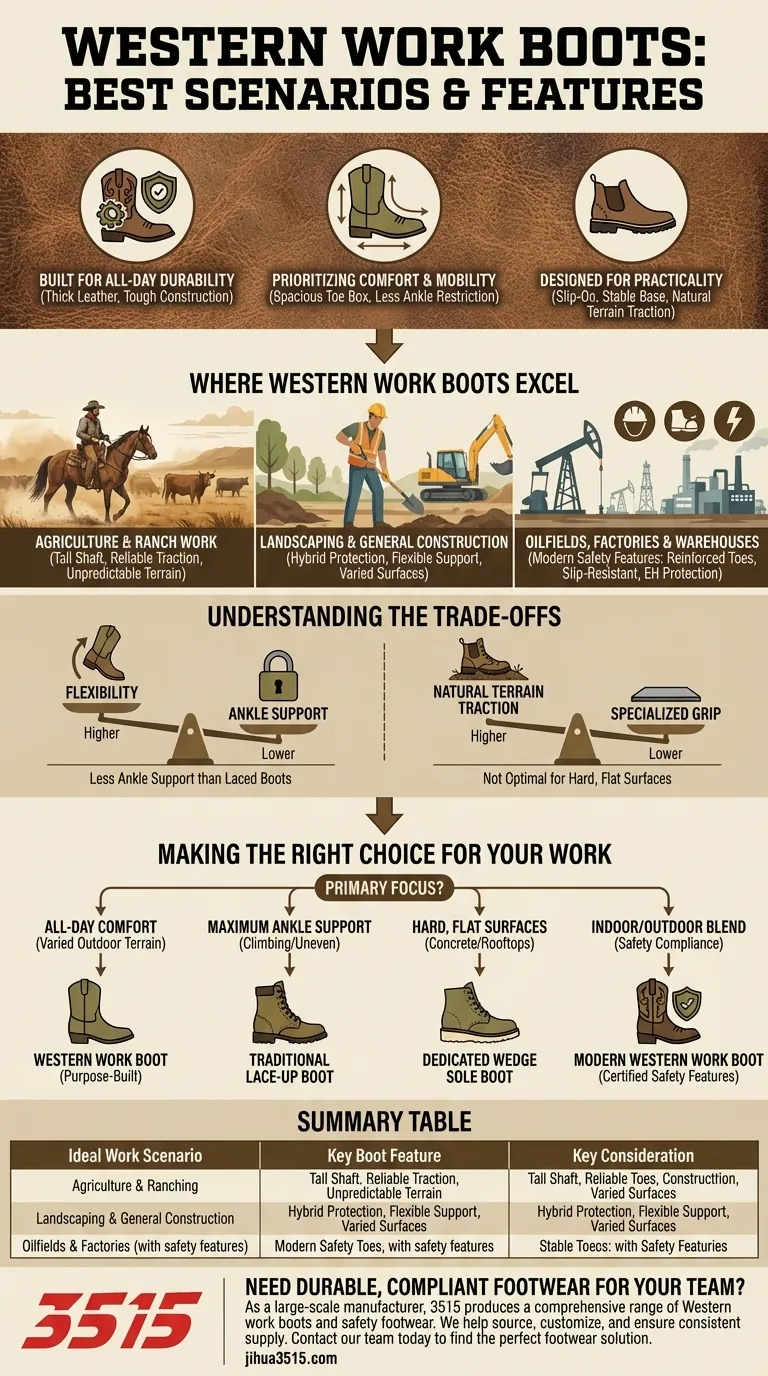
Visual Guide
Related Products
- Durable Leather Work Boots for Wholesale & Custom Manufacturing
- Durable Goodyear Welt Leather Work Boots for Wholesale & Private Label
- Durable Leather Work Boots for Wholesale & Custom OEM Manufacturing
- Durable Leather Work Boots Wholesale Manufacturer & Custom Factory
- Wholesale Leather Work Boots with Customizable Wedge Sole for Brands
People Also Ask
- What is the difference between full-grain and top-grain leather? Premium Material Guide for Boot Manufacturers
- What are the common workplace hazards that can be mitigated with the right work boots? Protect Your Workforce
- What are the common foot issues workers face due to uncomfortable work boots? Prevent Pain & Deformities
- What are the advantages of leather versus synthetic work boots? A Guide to Choosing the Right Material
- What are the key components of modern work boots? Engineered for Ultimate Durability and Comfort